
Short Answer: Most Hampton Roads lawns need roughly one inch of water per week through summer, including rainfall. Deliver it in two longer cycles (rather than five short ones), water in the early morning between 4 a.m. and 9 a.m., and adjust based on what your grass is telling you. Fescue needs more water than Bermuda or zoysia. Sandy soils need shorter, more frequent cycles than clay. The biggest mistake homeowners make is watering daily for 10 minutes, which trains shallow roots and leads to a weak lawn that fails in heat. Read the footprint test, watch the color, and irrigate to soil depth, not to a schedule.
“How often should I be watering?” is probably the question we get more than any other from May through August. And the honest answer is: it depends on what you have, where you are, what the weather is doing this week, and what your lawn is showing you. There is no single number that fits every property in Hampton Roads. But there is a framework that works for almost every property, and once you understand it, the daily decisions get easier.
The reason this matters is that watering wrong is one of the fastest ways to lose a lawn in our climate. Too much water, especially in our 70-plus percent summer humidity, sets up brown patch and other fungal problems that can take out a fescue lawn in a single week. Too little water, and the lawn goes into drought stress, thins out, and becomes vulnerable to weeds, insects, and bare-spot recovery work that costs real money. Getting it right is not complicated, but it does take a little understanding. Here is the version we walk our customers through.
The One-Inch Rule (and Why It Is Not Quite That Simple)
The general rule for most turf grasses in our region is one inch of water per week during the active growing season. That inch can come from rainfall, irrigation, or a combination of the two. In Hampton Roads, May and June often deliver enough rain that you barely need to irrigate. July and August almost always require supplemental water.
Where the rule gets nuanced is that not all soils hold that inch the same way. Sandy soils, which are common closer to the rivers and the bay, drain faster and hold less water in the root zone. They benefit from shorter, more frequent cycles, maybe 30 to 40 minutes twice a week rather than 60 minutes once. Heavy clay soils, which we see more of inland in Suffolk, Windsor, and parts of Chesapeake, hold water longer but can saturate and run off if you apply too much at once. Those lawns do better with multiple short cycles separated by an hour to let water absorb.
The right way to know how your soil is performing is to put empty tuna cans or rain gauges around the yard and run your irrigation a normal cycle. Measure how much water lands in each. That tells you your real output, which is almost always different from what the controller says. From there, you can adjust the run times to deliver the actual inch you want.
When to Water
Early morning, between roughly 4 a.m. and 9 a.m., is the right window. The wind is usually calm, the temperature is low so evaporation is minimal, and the grass blades will dry quickly once the sun comes up. Drying matters because wet grass blades that stay wet through the night are the perfect environment for the fungal diseases that plague Hampton Roads lawns.
Evening watering is the worst choice. The grass stays wet for 10 or 12 hours overnight, humidity stays high, and brown patch, dollar spot, and pythium have ideal conditions to develop. We have seen otherwise healthy fescue lawns ruined in a single week of evening watering during a hot July.
Midday watering is wasteful (evaporation rates are high) but generally not as damaging as evening watering. If your only window to water is midday, you are better off doing it than skipping. Just expect to apply 20 to 30 percent more water than you would in the morning to compensate for evaporation.
Deep and Infrequent Beats Shallow and Daily
If we could change one habit on Hampton Roads lawns, this would be it. The reflex to water every day for 10 or 15 minutes feels right, because you are doing something, but it is actively bad for the lawn.
Short daily watering wets only the top half-inch of soil. The grass roots, which respond to where the water is, stay shallow. When the heat of late July hits and the top inch dries out fast, those shallow roots cannot reach the moisture deeper in the soil, and the lawn goes into drought stress almost immediately. Meanwhile, weeds with deeper natural root systems take over.
The fix is to water less often but longer. For most Hampton Roads lawns, two cycles per week of 30 to 45 minutes per zone (adjusted for your specific output rate) delivers an inch of water and soaks down four to six inches into the soil. The roots follow the moisture down, the lawn becomes drought-tolerant, and you spend less total time and money on water.
If you have an irrigation controller with a “cycle and soak” feature, use it. Two 20-minute pulses with an hour between them puts more water in the root zone than one 40-minute cycle, especially on clay or sloped ground where runoff is a problem.
How Each Grass Type Wants to Be Watered
Tall fescue, the most common turf in our service area, has the highest summer water needs. Fescue is a cool-season grass trying to survive Hampton Roads heat, and it needs the full one inch per week, sometimes a bit more during a 95-degree stretch, to stay green and avoid going dormant. If you let fescue go fully dormant in summer, recovery is uncertain.
Bermuda is far more drought-tolerant. A healthy Bermuda lawn can get by on three-quarters of an inch per week, sometimes less, and will recover quickly from short drought periods. Bermuda actually performs better with slightly less water than more.
Zoysia falls between fescue and Bermuda for water needs. Three-quarters to one inch per week is the typical range. Zoysia signals drought stress later than the other grasses, which can make it harder to know when to water, but the deep root system means it survives dry stretches that would damage fescue.
St. Augustine is thirsty, generally more than Bermuda or zoysia, and the broad blades show wilt clearly. One inch to one and a quarter inches per week is the typical target. St. Augustine roots are shallower than most other grasses, so more frequent shorter cycles can work better than the long-and-infrequent approach.
Centipede prefers the lightest hand. Three-quarters of an inch per week is plenty in most cases, and overwatering centipede can lead to decline. If you have centipede, the answer is almost always less water, not more.
How to Read What Your Lawn Is Telling You
You can lean on the rule of thumb, or you can let the lawn tell you when it needs water. The footprint test is the classic indicator: walk across the lawn in the morning, then look back. If your footprints stay visible in the grass for more than a few seconds, the lawn is approaching drought stress. Healthy, hydrated turf springs back almost immediately.
Color is the next signal. As fescue or Bermuda starts to stress, the green dulls to a blue-gray tone before turning straw-brown. Catching the lawn at the blue-gray stage and watering well usually brings it back without lasting damage. Once it has gone fully brown, the recovery time is longer and depends on how deep the dormancy went.
The signs of overwatering matter too. A lawn that always feels soft underfoot, smells slightly sour, has visible thatch building up, or shows random circular patches of dead grass is often a lawn that is getting too much water. Brown patch in particular announces itself as circular tan patches 6 inches to several feet across, almost always tied to overwatering or evening watering in humid conditions.
What About Irrigation Systems
If you have an in-ground irrigation system, the controller is doing the watering whether you are paying attention or not. We strongly recommend a smart controller (one that pulls weather data and adjusts run times automatically) if you do not have one. They typically pay for themselves in water bill savings within a season or two and they water the lawn correctly without you having to think about it.
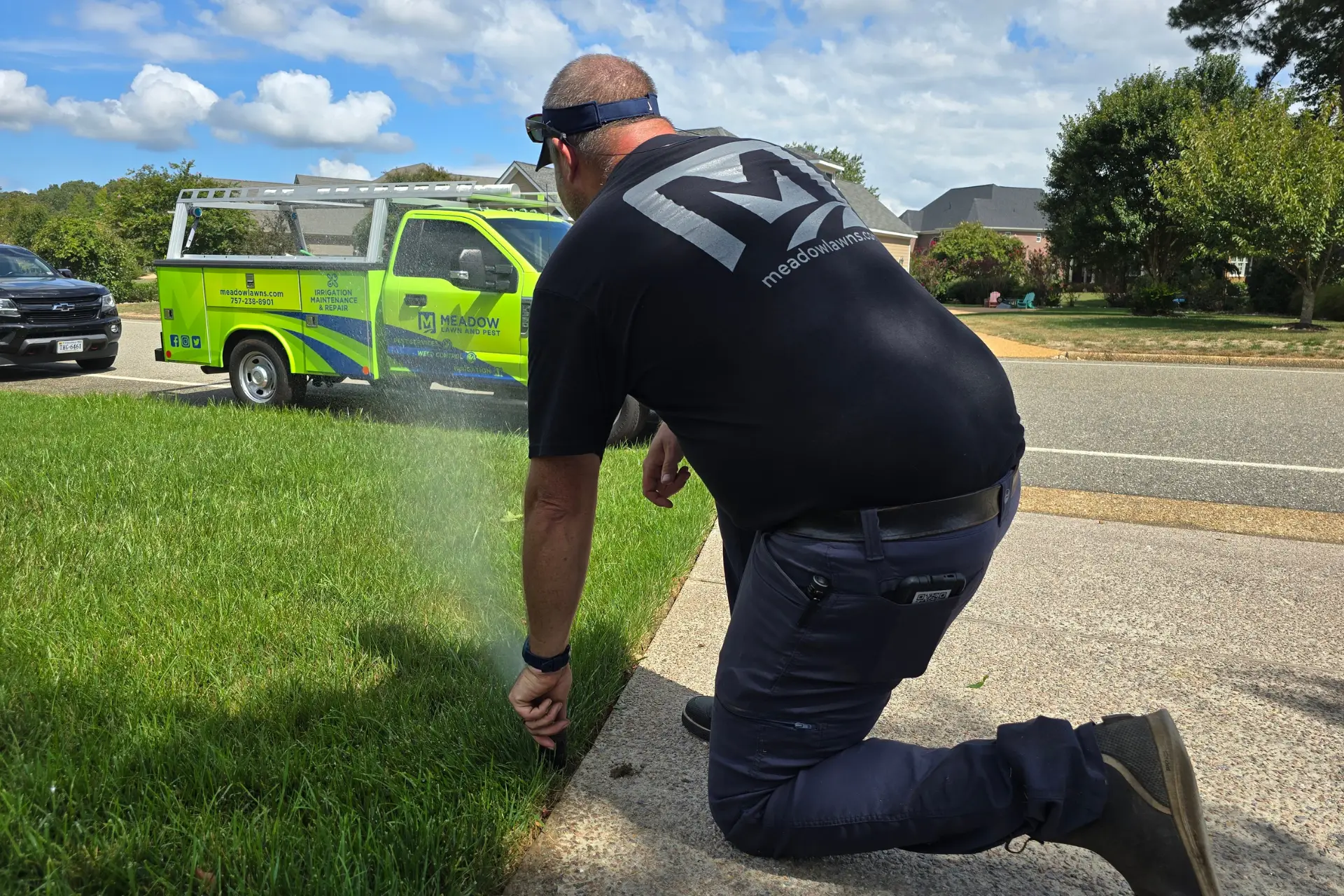
Whatever controller you have, the spring startup matters. Misaligned heads, sunken heads that are spraying the soil instead of the grass, clogged nozzles, and blocked rotors all create dry spots and wet spots. We offer irrigation startups, mid-season checks, and winterizations for properties in our service area, and we are happy to assess whether your current system is delivering what your lawn needs.
What to Do Next
If you are heading into summer and you are not confident your watering plan is right, that is a great time to call us. We can come out, identify your grass type, evaluate your soil, check your irrigation system if you have one, and put together a watering schedule that fits your specific property. Call (757) 238-8901 or visit stg-5eq9zo.elementor.cloud/request-a-quote.
With five Virginia Tech Certified Turfgrass Professionals on our team and 17+ years working coastal Virginia properties, we have walked thousands of lawns from Carrollton to York County. The difference between a thriving summer lawn and a struggling one usually comes down to a handful of habits, and watering correctly is at the top of the list. We are happy to help you get it right.