
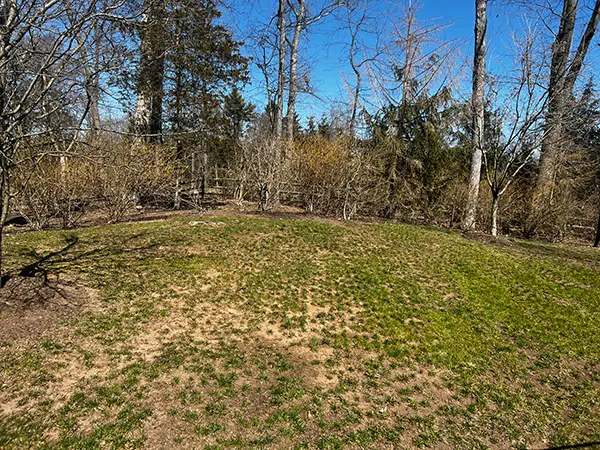
Short Answer: Brown patch and dollar spot are the two fungal diseases most likely to damage a Hampton Roads lawn between mid-May and early August. Brown patch produces circular brown areas one to three feet across, often with a darker smoke ring at the edge, and primarily attacks tall fescue. Dollar spot creates small straw-colored spots the size of a silver dollar that can merge into larger patches, and it hits both cool-season and warm-season grasses. Both diseases love warm nights, high humidity, and extended leaf wetness, which is exactly what our Tidewater climate delivers. Catching them early, drying the canopy out, mowing correctly, and applying a labeled fungicide at first symptoms is what keeps a single bad week from becoming a summer-long recovery project.
If you live in Hampton Roads and you have a fescue lawn, the calendar between May 15 and August 15 is the most dangerous stretch of the year. Daytime temperatures are climbing into the eighties, overnight lows are barely dropping below seventy, and the humidity is sitting somewhere between heavy and oppressive. That is fungus weather. We see brown patch and dollar spot every single year, and the homeowners who handle them well usually share two habits. They look at their lawn closely every few days, and they call us the moment they notice something odd rather than waiting two weeks to see if it gets worse.
Here is what we want every Hampton Roads homeowner to know about these two diseases, how to identify them, and what actually works to slow them down.
What Brown Patch Looks Like in a Hampton Roads Lawn
Brown patch is caused by a fungus called Rhizoctonia solani. It thrives when overnight temperatures stay above 65 degrees and the grass canopy stays wet for more than ten consecutive hours. That happens almost every summer night here. The classic signature is a roughly circular brown area, usually one to three feet across, often with a slightly darker edge where the fungus is actively expanding. On dewy mornings, that edge can look gray or smoky, which is where the nickname “smoke ring” comes from.
Inside the patch, the grass blades will look bleached or straw-colored. If you pull on them gently, individual blades come away easily because the lesions at the base of the leaf have rotted the tissue. The crown and roots usually stay alive, which is why a brown patch lawn can recover. The leaf tissue is dead, but the plant is not, as long as you act before the disease pressure breaks the crown too.
Brown patch hits tall fescue hardest in our region, and fescue is the dominant grass type in most Hampton Roads lawns. We also occasionally see it on St. Augustine, where it presents a little differently as larger irregular areas rather than tight circles. If you have a Bermuda or zoysia lawn, brown patch is less common but not impossible, particularly in heavily shaded or low-drainage sections.
What Dollar Spot Looks Like in a Hampton Roads Lawn
Dollar spot is caused by a different fungus, Clarireedia jacksonii (the species was renamed a few years back, you may still see it called Sclerotinia homoeocarpa in older references). The classic symptom is small straw-colored spots roughly the diameter of a silver dollar, scattered across the lawn. Early in the morning, those spots often have a white cobwebby mycelium growing across the surface, which usually burns off as the dew dries.
Look closely at an individual blade inside a dollar spot lesion and you will see a tan or bleached band across the leaf, often with a reddish brown border. That hourglass-shaped lesion is the most reliable identifier. If the spots have started merging into larger irregular areas, you are looking at a more advanced infection, and the lawn likely has been under pressure for one to two weeks before you noticed.
Dollar spot pressure tends to come on a few weeks before brown patch each season. We start watching for it in mid to late May, and it can persist into October during humid years. It hits both cool-season grasses and warm-season grasses, although fescue and zoysia are the two we see most often in our service area.
Why These Diseases Hit Our Region So Hard
Three factors put Hampton Roads near the top of the country for turfgrass disease pressure. First, we sit at the southern edge of where tall fescue can comfortably survive, which means our fescue lawns are already stressed in summer before any disease shows up. Second, our overnight humidity is among the highest in the eastern United States because we are bordered by water on three sides. Third, the warming pattern we have seen the past decade means our overnight temperatures are staying in the disease danger zone (above 65 degrees) for more nights per year than they used to.
Add in a sprinkler system that runs in the early evening (a common mistake), a fescue lawn that has not been thinned out, and a fertilization program that pushes too much spring nitrogen, and you have built a near perfect environment for these fungi to flourish.
What to Do at First Signs
The single most important thing is to recognize the symptoms within a few days of when they appear. Walk your lawn every morning while the dew is still on, ideally before you have coffee. Disease shows up most clearly under those conditions. If you see circular brown areas, scattered silver-dollar-sized spots, or any unusual change in color or texture, take a photo and look at it on a larger screen. Small lesions are easier to see in a zoomed photo than they are in person.
Once you suspect disease, here is what we want you to do in the first 48 hours. Shut off any evening irrigation. Water deeply in the early morning only, ideally before sunrise, so the canopy can dry quickly. Stop fertilizing immediately if you were planning a round, particularly with quick-release nitrogen. Raise your mowing height to the upper end of what is appropriate for your grass type (4 inches for fescue, 2.5 inches for zoysia). And clean your mower deck and blade between mowings, because the disease can spread on contaminated equipment.
If the affected area is more than a few small spots, that is when fungicide makes sense. We carry preventive and curative fungicides labeled for both diseases, and the choice of product, the rate, and the timing matter enormously. A homeowner-grade fungicide from a big-box store can help on a very early light infection, but if the disease has any momentum at all, you usually need a professional-grade product applied at the right curative rate.
The Cultural Fixes That Prevent the Next Round
Fungicide buys time, but cultural practices are what keep disease from coming back two weeks after the first round of treatment. Fall aeration and overseeding to thicken the canopy, soil testing to make sure your pH and nutrients are in range, switching from evening to pre-dawn irrigation, getting your mowing height up, and reducing spring nitrogen on fescue lawns will do more for long-term disease resistance than any single fungicide application.
We also look at tree limb pruning. If parts of your lawn stay shaded and damp until mid-morning, those are the areas where disease starts. Sometimes the right answer is opening up a tree canopy 20 percent to let morning sun and airflow reach the lawn surface. That conversation often surprises homeowners, but it is one of the highest-impact things you can do for a fescue lawn in our climate.
When to Call Us
Call us at the first sign of disease, not after two weeks of watching it spread. The difference between a quick curative treatment on a small area and a multi-round recovery on a half-acre lawn is usually about 10 to 14 days of waiting. We would rather come out and tell you it is not disease (sometimes it is heat stress, sometimes it is a fertilizer burn, sometimes it is dog damage) than show up after the lawn is already 40 percent compromised.
Reach us at (757) 238-8901 or stg-5eq9zo.elementor.cloud/request-a-quote. We have five Virginia Tech Certified Turfgrass Professionals on staff, and disease diagnosis is something we do every week from May through September. The earlier we see it, the better the outcome.
Your lawn does not have to lose a chunk of summer to fungus. Watch closely, act fast, and call us as soon as something looks off.