
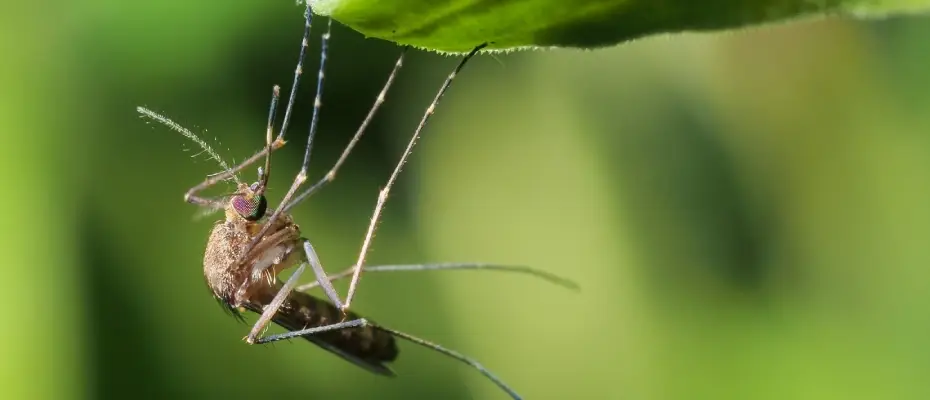
Short Answer: Hampton Roads mosquitoes typically become active in April and peak from June through September, with our humid coastal climate and proximity to the Great Dismal Swamp creating some of the most intense mosquito pressure on the East Coast. The most effective approach combines two things: eliminating standing water around your property and starting a barrier treatment program before populations explode. Waiting until you are already getting bitten means playing catch-up all summer. Here is what you can do this month to protect your yard.
If you have ever tried to enjoy a Hampton Roads evening on the patio in late June only to retreat indoors within ten minutes, you know exactly why we are writing this in April.
We hear the same story every year. Customers call us in early July, miserable, swearing they are going to fix this. By then, mosquito populations have already established, breeding cycles are in full swing, and we are working twice as hard to get the yard back to comfortable. The customers who call us in April have a completely different summer.
So this one is for you, before the bites start.
What Is Actually Happening With Hampton Roads Mosquitoes Right Now
Here is the picture. Mosquito eggs from last year have been sitting in standing water and damp organic matter all winter. As soon as our overnight temperatures stay consistently above 50 degrees (typically late March to mid-April in Hampton Roads), those eggs start hatching. The first generation of adults emerges within a couple of weeks. Each female lays 100 to 300 eggs per cycle, and a single female can complete that cycle every 7 to 10 days. By mid-June, you are looking at a population that has multiplied through three or four generations.
The species we deal with most across Hampton Roads include the Asian tiger mosquito (aggressive daytime biter, loves shaded yards with dense plantings), the southern house mosquito (active at dusk and after dark, the main carrier of West Nile virus in Virginia), and various floodwater species that explode after heavy rain. Each species has slightly different habits and breeding preferences, which is why effective mosquito control treats the whole yard, not just one spot.
What this means practically: the yard that looked fine on May 1 can become unusable by June 15 if you did not get ahead of the population.
Why Hampton Roads Is One of the Toughest Mosquito Markets on the East Coast
A few things make our region significantly harder than most for mosquito control.
Our proximity to the Great Dismal Swamp, the Northwest River, the Southern Branch of the Elizabeth River, and dozens of other waterways and wetlands creates an enormous natural breeding ground that constantly replenishes mosquito populations across the region. Properties in Chesapeake, Suffolk, Carrollton, and Smithfield are especially close to these water sources.
Our humidity is relentless. Mosquitoes thrive in humid environments because they dehydrate quickly and seek out damp resting sites. Hampton Roads summers regularly run 70%+ humidity, which extends mosquito flight ranges and lifespans compared to drier climates.
Our rainfall pattern creates new problems constantly. We get heavy storms throughout late spring and summer, and each storm creates new breeding sites in standing water that was not there a week earlier. Hurricane season (June through November) adds the potential for flooding that can cause explosive mosquito population growth in the weeks after a storm.
Our tree canopy and landscaping work against us. Mature neighborhoods across Hampton Roads have beautiful shade trees and dense plantings, which create ideal mosquito resting habitat. The yards with the most attractive landscaping are often the worst for mosquitoes without treatment.
Our season is long. Mosquito activity here typically runs from April through October, and in mild winters, some species remain active even longer. That is six to seven full months of pressure, longer than in most of the country.
The Two Things That Actually Reduce Mosquitoes
There is a lot of bad information out there about mosquito control. Let us cut through it.
What works: eliminating standing water. Mosquitoes need still water to breed. Even a bottle cap full of water can produce dozens of mosquitoes. Walk your property this weekend and look for: clogged gutters (the single biggest source we find on residential properties), saucers under potted plants, kids’ toys, pet water bowls left outside, low spots in the lawn that hold water after rain, tarps with sagging puddles, wheelbarrows, recycling bins, corrugated drainpipe extensions, the rim of trash can lids, and bird baths that do not get refreshed weekly. If you do nothing else this April, do this. It is free, and it eliminates the source instead of treating the symptom.
What works: barrier treatments applied to mosquito resting sites. Adult mosquitoes spend most of their time resting on the underside of leaves, in dense shrubs, in tall grass, and on shaded fence lines. A properly applied barrier treatment targets these resting sites with a product that kills mosquitoes on contact and continues to repel them for about three weeks. Reapplied every 21 days through the season, this approach can reduce mosquito populations in a treated yard by 85 to 90%.
What does not work (or barely helps): bug zappers, citronella candles, ultrasonic devices, and most “natural” yard sprays. Studies have consistently shown bug zappers kill very few mosquitoes (and lots of beneficial insects, including pollinators). Citronella creates a small zone of partial repellency around the candle itself, useful for a 3-foot radius, not a yard. Ultrasonic devices have been studied repeatedly and do not work. Most essential-oil-based yard sprays provide a few hours of mild repellency at best. We mention this because we would rather help you skip the wasted money and get to what actually works.
What April Looks Like for Mosquito Prevention
Here is the order of operations we recommend for any Hampton Roads homeowner who wants a usable yard this summer.
This week: walk the property and eliminate standing water. Clean gutters if you have not yet. Drill drainage holes in any toy or container that holds water. Refresh bird baths weekly going forward. Empty plant saucers after rain. Pay extra attention to areas near any waterways, wetlands, or wooded borders on your property.
Next two weeks: trim back dense plantings near patios and seating areas. Mosquitoes rest in shaded, humid spots, so reducing those resting sites near where you spend time outdoors makes a measurable difference. Mow regularly so grass does not get tall enough to hold humidity at the soil surface.
Late April to early May: start your first barrier treatment of the season. Treating before mosquito populations establish is dramatically more effective than treating after. The first application also kills any larvae that have hatched in damp organic matter you may have missed.
Through the season: maintain barrier treatments every 21 days from May through October. Continue checking for standing water weekly, especially after heavy rain. Pay attention to the corners of your yard, which are easy to miss but often the worst spots.
A Word About Mosquitoes and Health in Hampton Roads
We do not want to be alarmist, but it is worth being honest. Virginia reports West Nile virus cases most years, and Hampton Roads is a hotspot due to our climate and water features. Mosquitoes can also carry Eastern equine encephalitis (EEE), which is rare but has been detected in Virginia. Children, older adults, and people with weakened immune systems are at higher risk for complications from mosquito-borne illness.
For most healthy adults, mosquito bites are a nuisance more than a health threat. But if your household includes young kids or family members who should not be exposed, that is a real reason to take prevention seriously rather than treating it as purely cosmetic.
How Our Mosquito Control Program Works
For customers who want professional treatment, here is what we do.
Our mosquito service is a season-long barrier treatment program. We treat every 21 days from April through October, which matches the mosquito reproductive cycle and keeps coverage continuous. Each visit, we treat the underside of leaves in shrubs and trees up to about 10 feet, dense ground cover, fence lines, the perimeter of the home, and any other shaded resting areas around your seating spaces.
We use products that are EPA-registered for residential mosquito control, applied by licensed technicians, and dry within about 30 minutes (after which the area is safe for kids and pets). We also identify any breeding sites we notice during the visit and let you know so you can address them. This is part of why a season-long program is more effective than spot treatments. We are catching the things you might miss.
Each application typically runs $75 to $125 depending on property size. The yards that are treated all season look and feel completely different from neighboring yards that are not. A single treatment in July provides about three weeks of relief but does not address the population that has already established by then. Customers who get the most value start in April or early May and continue through October.
What to Do Next
If you would like to add mosquito control this season, here is what happens when you call (757) 238-8901 or visit stg-5eq9zo.elementor.cloud/request-a-quote. We will walk your property and identify treatment areas. We will send a written quote with clear per-visit pricing and the full season schedule. If you say yes, we can typically start within a week. You will get a courtesy notification before each visit, and you do not need to be home for treatments.
We also bundle mosquito control with the rest of our services (lawn fertilization, pest control around the foundation, irrigation, mowing) for customers who want one company handling the whole property. With 17+ years in Hampton Roads and a team that understands the unique mosquito pressures of coastal Virginia, Meadow Lawn and Pest is built to help you take your yard back.
We proudly serve Carrollton, Smithfield, Windsor, Suffolk, Chesapeake, Hampton, Newport News, Poquoson, York County, and the greater Hampton Roads area.
Whether you go DIY or hire it out, the timing principle is the same. Get ahead of mosquito season in April, and your summer evenings outside will look completely different. Wait until July, and you will spend the rest of the season catching up.
Hampton Roads summers are too good to spend indoors.