Cool Season Lawn Fertilization Weed Control in Battery Park
Cool Season Lawn Care for Battery Park Homeowners
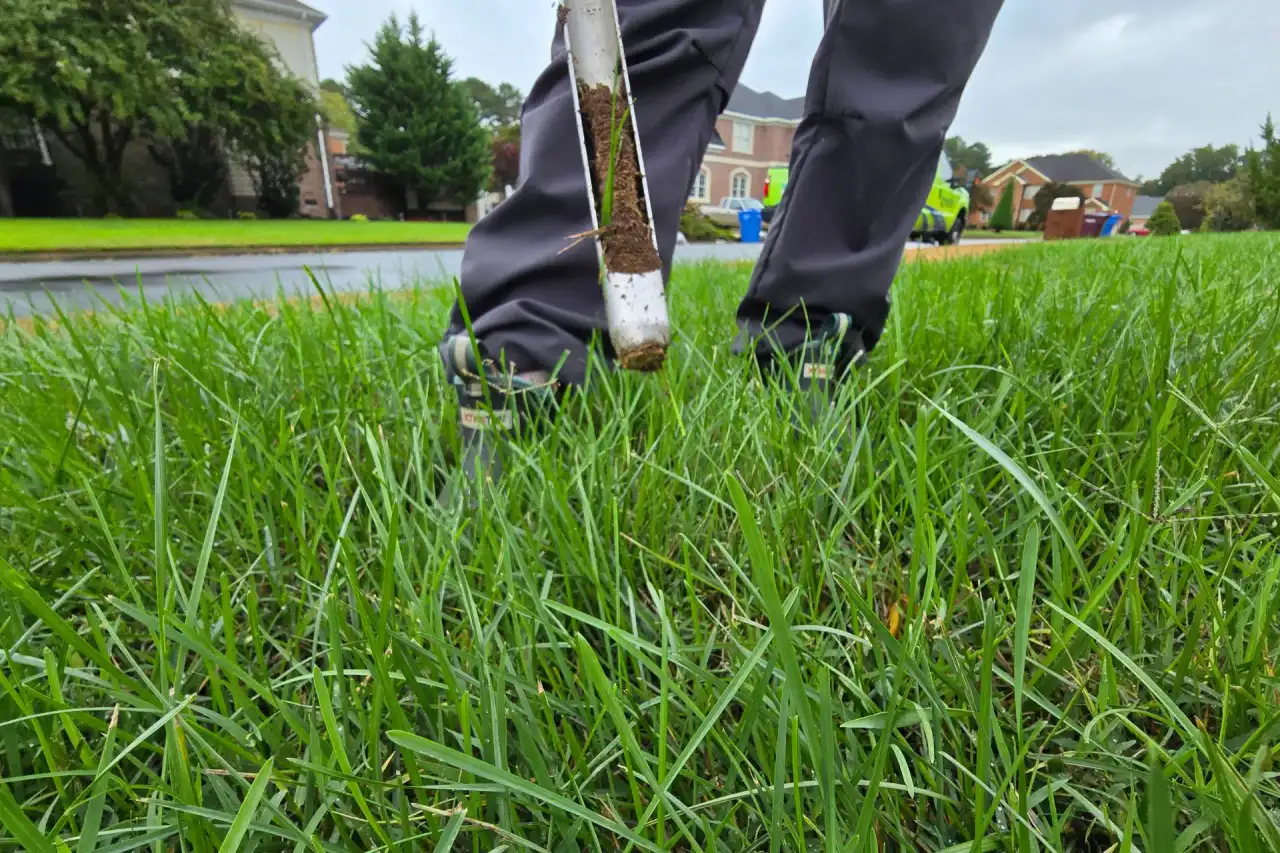
Battery Park is a quiet waterfront community in Isle of Wight County, nestled along the James River where the water influences humidity, drying times, and the kinds of weeds that appear most. Timing matters more here than in drier inland areas, and cool season grasses like tall fescue respond beautifully when supported by a 7-round fertilization and weed control program built around actual local conditions — not a generic calendar. Every Battery Park plan starts with a free soil test and on-site inspection so we understand your pH, NPK balance, and weed pressure before any product is applied. From there we adjust each round across the year as the lawn responds, keeping both feeding and weed control on track.
Cool Season Grasses That Thrive in Battery Park
Tall fescue is the most reliable cool season grass on Battery Park properties because its deep root system helps it handle the area’s warm, humid summers. Fine fescue works well in spots shaded by the older trees common along the riverfront. Both varieties enter their most active growth phase when soil temperatures sit between 50 and 65°F, which corresponds with fall and early spring here. During summer heat they naturally slow — that is normal behavior for cool season grasses, not a sign of damage. Identifying exactly which grass variety is growing in your yard lets us match every fertilizer timing, pre-emergent application, and selective herbicide choice to what will actually benefit your specific turf.
Best Times to Fertilize Cool Season Lawns in Battery Park
For Battery Park lawns, the most productive fertilization windows are fall (September through November) and early spring (late February through April). Fall is the most important because cool season roots grow deepest then and absorb slow-release nitrogen that carries the lawn through winter. Our 7-round program lines up with that biology: Round 1 in late January / February kicks off spring growth, Rounds 2 and 3 run through the spring push, Rounds 4 and 5 use a 5-0-30 slow-release blend to support roots through summer heat without forcing top growth, and Rounds 6 and 7 in fall and early winter build the reserves for the year ahead. Battery Park’s riverside location means we also factor rain forecasts carefully to avoid wash-off.
Pre-Emergent Weed Control in Battery Park
Battery Park’s riverside terrain includes low spots and naturally moist soil that can be especially inviting for weed seed germination. Pre-emergent herbicide applications — we use Prodiamine — put a barrier in the soil that prevents weed seeds from sprouting before they can establish. Spring Prodiamine goes down in early to mid-March as soil temperatures approach 55°F to block crabgrass, goosegrass, and summer annual weeds. Because Prodiamine provides 6–8 weeks of control per application, our 7-round program applies it in both Round 1 and Round 2 for continuous coverage through the critical spring window. A fall application in August or September stops winter annuals like annual bluegrass and chickweed before they take hold.
Post-Emergent Treatment for Existing Weeds in Battery Park
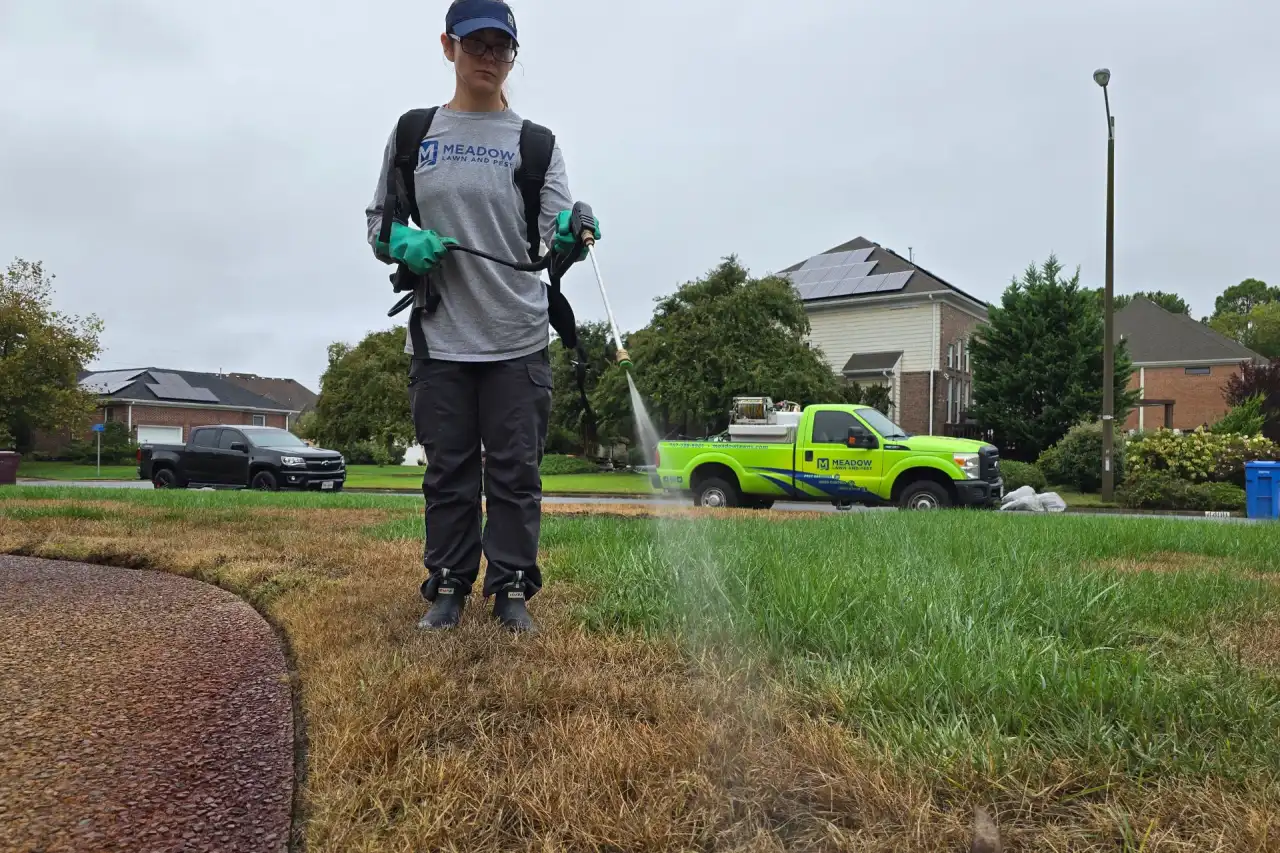
Where weeds are already actively growing in a Battery Park lawn, post-emergent herbicides target and remove them without damaging surrounding turf. We use selective products matched to the specific weed species present — broadleaf herbicides for dandelion, clover, and plantain. Nutsedge is a particular concern in Battery Park’s moisture-prone areas, but it requires specialty chemistry that is quoted separately from the standard 7-round program, as does dallisgrass. Crabgrass caught early in the growing season can be treated before it matures and drops seed. Most broadleaf weeds show visible decline within 7–14 days of a correctly applied treatment at temperatures between 55 and 85°F. Our re-treatment policy waits 21 days before a complimentary spot re-service.
Get A Quote
Ready to get started? Fill out the form or contact us at the phone number below to get started.
Common Weeds in Battery Park Lawns
Battery Park lawns face weed pressures driven by the area’s humid riverside climate and the variety of soil moisture levels across local properties. Nutsedge is a standout challenge in wetter or low-lying areas, growing rapidly and resisting standard broadleaf herbicides — it requires specialty chemistry quoted separately from the 7-round program. Crabgrass fills thin areas during summer heat. Dandelion and clover appear year-round. Wild violet colonizes shaded spots under trees and is difficult to control with a single application. Annual bluegrass emerges in fall and can dominate cool, bare areas through winter. Ground ivy spreads in shadier or poorly drained corners. A program combining Prodiamine pre-emergent and targeted post-emergent applications is the most effective approach to keeping Battery Park lawns clean over time.
Fall Lawn Treatments for Battery Park Properties
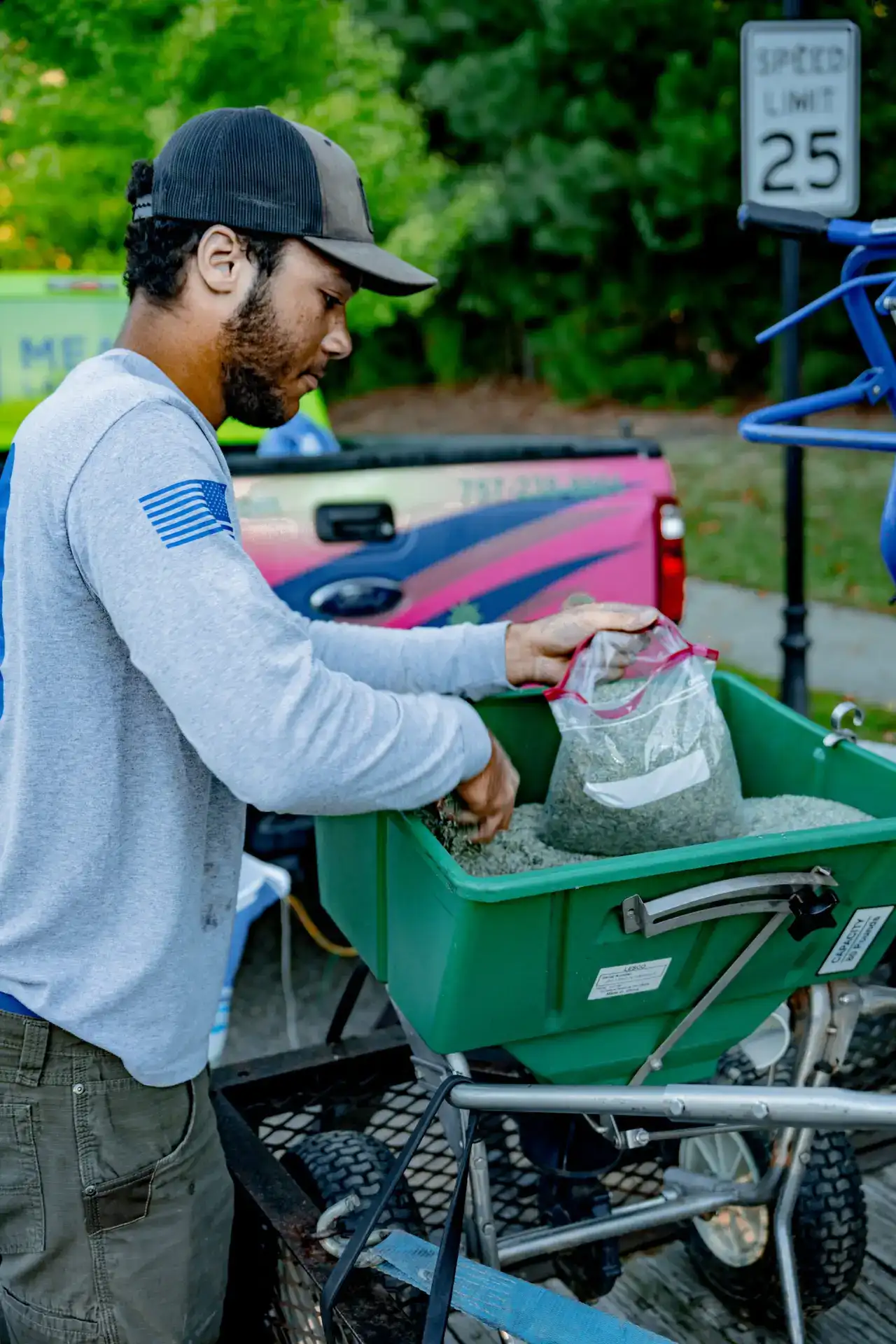
Fall is when cool season lawn programs deliver their most lasting results in Battery Park. From September through November, cool season grasses are actively growing, building root depth, and storing energy for winter. Round 6 of our 7-round program (October–November) is a 32-0-15 slow-release fertilizer that promotes root development and winter hardiness — timed after aeration and overseeding, and intentionally without herbicide so newly seeded areas are protected (herbicide can be included on request if not overseeding). Round 7 in November / December adds nitrogen plus a post-emergent for winter annuals. Properties with thin or bare areas benefit from early-fall overseeding while soil is still warm enough for strong germination. Skipping fall care leaves the lawn starting spring from behind.
Spring Lawn Care for Battery Park
Spring lawn care in Battery Park focuses on breaking dormancy with timely fertilizer, preventing crabgrass before it germinates, and cleaning up any winter weeds before they go to seed. Round 1 (late January / February) combines nitrogen with Prodiamine pre-emergent and post-emergent herbicides. Round 2 (March / April) adds a second nitrogen application and a second Prodiamine application for continuous coverage through the crabgrass germination window. Round 3 (late April / May) layers in slow-release nitrogen with iron and potassium plus spot treatment for breakthrough weeds. Spring is also when we evaluate winter damage and recommend any repairs before the growing season hits full stride. Getting the lawn growing densely in spring is the best defense against the summer weed pressure that follows.
Soil and Drainage Considerations in Battery Park
Battery Park’s position near the James River means many properties have soils influenced by river proximity — sometimes sandier and well-draining, and in other spots wetter and prone to holding moisture. Wet soils encourage nutsedge, moss, and certain annual weeds that thrive in low-oxygen surface conditions. Heavier soils compact under foot traffic and reduce root growth depth and fertilizer effectiveness. Soil pH is another important variable — acidic soils reduce nutrient availability even with regular fertilization. Every Battery Park lawn enrolled in the 7-round program starts with a free soil test that checks pH, N-P-K, organic matter, and micronutrients, with written results reviewed before treatments begin. Core aeration and targeted amendments follow the test findings.
Safe Treatments for Battery Park Families and Properties
We apply the same product safety standards to every Battery Park property we care for. All herbicides and fertilizers are EPA-registered and applied at label-specified rates and methods — federal law (“the Label is the Law”) prohibits deviation. After liquid treatments, people and pets should stay off the treated area until it dries, which takes about 1–2 hours in typical weather. Granular applications are safe once watered into the turf. Near the waterfront and any drainage channels or low areas that flow toward the river, we are especially mindful of application buffers to protect the local environment. Weather restrictions are strictly enforced: no applications with winds over 15 mph, within 2 hours of forecast rain, above 90°F, or on saturated lawns. Documentation is available on request for every service.