Christmas Light Installation
After the Holidays: Christmas Light Takedown, Storage, and Protecting Your Home and Lawn
Meadow Lawn & Pest • November 2026 • Hampton Roads, VA • 7 min read
Short Answer: Christmas light takedown matters almost as much as installation. In Hampton Roads, most displays come down in early to mid January. Careful takedown removes clips without damaging shingles, gutters, or trim, unwraps trees without breaking branches, and lifts lights and stakes from beds and lawns without tearing up turf. Lights should be inspected, wound loosely, kept dry, and labeled by section so they work next season. Professional takedown handles the ladder work in cold, damp January weather and leaves the property looking like it did before the holidays.
When the holidays end, the lights that looked so beautiful in December suddenly feel like one more chore. Taking them down in January, often on a cold, gray, windy day, is the part of the season many families dread.
But how lights come down matters. Careless takedown can damage roofs, gutters, trees, and lawns, and lights that are thrown into a box tangled and wet often do not work next year. Here is what homeowners across Hampton Roads should know.
When to Take Lights Down
Most families take their lights down in early to mid January, after New Year's. Some HOAs have guidelines about how long decorations can stay up. Leaving lights up too long exposes them to more wind, rain, and wear, shortens their life, and may draw attention from neighbors or the HOA.
Takedown Is Often Harder Than Installation
Installation happens in November, often on mild days. Takedown happens in January, when weather is colder, wetter, and windier. Roofs and ladders can be slick. Cords may be stiff from the cold. That makes takedown riskier for homeowners doing it themselves.
Protecting the Roof and Gutters
Clips designed for holiday lights should come off without damaging shingles, fascia, or gutters, but only if they are removed carefully. Pulling strands off the roofline can tear shingle edges, bend gutters, or leave broken clips behind. Removing clips one by one is slower but protects the house and the clips themselves.
Protecting Trim and Arches
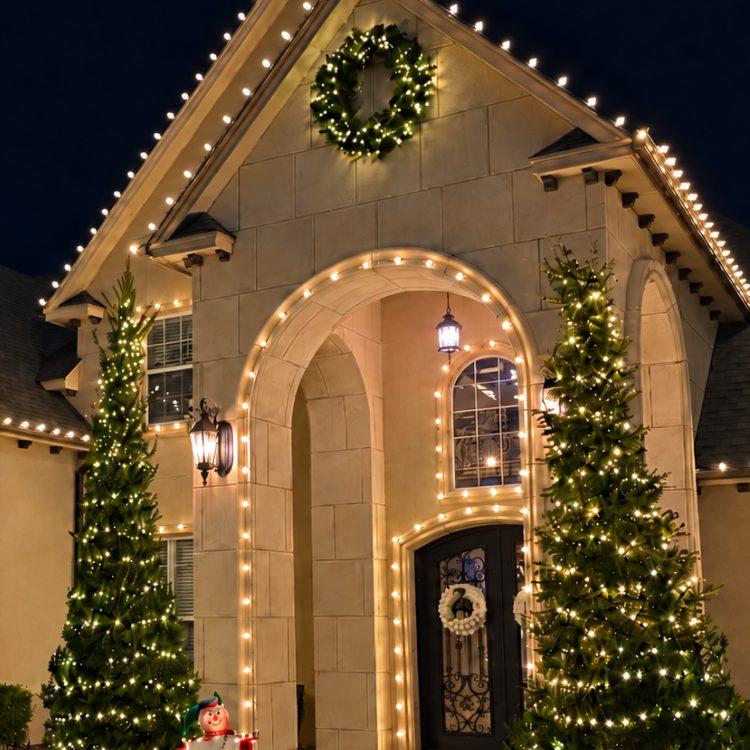
Lights along trim, arches, and doorways, like the arched entry pictured here, should be removed carefully so clips and fasteners do not chip paint or damage stone or stucco.
Unwrapping Trees
Trees should be unwrapped gently, without pulling lights through the branches. Pulling can break branches on evergreens and scrape bark on deciduous trees. Working from the top down, or following the original wrap, is easier on the tree.
Lifting Lights From Beds and Lawns
Lights in beds and along walkways often have stakes or pins. Pulling them out carefully avoids tearing up mulch and plants. In January, Hampton Roads lawns are often soft and wet, and heavy foot traffic and dragged equipment can damage turf. As a lawn and pest company, we pay close attention to leaving the yard in good shape.
Wreaths and Garland
Wreaths and garland should be removed and stored flat or hung so they keep their shape, and bows should be fluffed and stored loosely so they do not crush. Lit wreaths and garland should be checked for damaged wires before storage.
Inspect Before Storing
Takedown is the best time to check lights. Look for broken bulbs, cracked sockets, frayed wires, and dead sections. Replacing or discarding damaged strands now saves frustration next November.
Dry Before Storing
Lights taken down after rain or heavy dew should dry before storage. Storing wet lights can lead to corrosion and mildew, especially in humid coastal climates.
Wind Loosely and Label
Winding lights loosely around a reel, piece of cardboard, or hanger prevents tangles and kinks. Labeling each strand by location, such as front gable, left eave, or garage, makes next year's installation faster.
Store in a Dry Place
Where lights are stored matters. Store them in sealed bins in a dry place, away from extreme heat, moisture, and pests. Garages and attics in Hampton Roads can get humid in every season, so sealed containers help.
Timers and Extension Cords
Remove timers and extension cords, check them for damage, and store them with the lights so everything is ready next season. Labeling cords by length saves time next year.
Safety During Takedown
If you take lights down yourself, choose a calm, dry day, use a sturdy ladder on firm ground, and have someone hold it. Avoid working on wet or frosty roofs. Cold hands and stiff cords make takedown slower, so give yourself time.
Don't Leave Clips Behind
Broken or forgotten clips left on gutters and shingles can trap debris and look messy all year. A final walk around the roofline after takedown helps catch any left behind.
Check Outlets and GFCI
After takedown, check outdoor outlets and GFCI devices for damage or moisture, and close outlet covers. Coastal moisture can affect outdoor electrical fittings over the winter.
Leaves and Debris
Takedown often reveals leaves and debris that collected in gutters, beds, and corners during the season. Clearing them while you are already working around the house saves time later.
Photograph the Display
Before taking everything down, take a few photos of the display. They are helpful for planning next year and remembering what worked well.
Professional Takedown
Many professional installation services include takedown as part of the service. Crews remove lights carefully, protect the roof, trees, and lawn, and leave the property as it was before the holidays. Some services also store lights for customers between seasons. Ask about takedown and storage when you book.
Storage Services
If you do not have space to store lights, or prefer not to deal with them, some professional services store lights for customers between seasons and bring them back for installation the next year. Ask whether that is an option when you book.
What to Replace Each Year
Even well-stored lights wear out over time. Strands with multiple dead bulbs, brittle wires, or faded colors should be replaced. Replacing a few strands each year keeps the display consistent.
Pests and Storage
Mice and insects can damage lights and cords stored in garages and attics. Sealed bins and a clean storage area help keep pests away. As a lawn and pest company, we see how quickly rodents can chew through wiring stored loosely in boxes.
Spring Lawn and Landscape Care
After takedown, it is a good time to look at the lawn and beds. Winter is when weeds like henbit and chickweed start showing up in dormant lawns, and beds may need fresh mulch. Planning spring lawn care now gives your yard a head start.
Lawn Damage From Decorations
Inflatables, stakes, and heavy decorations left on the lawn for weeks can leave yellow patches where they blocked light. Moving them occasionally during the season and removing them promptly after the holidays helps the grass recover.
Book Takedown When You Book Installation
Takedown schedules fill up in January, just like installation schedules in November. Asking about takedown timing when you book installation keeps everything on track.
What a Smooth Takedown Looks Like
Imagine this. It is the second week of January. The lights come down without a single broken gutter or torn shingle, the trees are unwrapped without a snapped branch, the beds and lawn look untouched, and every strand is checked, dried, labeled, and stored. Next November, the display goes back up faster than ever.
What to Do Next
Plan to take lights down in early to mid January, on a calm, dry day if you are doing it yourself. Remove clips one by one, unwrap trees gently, lift stakes carefully from beds and lawns, and inspect, dry, wind, and label each strand before storing it in a sealed bin. Ask your installer about takedown and storage when you book.
If you would rather have someone else handle the ladders and the design this year, we are here for that. Meadow Lawn & Pest offers Christmas light installation in Carrollton, Smithfield, Suffolk, Chesapeake, Newport News, Hampton, Poquoson, York County, and across Hampton Roads. Call 757-238-8901 or visit meadowlawnandpest.com to request a free quote.
Here is what to expect. We will look at your home and landscape with you, talk through the look you want, and explain what the installation would include before anything goes up. You will know what you are getting and when.