
Cool Season or Warm Season? Identifying Your Hampton Roads Lawn
Meadow Lawn & Pest • September 2026 • Hampton Roads, VA • 7 min read
Short Answer: Hampton Roads sits squarely in the transition zone, which means both cool season grasses like tall fescue and warm season grasses like Bermuda and zoysia grow here, often on adjoining properties. September is the easiest month of the year to tell them apart, because they are moving in opposite directions: fescue is waking up and thickening as nights cool, while Bermuda and zoysia are slowing toward dormancy. Knowing which you have determines when to seed, when to fertilize, what weed control is safe, and what to expect from your lawn in January. Getting it wrong wastes an entire season.
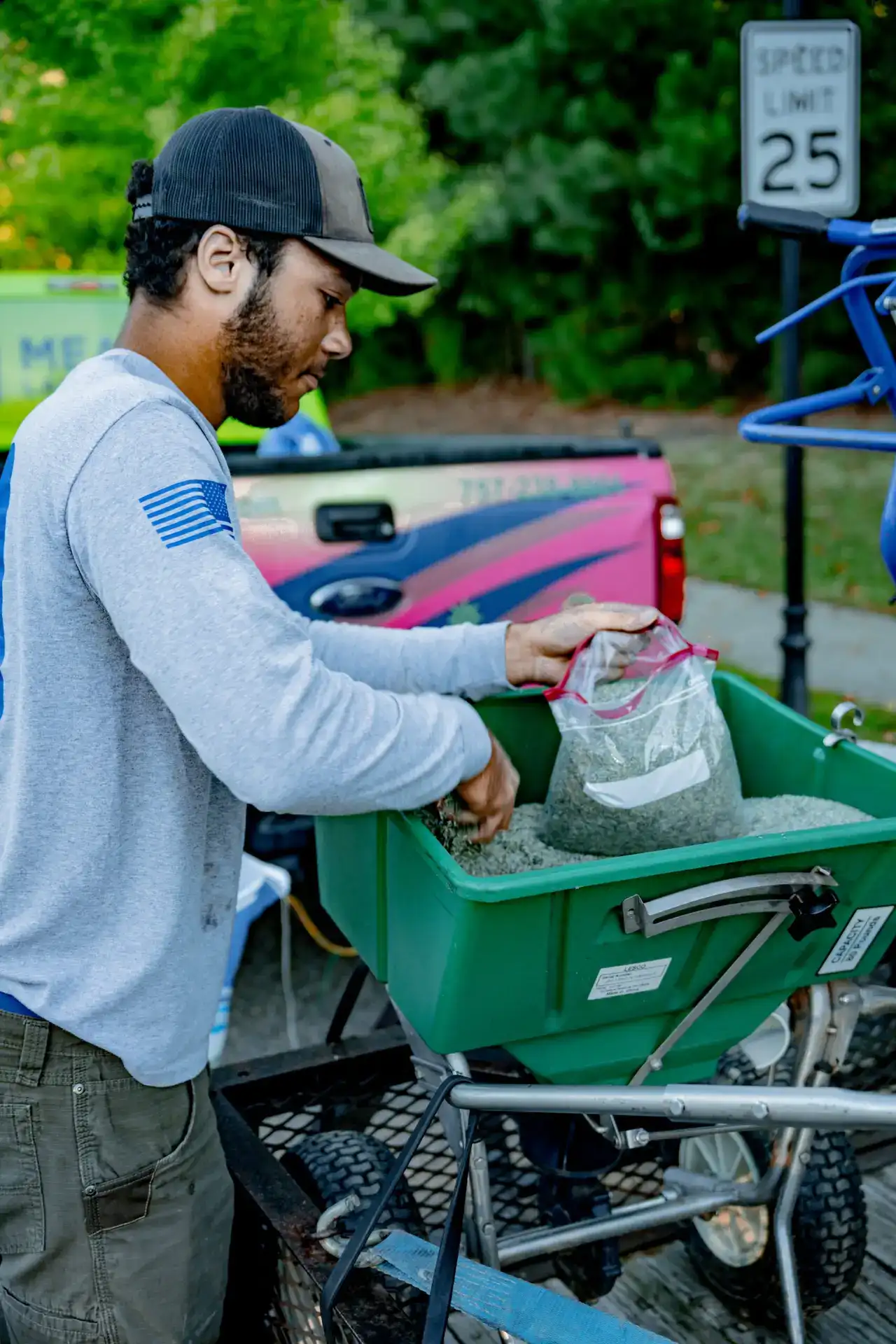
This is the first question we ask on any new property in Carrollton, Smithfield, Suffolk, or anywhere else we work, and it surprises people how often the homeowner is not sure. That is not a failing on their part. Hampton Roads genuinely is a place where two entirely different kinds of lawn coexist, sometimes on the same street, occasionally in the same yard.
September is the best month to settle it, because this is when the two types behave most differently.
Why This Region Is Complicated
Most of the country falls clearly on one side or the other. The upper Midwest and Northeast are cool season country. The Deep South and Gulf Coast are warm season country. Neither type is truly comfortable here.
Our summers are hot and humid enough to stress cool season grasses badly, which is why fescue lawns thin out every July and August. Our winters are cold enough to push warm season grasses into full dormancy, which is why Bermuda lawns go tan from roughly November into April.
So every lawn in Hampton Roads is a compromise. Fescue looks wonderful for three seasons and struggles in one. Bermuda thrives all summer and is brown for a third of the year. Neither is wrong, and understanding which compromise you own is the point.
The September Test
Right now, the two behave in opposite ways, which makes identification straightforward.
Tall fescue is entering its best stretch of the year. As nights cool it greens up, thickens, and starts growing vigorously again after a difficult summer. If your lawn is visibly improving in September without you doing anything, you have cool season grass.
Bermuda and zoysia are doing the reverse. Growth is slowing, color is fading slightly, and they are moving toward dormancy. If your lawn peaked in July and is now easing off, you have warm season grass.
The winter question settles any remaining doubt. Think back to January. If your lawn was green, or greenish, it is fescue. If it was completely tan and stayed that way until spring, it is Bermuda or zoysia. Homeowners sometimes tell us their lawn died last winter. Usually it went dormant exactly as it was supposed to.
Looking at the Plant Itself
If you want certainty, get down and look closely.
Tall fescue grows in clumps rather than spreading. Each plant is a bunch, and the blades are relatively wide, with a distinctly coarse texture and prominent parallel veins you can feel with a fingernail. Because it does not spread, a fescue lawn is really thousands of individual plants growing close together, which is precisely why bare spots stay bare until you add seed.
Bermuda spreads aggressively by above ground runners called stolons and underground stems called rhizomes. Look for those runners creeping across bare soil, along bed edges, and into your driveway cracks. Blades are narrow and fine, and the grass forms a dense mat rather than clumps.
Zoysia also spreads but far more slowly, and its most recognizable trait is density. A zoysia lawn feels stiff and carpet like underfoot, noticeably firmer than either of the others.
Mixed lawns are common here. Bermuda creeping into a fescue lawn from a neighbor's yard is one of the most frequent situations we see, and it creates a patchwork that behaves differently in different sections.
Why the Answer Changes Everything
Seeding is the clearest example. Fescue is seeded in fall, September into early October, and that is close to the only reliable window. Bermuda is established in late spring and summer when it is actively growing. Seeding fescue in May or Bermuda in October is money spent for very little return.
Fertilizer timing inverts as well. Fescue wants its most important feedings in autumn, supporting root development going into winter. Warm season grass wants feeding during summer growth and should not receive a heavy nitrogen push late in the season, since that produces tender growth heading into the first freeze.
Weed control differs too. Several products safe on one type will damage the other, and this is where do it yourself efforts most often go wrong. A product labeled for Bermuda lawns applied to fescue can thin or kill it.
Even mowing height differs. Fescue generally wants to be kept tall, around three to four inches, which shades the soil and supports deeper roots. Bermuda and zoysia are cut considerably shorter and get denser for it.
What Each Type Asks of You
Beyond the calendar, the two grasses make different demands, and it is worth knowing what you are signing up for.
Fescue needs more water through summer. It has no dormancy strategy for heat the way Bermuda does, so when a Hampton Roads July arrives, fescue either gets irrigated or it thins. It also needs that annual overseeding, which is a recurring cost. What you get in return is a lawn that looks good from October through June, tolerates shade far better, and never goes fully tan.
Bermuda needs full sun and will not accept shade at all. Under a maturing tree it simply thins out, and no fertilizer fixes that. It also spreads into places you did not invite it, which means edging beds and drives becomes a real part of maintenance. In return it is genuinely drought tolerant once established, repairs its own damage by spreading, and costs less to keep going through a hot summer.
Zoysia asks for patience. It establishes slowly and recovers slowly, so damage takes longer to grow out. What it gives back is density that crowds out most weeds on its own.
None of these is the right answer universally. The right answer depends on how much sun your yard gets, how much you are willing to water, and whether a tan lawn in January bothers you.
The Overseeding Question
One place the distinction matters urgently in September.
If you have fescue, this month is your annual opportunity, and skipping it means the lawn gets thinner each year, because fescue cannot fill its own gaps.
If you have Bermuda or zoysia, overseeding with fescue is generally a poor idea. It creates a lawn that looks passable in winter and then fights itself all summer as the warm season grass comes out of dormancy and competes with a cool season grass that is already struggling in the heat. Some people overseed Bermuda with annual ryegrass for winter color, which is a different and more temporary proposition.
On a mixed lawn, honest advice usually means choosing a direction rather than trying to maintain both, because the care calendars genuinely conflict.
What to Do Next
Go look at your lawn this week and answer two questions. Is it improving or fading right now? And was it green or tan in January? Those two answers identify it correctly on the large majority of properties.
Then check whether the grass spreads by runners or grows in distinct clumps, which confirms it.
If you have fescue, get your aeration and overseeding scheduled while the window is open. If you have Bermuda or zoysia, this is the month to ease off nitrogen and start thinking about winter weed prevention instead.
If you would rather have someone identify it properly and build the right calendar around it, that is what we do. Meadow Lawn & Pest serves Carrollton, Smithfield, Suffolk, Windsor, Chesapeake, Portsmouth, Hampton, Poquoson, York County, and the surrounding Hampton Roads communities. Call us at 757-238-8901 or visit meadowlawnandpest.com.
Here is what to expect. We will identify your turf on the first visit, tell you if you have a mixed lawn and what that means practically, and build a program around what you actually have rather than a generic schedule. If your lawn is a mix and you would be better served committing to one type, we will say so and explain what that involves.