
Nutsedge and Dallisgrass: The Weeds That Outlast Summer
Meadow Lawn & Pest • September 2026 • Hampton Roads, VA • 7 min read
Short Answer: If two things in your lawn are still growing vigorously while everything else slows down, they are probably nutsedge and dallisgrass. Neither responds to ordinary broadleaf weed control, because neither is a broadleaf. Nutsedge is a sedge with a triangular stem and it regrows from underground tubers, which is why pulling it multiplies it. Dallisgrass is a perennial grass that forms expanding clumps with distinctive tall seed stalks. Both need specific selective products chosen for your turf type, both usually need repeat applications, and both are strongly encouraged by wet, poorly drained soil.
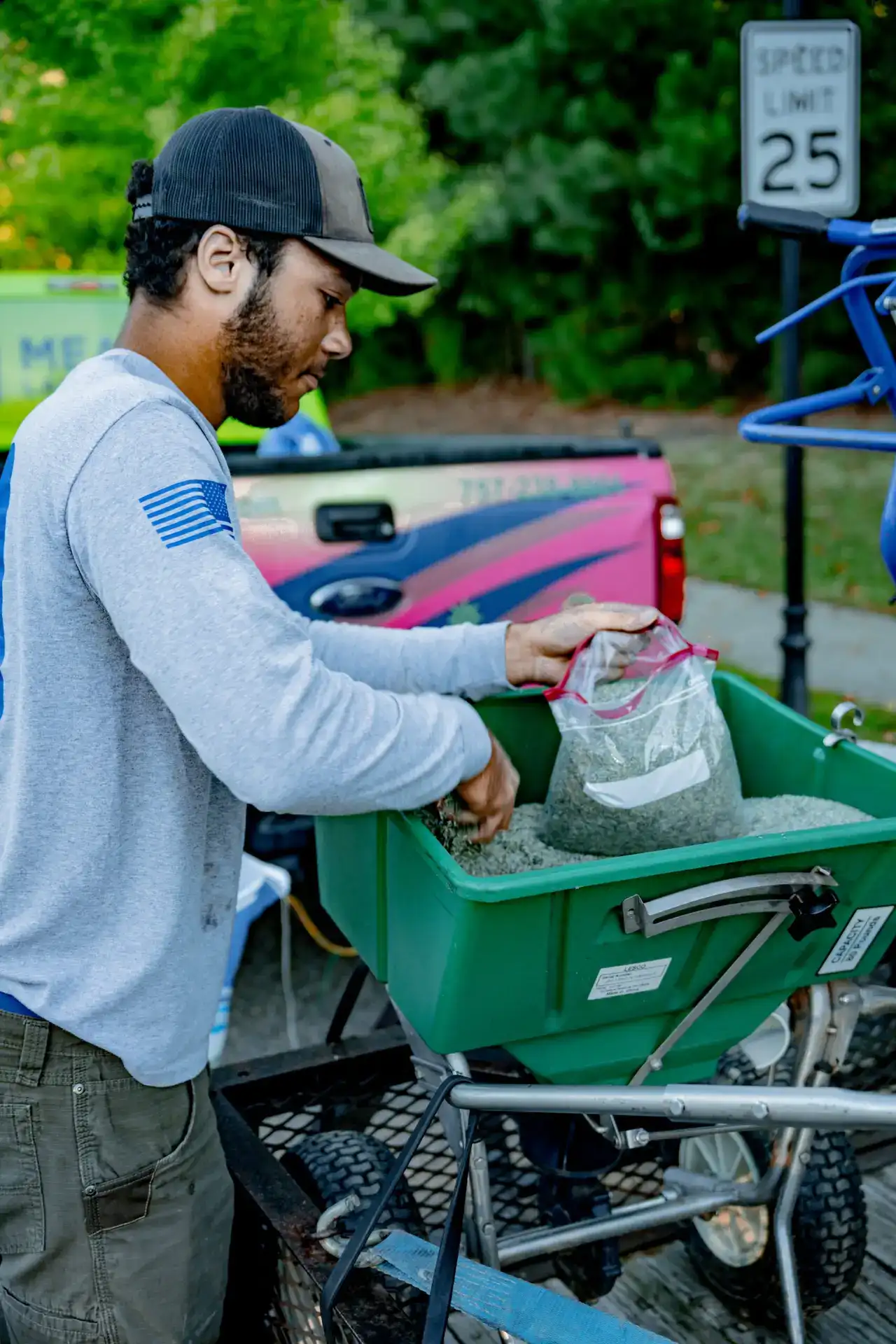
By late September most weeds in a Hampton Roads lawn have slowed down. The ones still growing enthusiastically, standing taller than the grass a day after you mowed, are usually one of these two.
They frustrate homeowners more than almost anything else we deal with, and the reason is simple: the weed control most people buy does nothing to either of them.
Why Ordinary Weed Killer Does Not Work
Most consumer lawn weed control is formulated for broadleaf weeds. Dandelion, clover, chickweed, plantain, henbit. Those products work by exploiting differences between broadleaf plants and grasses.
Dallisgrass is a grass. It is biologically similar to the lawn around it, so a product that spares your fescue also spares the dallisgrass. That similarity is exactly what makes grassy weeds difficult.
Nutsedge is neither a broadleaf nor a true grass. It is a sedge, a separate plant family, and it shrugs off both broadleaf products and most grass targeted ones. It requires products developed specifically for sedges.
So a homeowner who has applied weed and feed three times and seen no change has not done anything wrong. They have applied the wrong category of product, repeatedly.
Identifying Nutsedge
Nutsedge is easy to recognize once you know the test, and the test is genuinely diagnostic.
Roll a stem between your finger and thumb. Sedge stems are triangular, and you can feel the three edges clearly. Grass stems are round or flattened. There is an old saying that sedges have edges, and it is the most useful piece of weed identification we can give you.
Beyond that, it is a brighter yellow green than surrounding turf, the leaves are noticeably glossy, and it grows faster than your lawn, so it stands proud within a day or two of mowing. Leaves emerge in sets of three from the base.
Yellow nutsedge is the common one in this area. It favors wet ground, so a patch of nutsedge is frequently telling you about a drainage problem before it is telling you about a weed problem.
Why Pulling Nutsedge Makes It Worse
This is the single most important thing to know about it.
Nutsedge reproduces from underground tubers, often called nutlets, attached to the root system. A single established plant can produce a great many of them, and each is capable of becoming a new plant.
When you pull the visible plant, the stem breaks and the tubers stay in the soil. Removing the parent plant releases the tubers from the hormonal suppression that was keeping them dormant, and several of them sprout. Pull one plant, get five.
This is why homeowners report that hand weeding made their nutsedge problem dramatically worse over a summer. It did.
Effective control requires a product that moves through the plant into those tubers rather than simply burning off the top growth. Even then, because tubers persist, expect it to take more than one application and often more than one season.
Identifying Dallisgrass
Dallisgrass is a perennial grass that grows in distinct clumps, expanding outward from the center in a way that eventually produces a coarse ring with thinner grass in the middle.
The blades are wider and coarser than fescue, and the clumps sit slightly proud of the lawn. Its most recognizable feature is the seed head: a tall stalk with several finger like branches spreading from it, often bearing dark spots. Those stalks shoot up quickly after mowing, which is why a lawn can look tidy on Saturday and ragged by Tuesday.
It is often confused with crabgrass, and the distinction matters because the treatments differ. Crabgrass is an annual that dies with frost and is prevented with spring pre-emergent. Dallisgrass is a perennial that survives winter in the same spot and comes back from established roots, so pre-emergent alone will never solve it.
What Actually Works
Both require selective post emergent products matched to your specific turf, and that is the critical qualifier. What is safe on Bermuda may damage fescue, and vice versa. This is a common cause of homeowners killing patches of their own lawn while trying to treat a weed.
For nutsedge, treatment works best while plants are actively growing and before tubers have fully matured for the season. Late season applications on mature plants are less effective, which is an argument for addressing it earlier next year rather than waiting.
For dallisgrass, control usually requires repeat applications spaced out over time, because established clumps have substantial root systems. Large clumps in a small area are sometimes better removed physically and the area reseeded, particularly if there are only a few.
Neither is a one visit fix, and any company suggesting otherwise is setting you up for disappointment.
Timing and the Overseeding Complication
September raises a scheduling problem on fescue lawns that is worth thinking through before anything gets applied.
Selective herbicides used on these weeds generally require a waiting period before or after seeding, because they can affect germinating grass or injure very young seedlings. The intervals vary by product, and they are not trivial, often measured in weeks rather than days.
So on a lawn that needs both weed control and overseeding this autumn, the order matters. Treating first and then waiting the required interval before seeding pushes the seeding date later, and our fescue seeding window is not long. Seeding first and then waiting until the new grass has been mowed a few times before treating pushes the weed control into late autumn, when it is less effective on mature plants.
Which way round to go depends on how bad each problem is. A lawn overrun with dallisgrass may be better treated and seeded next year. A lawn that is mostly thin with a few clumps is usually better seeded now and spot treated in spring.
What does not work is doing both in the same week and hoping, which is how people end up paying for seed that never comes up.
Fix the Conditions or They Return
Both of these are opportunists, and they establish where turf is weak.
Nutsedge in particular is strongly associated with wet soil. A patch that keeps returning in the same place year after year is usually sitting in a low spot, under a downspout, next to a leaking irrigation head, or over compacted ground that will not drain. Treating the plant without fixing the water means treating it again next year.
Dallisgrass establishes in thin areas and along edges, particularly where the lawn is scalped by mowing over an uneven surface. Levelling low spots and keeping mowing height appropriate reduces the openings it exploits.
For both, the long term answer is dense turf. Aeration, appropriate fertility, correct mowing height, and sensible watering close the gaps these weeds need.
What to Do Next
Go out and roll a stem between your fingers. If it has edges, you have nutsedge, and the most useful thing you can do immediately is stop pulling it.
If you find coarse expanding clumps with tall branched seed stalks, that is dallisgrass, and note where they are so they can be treated as a targeted problem rather than a whole lawn one.
Then look at what is wet. A patch of either in the same spot every year is usually a drainage message.
If you would rather have someone identify it and treat it with the right product for your turf, that is what we do. Meadow Lawn & Pest serves Carrollton, Smithfield, Suffolk, Windsor, Chesapeake, Portsmouth, Hampton, Poquoson, York County, and the surrounding Hampton Roads area. Call 757-238-8901 or visit meadowlawnandpest.com.
Here is what to expect. We will confirm which of the two you have, check your turf type before choosing anything, and tell you honestly that both usually take more than one application. If the underlying issue is drainage, we will say so, because otherwise you would be buying the same treatment every autumn.