
What to Expect From Your First Fall Lawn and Pest Visit
Meadow Lawn & Pest • September 2026 • Hampton Roads, VA • 7 min read
Short Answer: A proper first visit is mostly assessment. We identify your turf type, check soil compaction and thatch, look at irrigation timing and coverage, walk the perimeter of the house for entry points, and note the conditions on the property that are actually driving whatever problem brought us out. Treatment follows from that rather than preceding it. You should expect a walkthrough and a plain explanation of what we found, not just an invoice. Results take time: perimeter pest work usually shows within a couple of weeks, while lawn improvement is measured across seasons rather than visits.
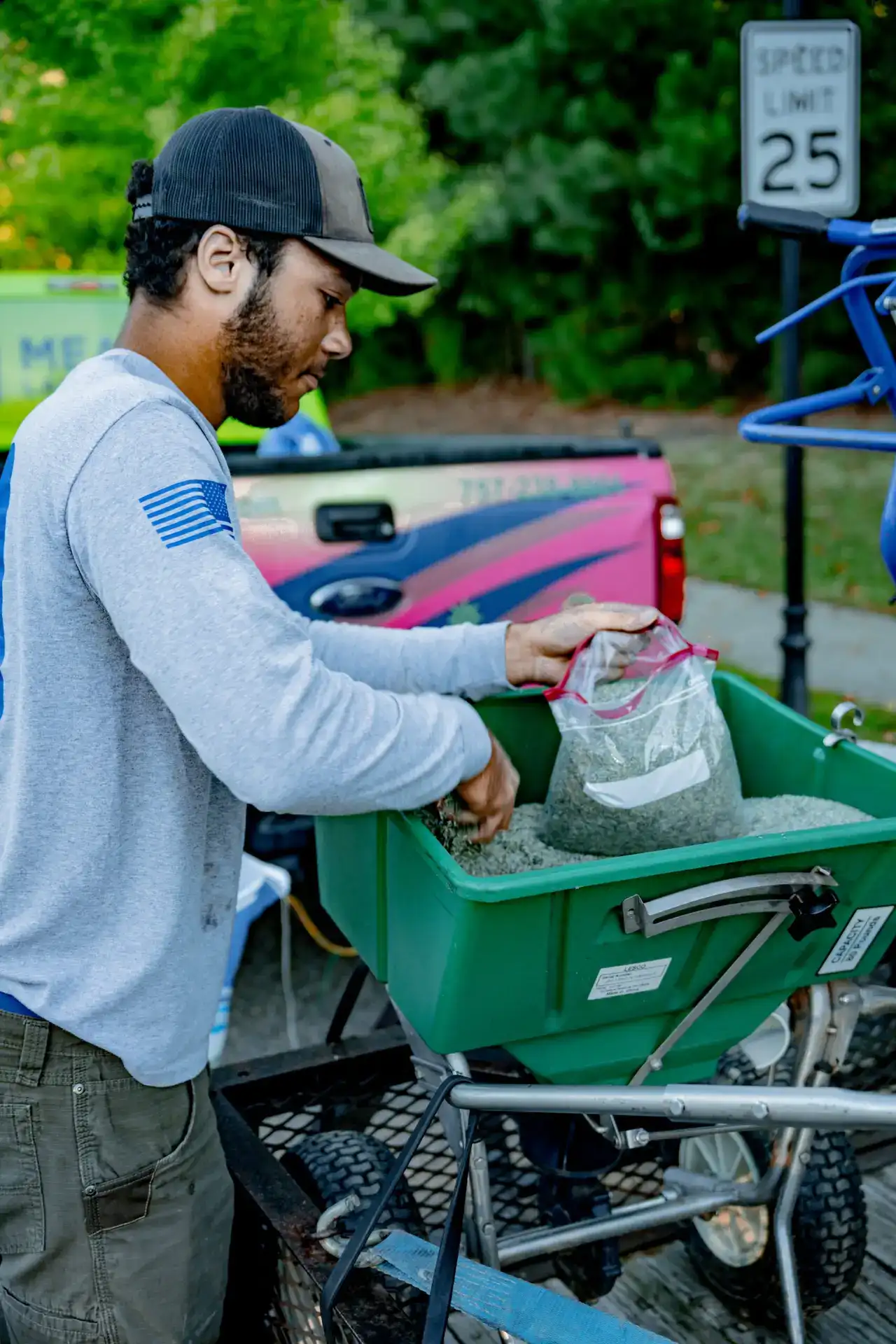
Hiring a lawn and pest company is one of those purchases where most people have no idea what a good version looks like, which makes it hard to tell whether you are getting one.
So here is what a first visit should involve, what questions are worth asking, and what results are genuinely reasonable to expect.
Assessment Comes Before Treatment
The most important thing that happens on a first visit is looking, and a company that arrives and immediately starts applying something has skipped the part that determines whether the application is right.
On the lawn side we want to know your turf type first, because in this transition zone region that single fact changes the entire calendar. Then soil compaction, thatch depth, how much shade different areas get, where water collects, and what weeds are present, since the weeds growing in a lawn are a fairly reliable report on its soil and its history.
On the pest side we walk the perimeter looking at door sweeps, weep holes, utility penetrations, garage seals, soffits, and any point where the structure is open. We look for conditions that stage insects against the house: mulch piled to the siding, shrubs touching walls, firewood stacked against the structure, and irrigation keeping a damp band around the foundation.
Most of what determines a program comes out of that half hour rather than out of a product catalog.
Expect Questions
A good technician asks a lot, and the answers genuinely change the plan.
What have you already tried and when. Whether you have seeded recently or plan to, which matters enormously because pre-emergent and new seed are incompatible. Whether you have pets, and where they spend time. Whether anyone in the household has allergies or sensitivities. Where children play. Whether you keep chickens, bees, or a pond with fish, all of which change what can be used and where.
If nobody asks about recent seeding before recommending weed control in September, that is a meaningful signal about how carefully the work is being done.
What Actually Gets Done
On the lawn, a first autumn visit typically involves the treatment appropriate to your turf type and its condition. On fescue that often means feeding aimed at root development, and possibly aeration and overseeding if the lawn needs it and the timing works. On warm season turf it means something quite different, since those grasses are heading toward dormancy.
Weed control at this point is generally targeted at what is actually present rather than blanket coverage.
On the pest side, a first visit is usually more thorough than subsequent ones. That commonly includes a treated band around the structure, attention to entry points, removing accessible spider webs and wasp nests from eaves and corners, and treatment of specific harborage areas identified during the walk.
Soil testing is worth asking about if the lawn has persistent problems that have resisted normal care, since it answers questions guessing cannot.
Expect a Conversation, Not Just a Receipt
You should end the visit knowing what was found, what was applied, and what happens next.
That means the turf type identified, the main issues in priority order, what went down today, when the next visit is and what it will address, and anything you need to do, such as watering in a treatment or staying off a treated area until it dries.
Reentry guidance should be specific to what was actually applied rather than a generic line. If you have pets or small children, ask directly and expect a clear answer.
You should also be told what the company cannot fix. A lawn under dense shade will not become a thick sun lawn. A property backing onto marsh will always have higher mosquito pressure than one in the middle of a subdivision. Honest limits at the start prevent disappointment later.
Realistic Timelines
This is where expectations most often go wrong, so it is worth being specific.
Perimeter pest control generally shows a noticeable reduction within one to two weeks. It is also normal to see more visible insect activity briefly right after treatment, as insects move out of harborage.
Weed control on existing broadleaf weeds usually shows within one to three weeks depending on the weed and the weather. Some tougher weeds need a second application, and that is not a failure of the first.
Lawn improvement is the slow one. Fertility and root development are measured in seasons. A thin lawn overseeded this month looks like a thin lawn for two or three weeks, then shows a fine green haze, and looks genuinely better next spring. Most properties we work with take two full seasons to reach the point where the owner stops thinking about the lawn.
Anyone promising a transformed lawn in a month is selling something we cannot deliver.
Questions Worth Asking on Day One
The first visit is the right moment to establish how this will work, and these questions are entirely reasonable.
What turf type do I have, and does that change anything about the schedule you quoted? How many visits does my program include across the year, and roughly when do they fall? What is included in the price and what is billed separately, particularly aeration, overseeding, fungicide, and any pest service beyond the standard perimeter?
Will I get a summary after each visit saying what was applied and what was observed? What happens if a treatment does not take, and does a return visit between scheduled visits cost anything?
Are you licensed and insured, and can I see it? This is standard and nobody reputable will hesitate.
And the most useful one: what do you think is the single biggest limiting factor on this property? A technician who has genuinely assessed the place will have an answer, and it is frequently something like shade, drainage, or compaction rather than anything on the invoice.
What You Can Do to Help
A few small things make a real difference to results.
Leave gates unlocked on service days and secure pets. Move vehicles, toys, and furniture off the areas being treated. Mark irrigation heads and any invisible fence line before aeration.
Tell us promptly when something changes, whether that is a new wet spot, an insect you have started seeing indoors, or a patch that appeared last week. Small problems caught early are considerably cheaper than large ones.
And follow the watering guidance after seeding, because that is the single variable most within your control and the one that determines whether a seeding succeeds.
Resist the urge to apply things between visits without mentioning it. This comes up more than you would think, and it causes real problems. A homeowner who puts down a store bought weed and feed two weeks after a professional application can double up on product, or apply something incompatible with what is already down, or undo a seeding with a pre-emergent nobody knew about. If you want to treat something yourself, a quick message first avoids all of that, and often we will tell you it is already scheduled.
The same goes for mowing height. If the guidance is to keep fescue tall through autumn and the lawn is being cut short by a separate mowing service, those two decisions are working against each other and neither party knows.
What to Do Next
Before your first visit, write down the three things that actually bother you about the property. Not the solutions you have in mind, just the problems. That list is more useful than anything else you can prepare.
Note whether you have seeded recently or intend to this autumn, and have your gate width and any pet or sensitivity considerations ready to mention.
If you would like to get started, Meadow Lawn & Pest serves Carrollton, Smithfield, Suffolk, Windsor, Chesapeake, Portsmouth, Hampton, Poquoson, York County, and the surrounding Hampton Roads communities. Call 757-238-8901 or visit meadowlawnandpest.com.
Here is what to expect from us specifically. We will walk the property with you rather than at you, identify your turf before we treat it, tell you which problems are worth spending money on and which will resolve with a change you can make yourself, and be direct about what will take a season or two. We would rather set the expectation correctly in September than have you wondering in November whether anything is happening.