Cool Season Lawn Fertilization Weed Control in Carrollton
Lawn Fertilization and Weed Control for Carrollton Homeowners
Carrollton is one of Isle of Wight County’s most active residential communities, a mix of newer subdivisions and established neighborhoods where lawn quality is a visible priority. Tall fescue is the standard across most Carrollton yards, and with the right 7-round fertilization and weed control program behind it, the turf can be dense, deep green, and visibly free of weed pressure throughout the year. We build a program specific to your lawn — grass type, soil condition, and weed pressure — rather than applying a generic schedule. A free soil test and inspection at enrollment guides every decision from that point forward, and we adjust each round across the year based on what we see on the ground.
Cool Season Grass Performance in Carrollton
Tall fescue is the grass of choice across most Carrollton neighborhoods because it tolerates warm summers while staying richly green through fall and winter. Many newer Carrollton subdivisions were planted with turf-type fescue blends, which offer improved density and disease resistance over older varieties. Fine fescue works well in shaded areas under maples and oaks in the older parts of the community. All of these cool season varieties grow and absorb nutrients most efficiently when soil temperatures sit between 50 and 65°F — primarily September through November and late February through April. Heat slows them down, which is expected. Proper fertilization in the active windows is what makes them come back stronger each season.
Fertilizing Cool Season Lawns on the Right Schedule in Carrollton
For Carrollton cool season lawns, the productive fertilization windows are September through November in the fall and late February through April in spring. Fall is the cornerstone — fescue roots grow deepest then, and slow-release nitrogen applied during this window carries the lawn through winter and drives visible spring green-up. Our 7-round program starts with Round 1 in late January or February for an early-season boost and continues across the year with applications timed to soil temperatures, not calendar dates. Summer rounds use a 5-0-30 slow-release formulation to support roots and stress tolerance during heat without forcing top growth, and Rounds 6 and 7 in fall and early winter store nutrients for the following season.
Pre-Emergent Herbicide Applications in Carrollton
Pre-emergent weed control prevents weed seeds from germinating by putting a chemical barrier in the soil before seeds activate. In Carrollton, we use Prodiamine and apply it as soil temperatures approach 55°F — typically mid-March — to block crabgrass, foxtail, and other summer annual weeds. A single Prodiamine application provides roughly 6–8 weeks of control, which is why Round 1 and Round 2 of our 7-round program both include it. The overlapping applications keep a continuous barrier through spring. A late-summer or early-fall pre-emergent stops winter annuals like chickweed and annual bluegrass. On Carrollton’s newer subdivisions where turf is thinner, pre-emergent is especially valuable because open soil gives weed seeds an easier germination environment.
Post-Emergent Treatments for Established Weeds in Carrollton
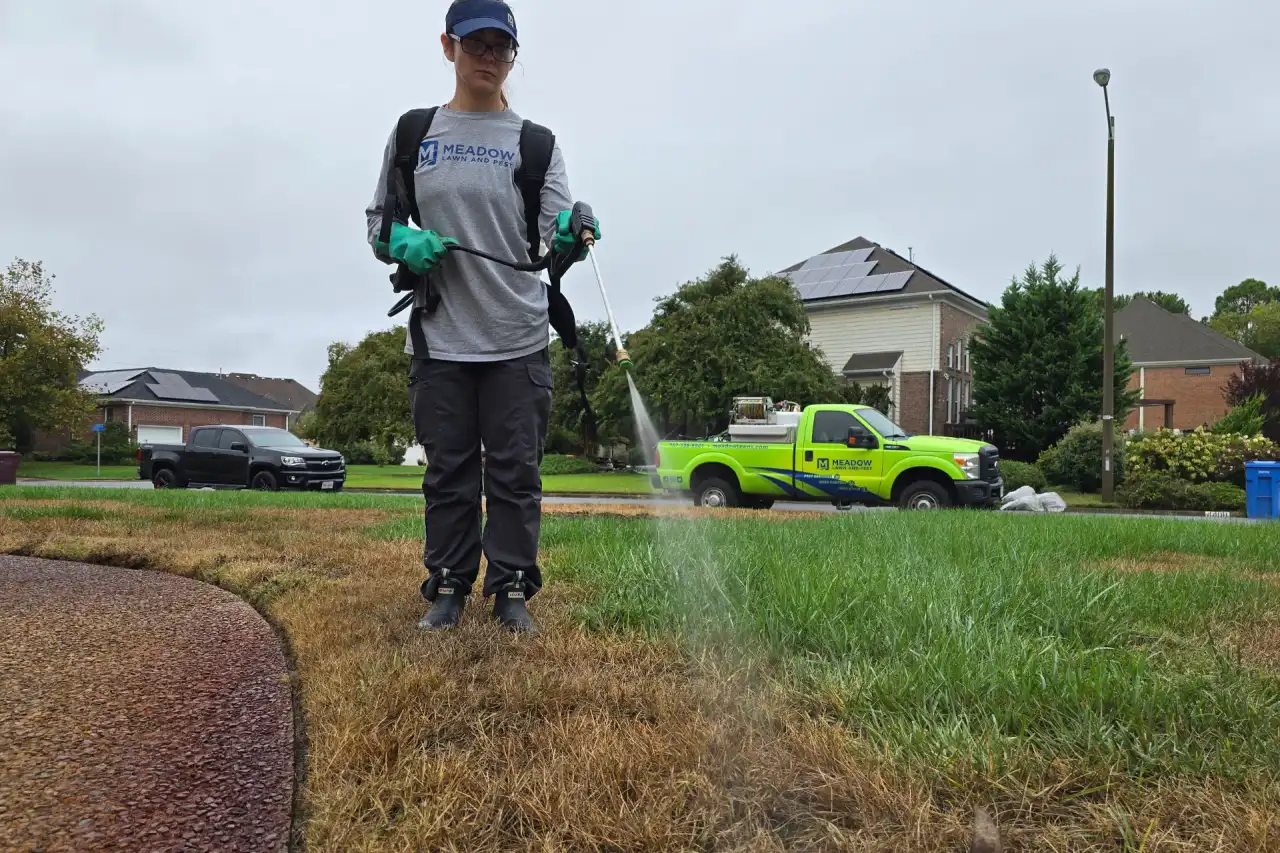
When weeds are actively growing in a Carrollton lawn, post-emergent herbicides eliminate them without damaging surrounding turf. Broadleaf weeds like dandelion, clover, wild violet, and plantain respond well to selective broadleaf herbicides applied to the leaf surface — the product moves through the plant to the root for complete kill and prevents regrowth. Persistent weeds like wild garlic may need more than one treatment across the season. Crabgrass caught early can be treated post-emergently before it matures. Most broadleaf weeds show visible decline within 7–14 days of a correctly applied treatment at temperatures between 55 and 85°F. Our re-treatment policy waits 21 days before a complimentary spot re-service. Nutsedge and dallisgrass are quoted separately.
Get A Quote
Ready to get started? Fill out the form or contact us at the phone number below to get started.
Weeds Found in Carrollton Lawns
Carrollton lawns deal with many of the same weeds found throughout Isle of Wight County. Crabgrass is the dominant summer weed, filling thin spots or along the edges of driveways and curbs where turf is under stress. Dandelion is a persistent year-round presence and spreads quickly by seed if not treated. Clover flourishes in low-nitrogen lawns, which is often a signal that fertilization needs attention. Wild violet builds colonies in shaded spots and resists standard broadleaf herbicides, requiring specialty products over multiple visits. Nutsedge appears in wetter areas after rain or where irrigation runs too long — specialty chemistry quoted separately. Annual bluegrass emerges in fall and can take over if not managed with Prodiamine pre-emergent. Consistent programs prevent any single weed from dominating.
Fall Lawn Care in Carrollton
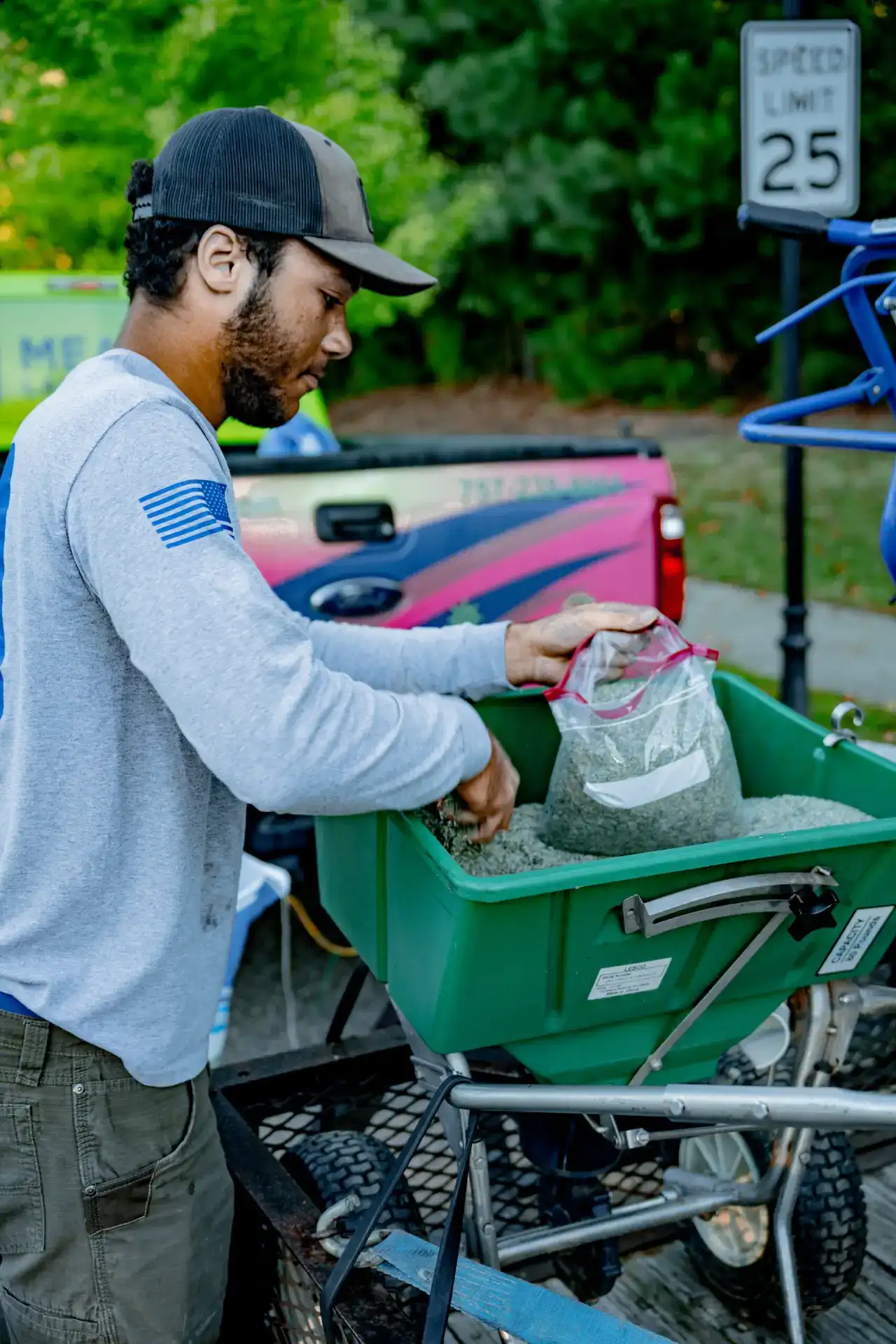
Fall is the most important season for cool season lawn care in Carrollton, and our 7-round program is designed to take full advantage of it. September through November offers ideal conditions — cooler temperatures, adequate rainfall, and the right soil environment for root development. Round 6 (October–November) is a 32-0-15 slow-release fertilizer that builds root depth and winter hardiness; it is timed after aeration and overseeding and skips herbicide so newly seeded areas are protected (herbicide can be added on request if no overseeding is planned). Round 7 (November–December) adds nitrogen and a post-emergent for winter annuals like henbit and chickweed. For thin or bare areas, early-fall overseeding combined with starter fertilizer produces excellent germination results.
Spring Lawn Treatments for Carrollton Properties
Spring care in Carrollton sets the trajectory for the entire growing season ahead. Round 1 of our 7-round program (late January / February) combines nitrogen with Prodiamine pre-emergent and post-emergent herbicides to jumpstart spring growth and eliminate winter weeds. Round 2 (March / April) adds a second nitrogen application and another Prodiamine application for continuous coverage through the critical crabgrass germination window. Round 3 (late April / May) layers in slow-release nitrogen with iron for deep green color, potassium for stress tolerance, and spot treatment for breakthrough weeds. Spring is also when we assess winter damage and recommend overseeding or aeration if needed — early fall is the better window for overseeding than spring. A thick lawn in April and May crowds out summer weeds far better than a thin one.
Soil Health in Carrollton Neighborhoods
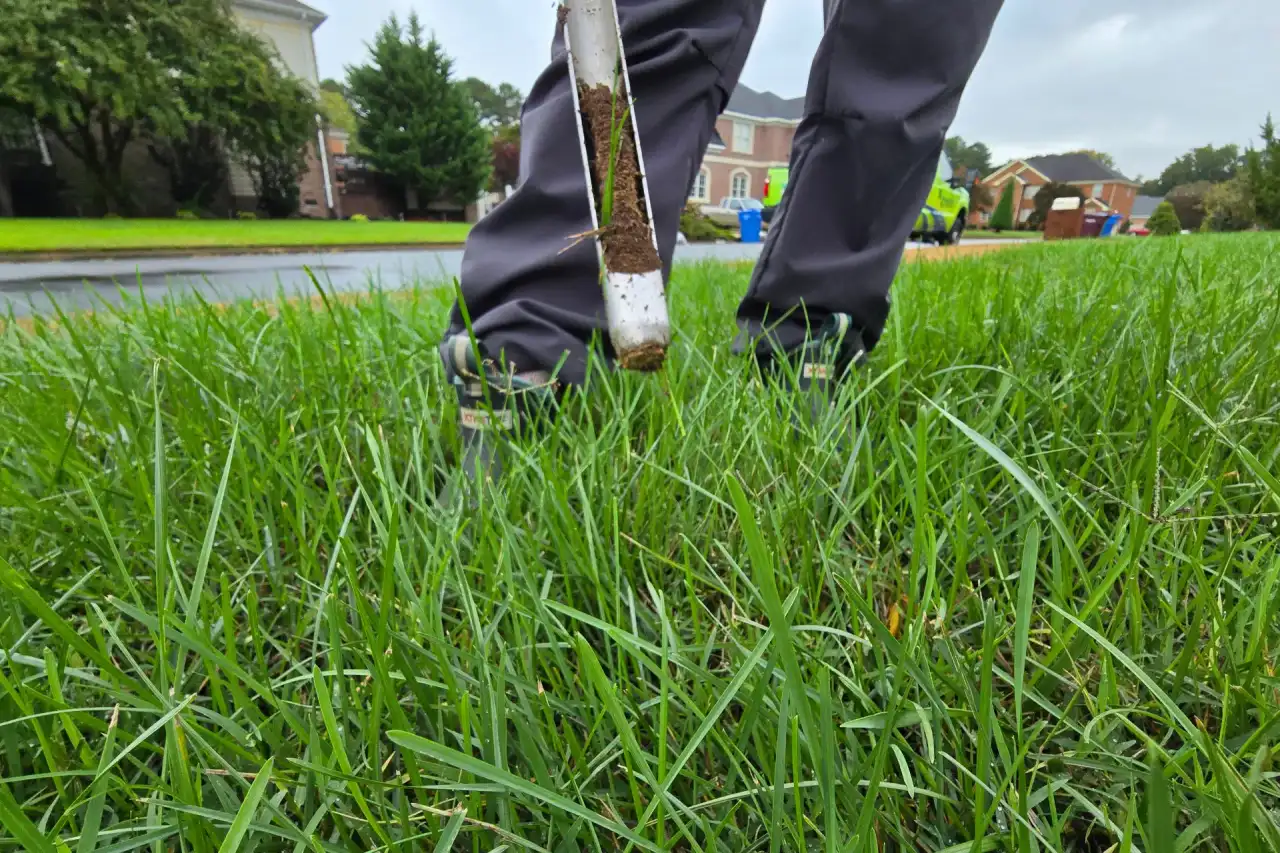
Carrollton soils in newer subdivisions often reflect the disruption of construction — subsoil pushed to the surface, compacted by heavy equipment, and stripped of the organic matter healthy lawns need. These conditions make it harder for roots to penetrate and reduce fertilizer effectiveness. Core aeration is often one of our first recommendations for newer Carrollton properties because it relieves compaction and improves water and nutrient movement. Soil pH in disturbed soils can vary widely. Acidic conditions prevent nutrient absorption even when fertilizer is applied correctly. Every Carrollton lawn starts with a free soil test that checks pH, N-P-K, organic matter, and micronutrients, with written results reviewed before Round 1. Lime applications correct acidic pH over one to two growing seasons.
Product Safety for Carrollton Families and Pets
Carrollton is a family-oriented community, and we take product safety seriously in everything we apply. All fertilizers and herbicides are EPA-registered and applied strictly within label guidelines for rate and method — federal law (“the Label is the Law”) does not allow deviation. After liquid herbicide treatments, please keep people and pets off the treated area until it has dried fully — generally 1–2 hours in average weather. Granular fertilizer is safe for foot traffic once watered into the turf. We keep detailed records of every product applied at your property so you always have access to that information. Weather restrictions are also enforced: no applications with winds over 15 mph, within 2 hours of forecast rain, above 90°F, or below 32°F for post-emergents.