Cool Season Lawn Fertilization Weed Control in Chesapeake
Lawn Care Built for Chesapeake's Climate
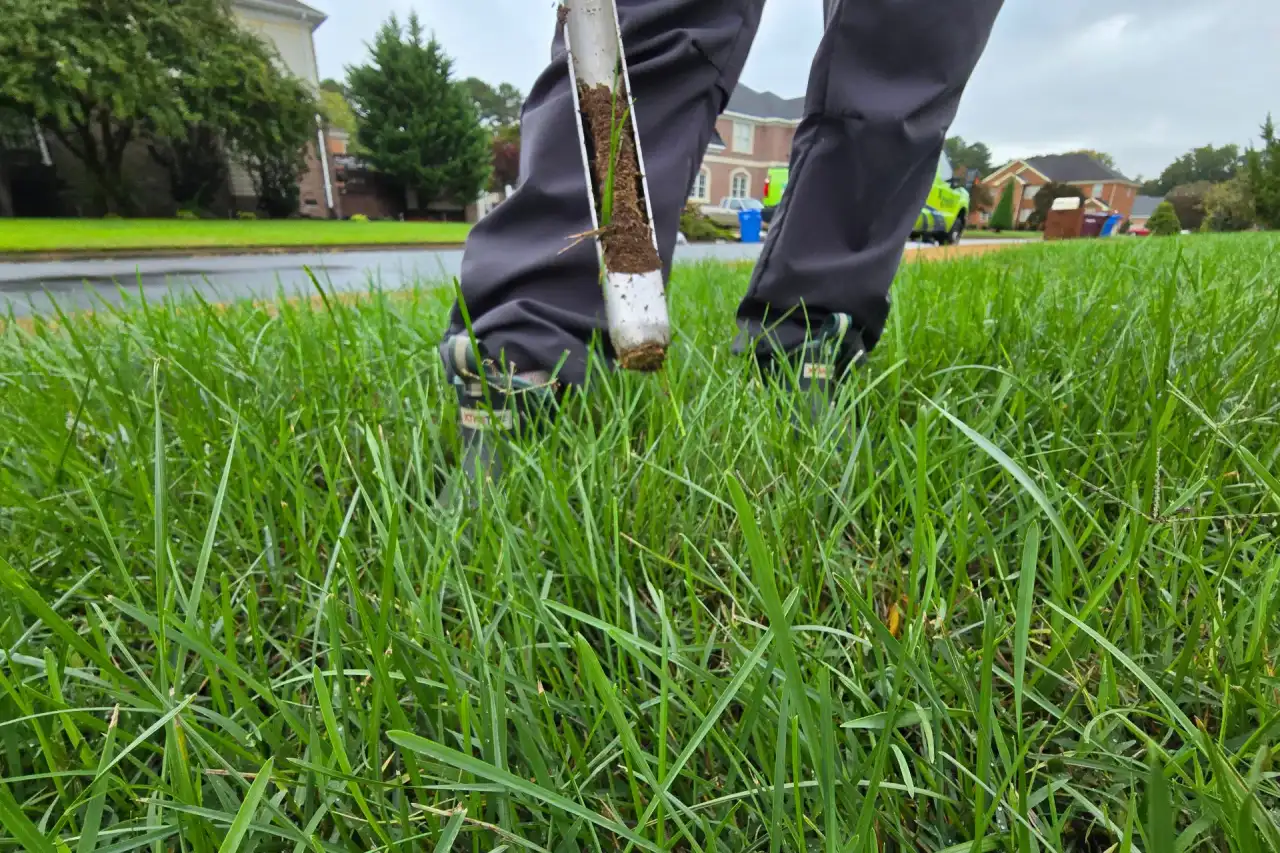
Chesapeake’s landscape runs the gamut from dense suburban neighborhoods to open farmland, and that variety shows up in the lawn care challenges we handle here every week — clay-heavy soils, low-lying areas that hold water, and stretches of summer humidity that stress cool season turf. Tall fescue and fine fescue can thrive across Chesapeake when they are supported by a 7-round fertilization and weed control program built around actual soil temperature and seasonal pressure, not a fixed calendar. Every Chesapeake program starts with a free soil test and on-site inspection so applications are tailored to your lawn’s pH, NPK levels, and weed pressure from the first visit. The result is a schedule that works with your lawn’s real growth cycles through every season.
Cool Season Grasses Common in Chesapeake
Most successful Chesapeake lawns are planted in cool season varieties, and tall fescue is the clear top choice because of its deep root system and tolerance for both summer heat and winter cold. Fine fescue does a nice job in shaded spots under mature trees common in Chesapeake neighborhoods. Both grasses hit their stride when soil temperatures fall between 50 and 65°F — the fall and early-spring windows our 7-round program centers on — and they naturally slow down during summer heat, which is expected behavior rather than a sign of trouble. Identifying your specific grass type is part of the free inspection we do before Round 1 so every fertilizer rate, herbicide, and timing decision is matched to what is actually growing in your yard.
When to Fertilize Your Chesapeake Lawn
Timing fertilizer correctly is one of the most important factors in cool season lawn care, and our 7-round program is built around that principle. In Chesapeake, the most productive windows for cool season turf are September through November in the fall and late February through April in spring. These windows match the natural growth cycles of tall fescue when roots are actively drawing up nutrients. Round 1 goes down in late January or February to jumpstart spring growth, and additional rounds land on top of real soil temperatures as the season progresses. Summer nitrogen pushes are intentionally avoided — Rounds 4 and 5 use a 5-0-30 slow-release formula to support roots without forcing top growth during heat stress.
Pre-Emergent Weed Control in Chesapeake
Pre-emergent herbicides — we use Prodiamine — create a barrier in the soil that stops weed seeds from germinating before they can root. In Chesapeake, spring pre-emergent goes down in early March to prevent warm-season weeds like crabgrass, goosegrass, and foxtail. A second pre-emergent application in late summer targets winter annuals such as annual bluegrass and common chickweed. Prodiamine provides roughly 6–8 weeks of control per application, which is exactly why our 7-round program applies it in both Round 1 and Round 2 — overlapping coverage keeps a continuous barrier in place through the critical spring germination window. Timing to actual soil temperature, not a calendar date, is how we hit the window right every season.
Post-Emergent Weed Control for Active Weeds
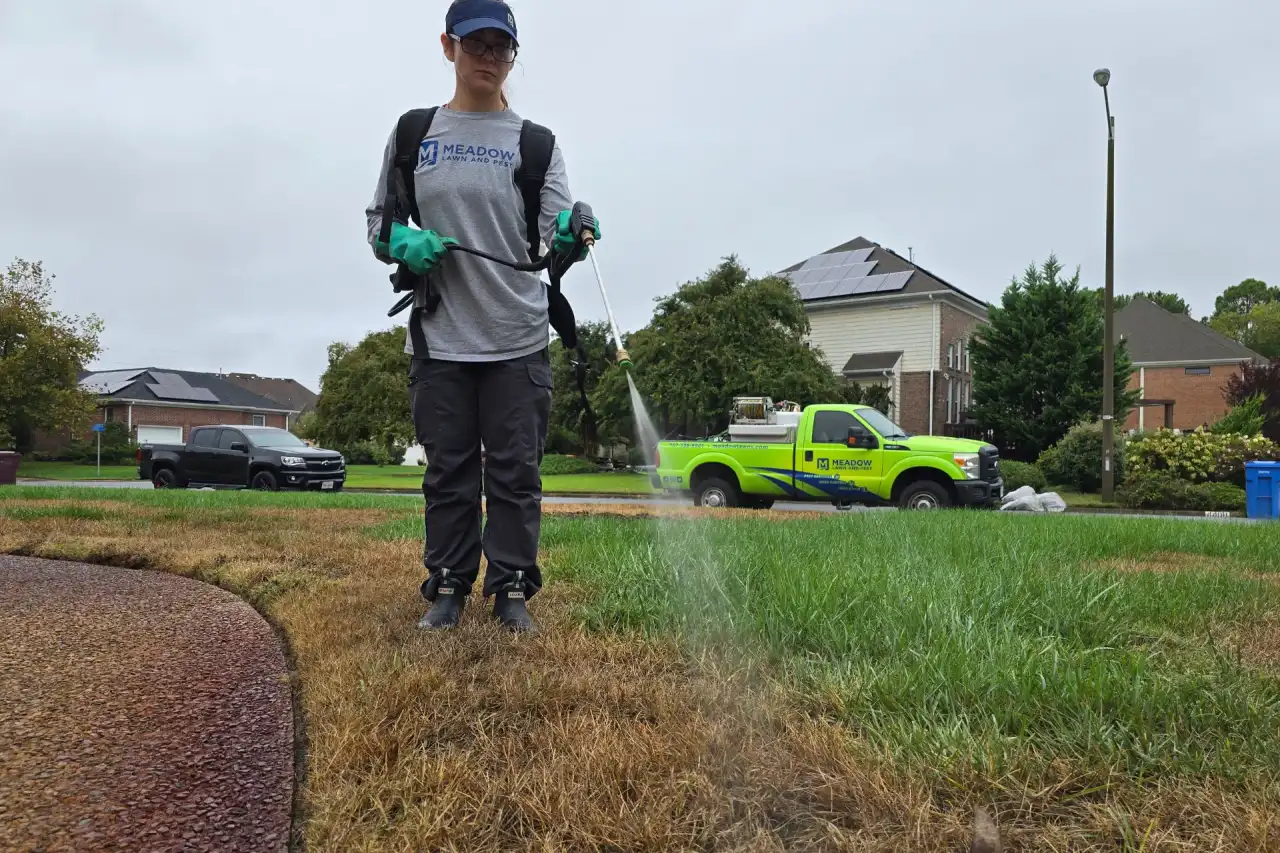
When weeds are already visible in a Chesapeake lawn, post-emergent herbicides are the right response. These products are absorbed through the leaf and stem, then move through the plant to kill it at the root. We use selective herbicides that target broadleaf or grassy weeds without damaging surrounding turf. Common targets include dandelion, clover, wild violet, and ground ivy. Most weeds show visible decline within 7–14 days of a properly timed treatment, though stubborn species can take the full 21 days — that is why our re-treatment policy waits 21 days before a complimentary spot re-service. Post-emergent herbicides work best when temperatures are between 55°F and 85°F and weeds are actively growing. Nutsedge and dallisgrass need specialty chemistry and are quoted separately.
Get A Quote
Ready to get started? Fill out the form or contact us at the phone number below to get started.
Common Weeds Found in Chesapeake Lawns
Chesapeake lawns deal with a wide variety of weeds driven by the region’s humid climate, clay soils, and wet terrain. Crabgrass is the top summer threat, especially in thin areas near driveways and sidewalks. Nutsedge thrives in low-lying wet spots common throughout Chesapeake and requires specialty chemistry quoted separately from the 7-round program. Dandelion and clover are present year-round in most neighborhoods. Wild violet spreads aggressively in shaded areas and resists many standard broadleaf programs. Ground ivy takes hold wherever grass struggles under trees or in poorly drained corners. Each weed requires a specific treatment strategy, which is why we identify visible weed species during every service visit so each application is precisely matched.
Fall Is the Most Important Season for Chesapeake Lawns
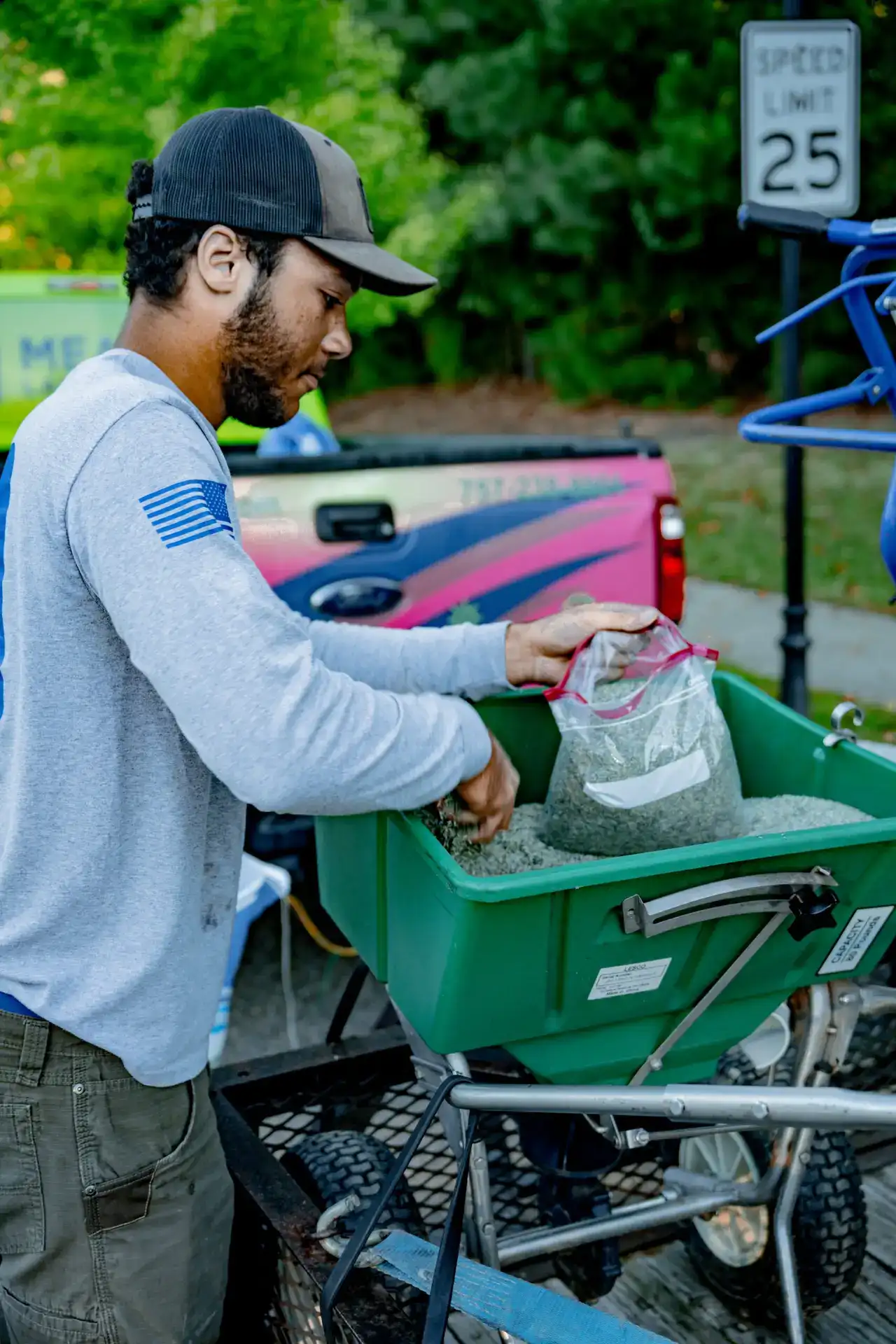
Fall is when cool season lawns in Chesapeake grow most vigorously and when a well-run program produces its most lasting results. Grass roots develop actively from September through November as soil temperatures cool. Round 6 of our 7-round program, in October or November, is a 32-0-15 slow-release fertilizer that builds roots and winter hardiness — timed after any aeration and overseeding, and intentionally without herbicide so newly seeded areas are protected (if no overseeding is done, herbicide can be included on request). Round 7 in November / December layers in nitrogen plus post-emergent herbicides to eliminate winter annuals like henbit and chickweed before they establish. Investing in fall care pays off in faster spring green-up, better weed resistance, and denser turf going into the following summer.
Spring Lawn Treatments for Chesapeake Properties
Spring treatments in Chesapeake help lawns break dormancy strong and get ahead of warm-season weed pressure. Round 1 of our 7-round program (late January / February) pairs nitrogen fertilizer with Prodiamine pre-emergent and post-emergent herbicides for any winter weeds still active. Round 2 (March / April) layers in a second nitrogen application plus another Prodiamine pre-emergent application to keep continuous coverage through the critical crabgrass germination window. Round 3 (late April / May) adds a slow-release nitrogen with iron for deep green color, plus potassium for stress tolerance, and spot treatment for any breakthrough weeds. Early-spring action shapes the entire trajectory of the lawn through the growing season and into fall.
Soil Health and Lawn Performance in Chesapeake
Chesapeake soils range from sandy loam near the Great Dismal Swamp to dense clay in many suburban neighborhoods. Clay soils compact over time, restricting root depth and causing water to run off instead of soaking in. Compacted soil also reduces how effectively fertilizer works because roots cannot reach the nutrients. Every Chesapeake lawn starts with a free soil test that checks pH, N-P-K levels, organic matter, and micronutrients, with written results reviewed before Round 1 applications begin. When pH drifts outside the 6.0–7.0 range, grass cannot absorb nutrients even when fertilizer is applied — lime applications can correct pH over one to two growing seasons. Core aeration may be recommended to relieve compaction and meaningfully improve how the lawn responds to the entire program.
Safe Lawn Treatments for Chesapeake Families and Pets
Product safety is part of how every Chesapeake visit is run because your lawn is a space your children and pets use every day. Every herbicide and fertilizer we apply is EPA-registered and used strictly within federal label directions — the industry shorthand is “the Label is the Law,” and we follow it without exception. After liquid applications, we ask that people and pets stay off the treated area until dry — typically 1–2 hours in normal weather. Granular products are safe for foot traffic once watered in. We do not over-apply, which protects both your lawn and the local environment. We follow strict weather restrictions (no winds over 15 mph, no applications within 2 hours of rain) and document every product used. Technicians will answer any question about ingredients or re-entry timing on request.