Cool Season Lawn Fertilization Weed Control in Hampton
Expert Cool Season Lawn Care for Hampton Homeowners
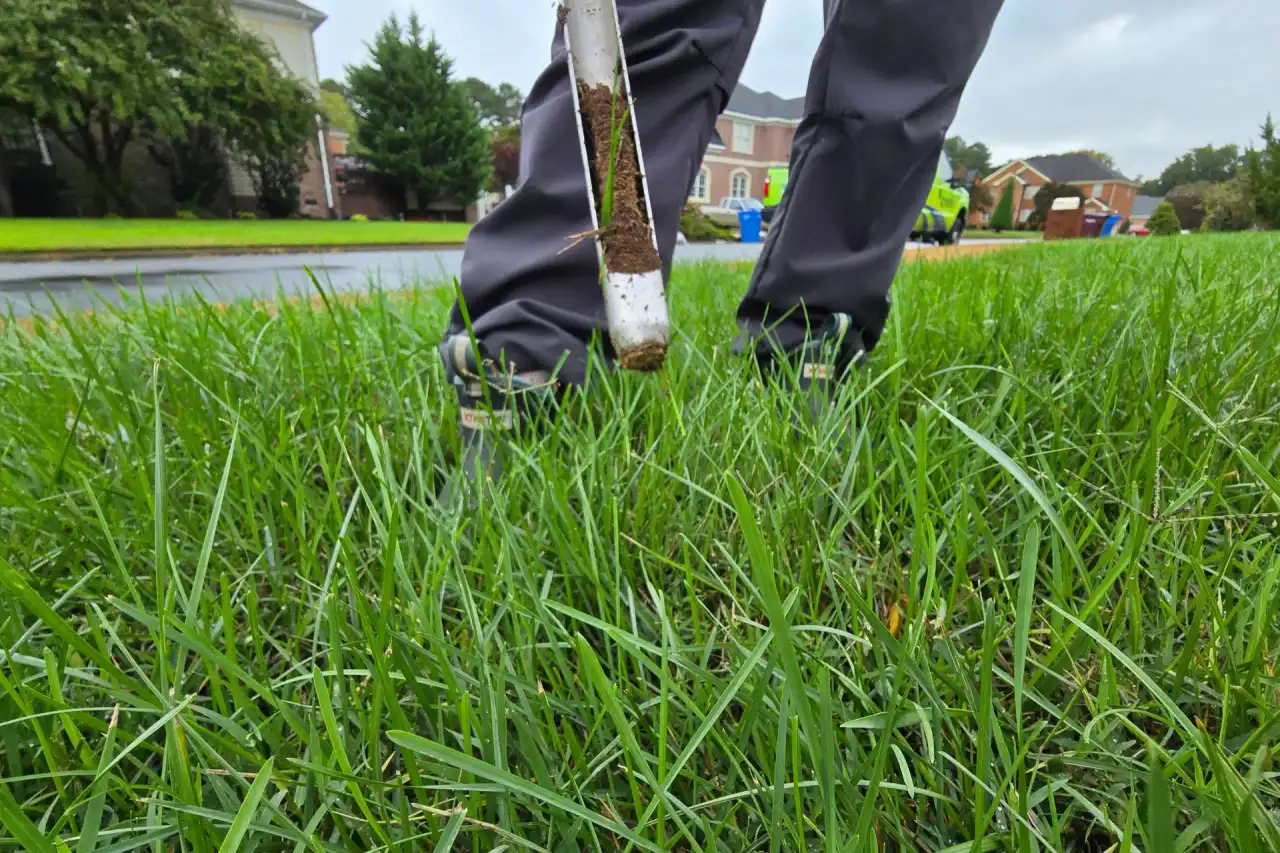
Hampton is a coastal city with a rich history and a direct connection to the Chesapeake Bay and its tributaries. Salt air, humidity, and waterfront influence are all part of what lawns in Hampton live with day to day. Across the city, older established neighborhoods, newer residential developments, and waterfront properties create a wide range of lawn conditions. Tall fescue can look beautiful in Hampton when supported by a 7-round fertilization and weed control program built around the actual grass, soil, and weed pressure at each property. Every Hampton program begins with a free soil test and on-site inspection so we know your pH, nutrient levels, and weed pressure before we ever apply the first pound of product.
Cool Season Grasses That Perform in Hampton
Tall fescue is the most reliable cool season grass across Hampton’s neighborhoods because it handles humidity and the occasional salt exposure better than most alternatives. Its deep root system gives it durability during summer dry spells and strong recovery capacity in fall. Fine fescue performs well in shaded yards, which are common in Hampton’s older neighborhoods with large mature trees. Both grasses grow most actively when soil temperatures fall between 50 and 65°F, which aligns with Hampton’s fall and early spring. Summer slows them — expected behavior rather than a problem. Identifying your specific variety is the first step in building a 7-round program that actually delivers measurable improvement over time.
When to Fertilize Cool Season Lawns in Hampton
For Hampton cool season lawns, the most effective fertilization windows are fall (September through November) and early spring (late February through April). Fall is the most important — roots grow most actively during this period, and slow-release nitrogen applied now sustains the lawn through winter and drives a strong spring green-up. Our 7-round program runs with that biology: Round 1 in late January / February to jumpstart, Rounds 2 and 3 through spring, Rounds 4 and 5 with a 5-0-30 slow-release through summer, and Rounds 6 and 7 in fall and early winter to build deep reserves. Hampton’s mild coastal climate sometimes gives us a longer effective window in fall than more inland areas enjoy.
Pre-Emergent Weed Control in Hampton
Hampton’s warm coastal climate and humidity make it a highly active environment for weed seed germination when lawns are not protected. Our pre-emergent is Prodiamine, which creates a barrier in the soil that stops weed seeds from germinating before they can root. Spring Prodiamine goes down in mid-March as soil temperatures approach 55°F to block crabgrass, goosegrass, and summer annual weeds. Because Prodiamine provides 6–8 weeks of control per application, our 7-round program applies it in Round 1 and Round 2 for overlapping coverage through the critical spring window. A late-summer pre-emergent application in August or September stops winter annuals like annual bluegrass and chickweed. Urban Hampton lots with thin turf benefit especially from pre-emergent.
Post-Emergent Weed Control for Hampton Lawns
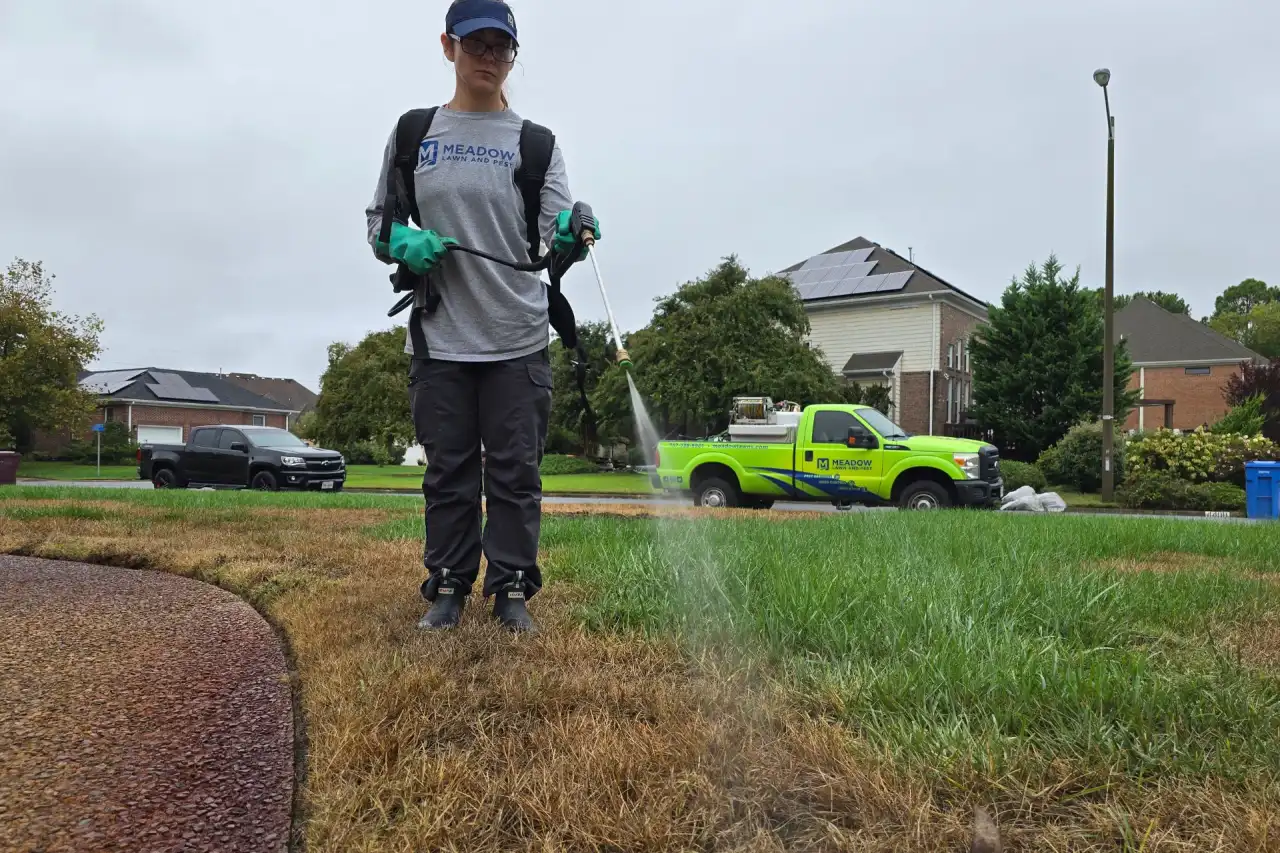
When weeds are actively growing in a Hampton lawn, post-emergent herbicides remove them without damaging the surrounding turf. We use selective products matched to the specific weed species we identify during each service visit. Dandelion, clover, plantain, and chickweed are treated with broadleaf herbicides. Wild violet in shaded Hampton yards may require specialty products applied across multiple visits. Crabgrass caught early in summer can be treated before it matures. Most broadleaf weeds show visible decline within 7–14 days of a correctly applied treatment at temperatures between 55 and 85°F. Our re-treatment policy waits 21 days before a complimentary spot re-service — product labels require that interval to avoid over-application. Nutsedge, which thrives in Hampton’s low-lying areas, needs specialty chemistry quoted separately.
Get A Quote
Ready to get started? Fill out the form or contact us at the phone number below to get started.
Common Weeds in Hampton Lawns
Hampton lawns deal with a combination of weeds driven by coastal humidity, urban soil compaction, and the mix of older and newer properties across the city. Crabgrass is the dominant summer annual, filling thin areas rapidly in full sun during summer heat. Nutsedge is a persistent problem in lower, wetter areas and near drainage channels common throughout Hampton — it requires specialty chemistry quoted separately. Dandelion and clover appear year-round in most neighborhoods. Wild violet colonizes shaded areas under Hampton’s mature trees and resists standard broadleaf herbicides. Annual bluegrass emerges in fall and can dominate cool bare areas through winter. Ground ivy spreads in shadier spots with poor air circulation. Prodiamine pre-emergent plus post-emergent applications on the right schedule keep these weeds manageable.
Fall Lawn Care for Hampton Properties
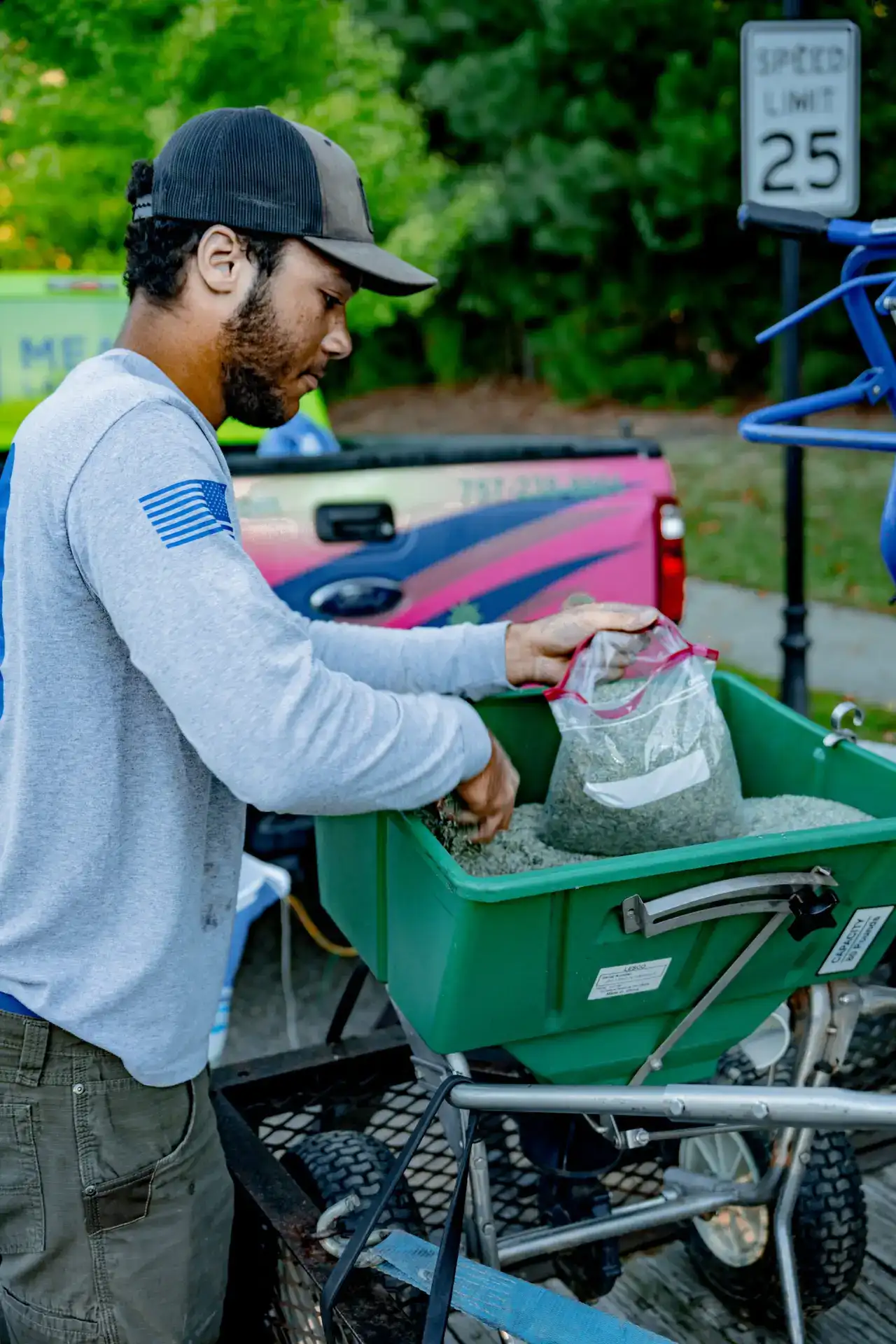
Fall is the most valuable season for cool season lawn investment in Hampton. From September through November, tall fescue roots grow actively and absorb nutrients most efficiently. Round 6 of our 7-round program (October–November) is a 32-0-15 slow-release fertilizer that builds root depth and winter hardiness — timed after aeration and overseeding, and intentionally without herbicide so newly seeded areas are protected (herbicide can be added in Round 6 on request if no overseeding is planned). Round 7 in November / December adds nitrogen and a post-emergent for winter annuals like henbit and chickweed. For Hampton properties with thin areas from summer stress, early-fall overseeding produces the best germination results while soil temperatures remain warm.
Spring Lawn Treatments for Hampton
Spring lawn care in Hampton focuses on breaking dormancy with the right nutritional support and blocking warm-season weeds before they can establish in the warming coastal soil. Round 1 (late January / February) combines nitrogen with Prodiamine pre-emergent and post-emergent herbicides. Round 2 (March / April) adds a second nitrogen application and another Prodiamine application for continuous coverage through the crabgrass germination window. Round 3 (late April / May) layers in slow-release nitrogen with iron for deep green color, potassium for stress tolerance, and spot treatment for breakthrough weeds. Spring is also when we assess any winter damage and recommend repairs. Getting the lawn growing thickly in spring is the single most important competitive advantage against the summer weed pressure that follows in Hampton’s warm coastal climate.
Soil Conditions Across Hampton
Hampton’s soils vary across the city, with older neighborhoods often showing decades of compaction from vehicle traffic, aging infrastructure, and root competition from large trees. Coastal areas near the water may have sandier soils with faster drainage and lower water-holding capacity. Urban soils can have pH drift from construction materials, road salt exposure, and years of uncorrected acidity. When soil pH falls outside the 6.0–7.0 range, grass cannot absorb nutrients efficiently even when fertilizer is applied. Core aeration is a valuable complement to fertilization for compacted Hampton properties. Every Hampton lawn starts with a free soil test that checks pH, N-P-K, organic matter, and micronutrients, with written results reviewed before Round 1 begins.
Safe Lawn Applications for Hampton Families
Hampton families can feel confident about the products we apply to their lawns. Every herbicide and fertilizer is EPA-registered and applied at label-specified rates and methods — federal law (“the Label is the Law”) prohibits deviation. After liquid herbicide treatments, people and pets should stay off treated areas until dry — typically 1–2 hours in normal weather. Granular fertilizer is safe once watered in. Near Hampton’s waterfront areas, tidal zones, and drainage systems, we are mindful of application buffers and choose products with minimal environmental impact near sensitive water environments. Weather restrictions are strictly enforced: no applications with winds over 15 mph, within 2 hours of forecast rain, above 90°F, or below 32°F for post-emergents. We maintain records of every product applied.