
Hampton Service
What Is Nutsedge and Why Is It in Your Lawn?
Nutsedge is a perennial sedge — not a grass or typical broadleaf weed — that thrives in wet, poorly drained, or compacted soil. It spreads through underground tubers called nutlets, which can remain dormant in the soil for 3 to 10 years and sprout when conditions are right. You can identify nutsedge by its triangular stems, its yellow-green or purple-green color, and the fact that it grows noticeably faster than surrounding grass. Overwatering is the number one cause of nutsedge in residential lawns. It often appears near sprinkler heads, in low spots, and along driveway edges where water collects. Standard lawn herbicides have no effect on nutsedge because it is technically a sedge, which requires specialized treatment products not used in a regular weed control program.
Why Standard Weed Killers Won't Control Nutsedge
One of the most common mistakes homeowners make is applying standard broadleaf herbicides like 2,4-D to nutsedge — these products simply don't work on it. Because nutsedge is a sedge, it requires specialized herbicides formulated specifically for sedge control. Professional-grade products containing halosulfuron, sulfentrazone, or imazaquin are labeled for nutsedge control and are not available at most retail stores. These products must be absorbed through the leaves and translocated down to the underground tubers to be effective. Without targeting the tubers, nutsedge will simply regrow from below. Our licensed technicians identify the correct product based on your nutsedge species and grass type before every application to ensure safety and maximum effectiveness.
What Is Included in Your Nutsedge Treatment?
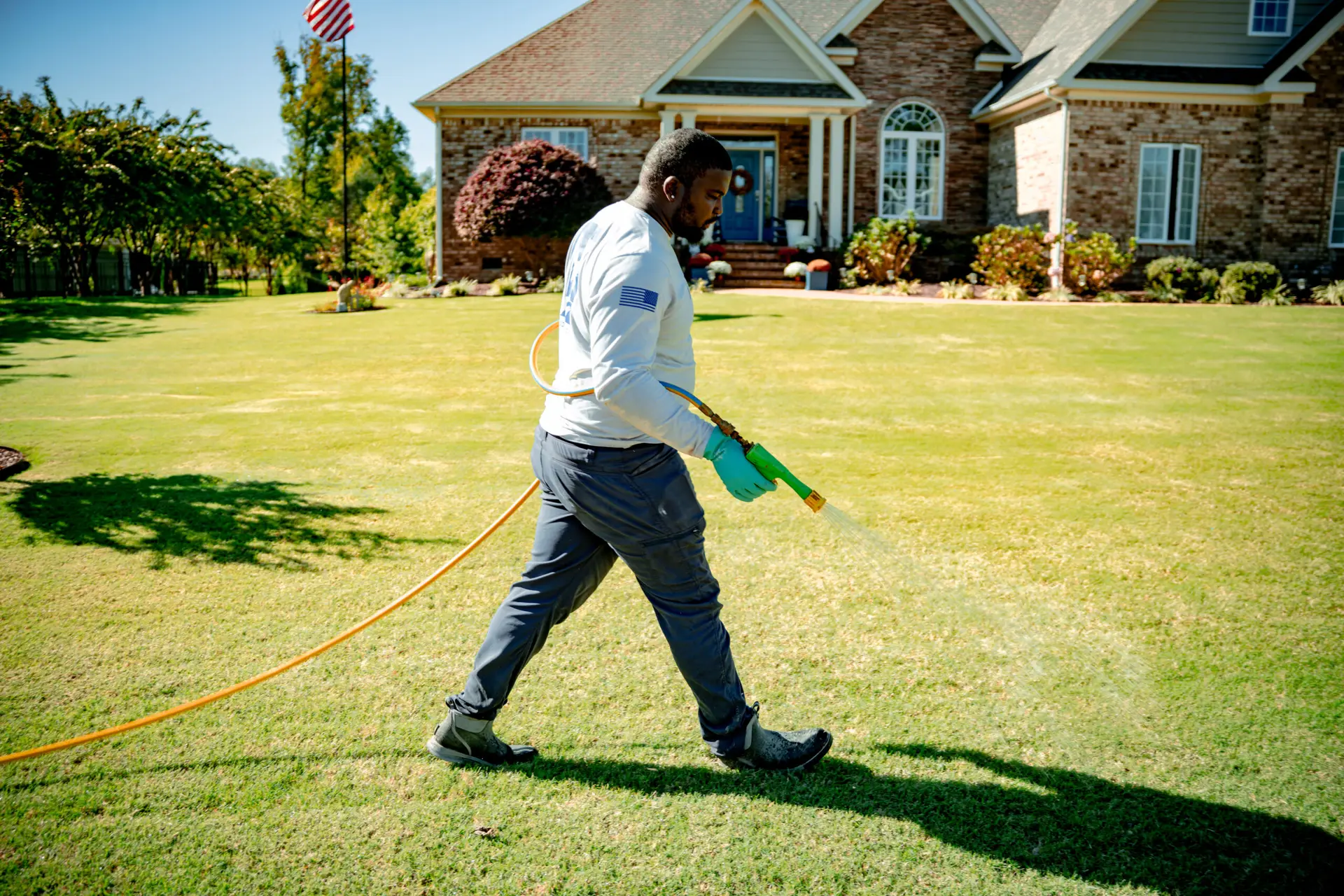
Our nutsedge program starts with a professional inspection to confirm the weed is actually nutsedge and to identify whether it's the more common yellow variety or the more aggressive purple variety. We assess how widespread the infestation is and look for contributing conditions such as poor drainage, irrigation problems, or compacted soil. Once confirmed, we apply professional-grade selective herbicides using calibrated equipment for uniform coverage and proper dosage. Treatments are timed based on active growth periods, typically when plants are 6 to 8 inches tall and most vulnerable to herbicide absorption. We also provide post-treatment guidance on watering and mowing restrictions, and recommendations to help address the root causes contributing to your nutsedge problem.
Why Multiple Treatments Are Typically Required
Most nutsedge infestations require 2 to 3 applications for effective control, and setting this expectation upfront is important. The first application targets actively growing plants visible above ground. However, each nutsedge plant can produce hundreds of underground tubers, many of which are dormant during the first treatment and not connected to actively growing plants. These dormant tubers will sprout 14 to 21 days later, which is why a follow-up treatment is a planned part of the program — not a sign the first application failed. Approximately 70 percent of customers need two applications and 30 percent need a third. Heavy infestations, purple nutsedge, or lawns with ongoing drainage problems may also benefit from continued treatment the following season.
Understanding Nutsedge Treatment Pricing
Nutsedge treatment is priced per application based on your actual turf area, not total property size. For lawns up to 5,000 square feet, each application is $54.97. Lawns from 6,000 to 10,000 square feet run $62.97 to $94.97 per application. Properties from 11,000 to 15,000 square feet are $102.97 to $134.97 per application. Most residential lawns in our service area range from 4,000 to 9,000 square feet. Since most infestations require 2 to 3 separate applications, planning for a 2-application total is a realistic expectation for most homeowners. No sales tax applies to this service. Customers on our fertilization program receive a 10 percent discount, and pre-paying for a 2 or 3 application package saves an additional 5 percent.
Get A Quote
Ready to get started? Fill out the form or contact us at the phone number below to get started.
What to Expect After Your Nutsedge Treatment
Nutsedge doesn't die quickly like typical broadleaf weeds, so patience after each application is important. During the first 7 days you may see little to no visible change as the herbicide is absorbed through leaves and moves down to underground tubers. Between days 7 and 14, yellowing begins, growth slows, and plants start to wilt. Significant decline is typically visible by days 14 to 21, with most plants appearing dead or dying. Full suppression of underground tubers can take up to 30 days. Because dormant tubers may sprout new growth during this window, a follow-up application is usually scheduled 14 to 21 days after the initial treatment. Re-spraying before the 14-day mark will not speed results and may put unnecessary stress on your desirable turf.
How to Care for Your Lawn After Treatment
Following a few simple steps after your nutsedge treatment protects the effectiveness of the application. Keep people and pets off treated areas until the lawn is completely dry, which typically takes 2 to 4 hours depending on weather. Do not water for at least 24 to 48 hours after treatment — nutsedge herbicides need extended absorption time to travel through leaf tissue down to the underground tubers. Watering too soon washes the product off before it can work. Do not mow for at least 3 to 5 days after treatment, and ideally wait 5 to 7 days. Mowing removes treated leaf tissue before the herbicide has fully translocated, which significantly reduces effectiveness. For best results, mow 2 to 3 days before your scheduled treatment so the lawn won't need cutting again for at least a week.
What This Service Does Not Include
The nutsedge treatment program is a targeted specialty service, and it's important to know what it does and does not cover. This program does not include fertilization, broadleaf weed control, crabgrass control, or general lawn maintenance. We treat nutsedge only — other weed species such as dallisgrass require separate programs. We do not repair bare or thin turf areas resulting from nutsedge damage; overseeding or sodding those areas would be quoted separately. We do not perform hand-pulling of nutsedge because pulling breaks off above-ground growth while leaving tubers intact, which causes regrowth and can spread the problem. We also do not treat lawns with active irrigation malfunctions — broken sprinkler heads and overwatering must be corrected first for treatment results to last.
Nutsedge Treatment in Hampton: What Local Homeowners Are Dealing With
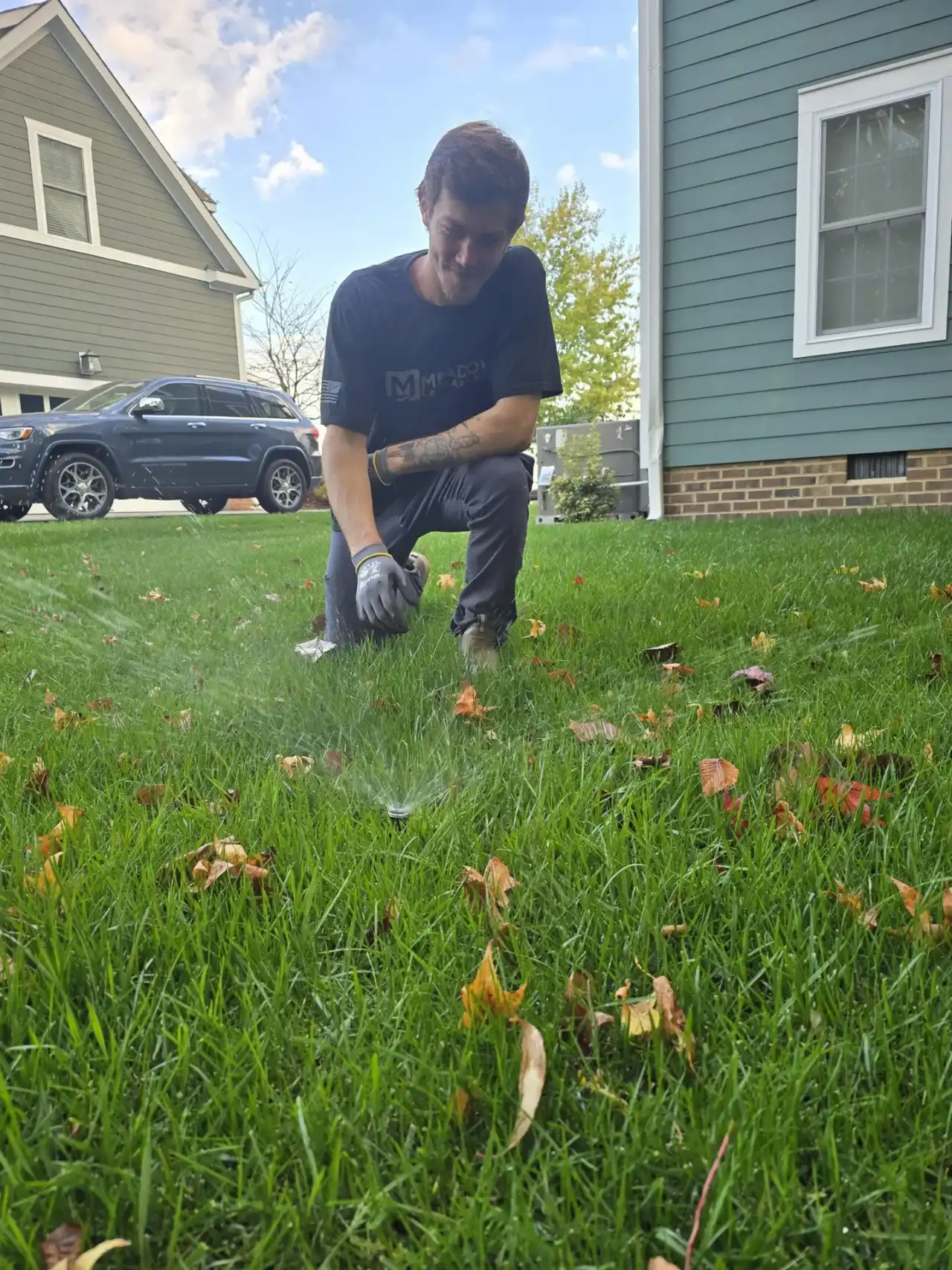
Hampton homeowners across Phoebus, Fox Hill, and other established neighborhoods deal with nutsedge in lawns where the combination of coastal humidity, high water tables, and clay soils creates wet conditions that nutsedge thrives in throughout the growing season. Hampton's proximity to the Chesapeake Bay and Hampton Roads waterways means many residential properties have drainage challenges that encourage nutsedge establishment in turf areas around sprinkler heads, low spots, and drainage routes. Standard weed control treatments do not affect nutsedge because it requires specialized sedge-specific herbicides applied by licensed professionals at the active growth stage for effective suppression.
Why You Shouldn't Wait or Try to Pull Nutsedge
Two of the most common mistakes homeowners make with nutsedge are waiting to see if it goes away and trying to pull it by hand. Nutsedge does not go away on its own — it gets worse with time. Each plant produces hundreds of underground tubers, and an infestation can double or triple in coverage within a single growing season. Tubers remain viable in soil for 3 to 10 years, so even when plants die back in winter, they return stronger in spring. Hand-pulling breaks off the above-ground plant but leaves tubers underground, which quickly regenerate and can actually produce more new shoots than before. Light infestations are far easier and less expensive to treat than established ones. Early treatment is always the most cost-effective approach — catching it now saves significant time, money, and frustration.
Hear From Our Happy Customers
If you need top-notch lawn care, professional landscaping, effective outdoor pest control, or help from an irrigation expert, Meadow Lawn & Pest is the #1 lawn and pest team to call in Carrollton, Smithfield, Northern Suffolk, and nearby areas of Virginia.