Cool Season Lawn Fertilization Weed Control in Isle of Wight County
Cool Season Lawn Care for Isle of Wight County
Isle of Wight County blends historic communities, rural farmland, and newer suburban development across a landscape shaped by the James River and the Pagan River. Soils range from well-drained upland ground to low-lying spots that stay damp well into spring, and that variation shows up in how lawns respond to fertilizer and weed control. Cool season grasses like tall fescue perform reliably across Isle of Wight County when they are supported by a 7-round fertilization and weed control program that works with the local seasonal pattern rather than a generic calendar. Every program opens with a free soil test and inspection so we know exactly what your lawn is working with before we ever apply a product.
Cool Season Grass Varieties in Isle of Wight County
Tall fescue is the most popular and most successful cool season grass across Isle of Wight County, valued for its ability to stay green through fall and early winter and to recover well each spring. Its deep roots help it survive dry spells during the summer slowdown that all cool season grasses experience in this region. Fine fescue is the practical option for shaded areas under the county’s mature oaks and hardwoods. Both varieties grow most actively when soil temperatures sit between 50 and 65°F — typically in fall and early spring in this area. Understanding which grass type is in your lawn is the foundation for every fertilization and weed control decision our 7-round program makes.
Fertilizer Timing That Works for Isle of Wight County Lawns
In Isle of Wight County, the two most productive fertilization windows for cool season turf are September through November and late February through April. Fall is the most important window of the year because roots grow deepest then and build the reserves that sustain the lawn through winter and power fast spring green-up. Our 7-round program is structured around that biology: Round 1 in late January / February, Rounds 2 and 3 through spring, Rounds 4 and 5 using 5-0-30 slow-release formulations through summer stress, and Rounds 6 and 7 in fall and early winter to build deep roots for the year ahead. We avoid summer nitrogen pushes because they stress fescue and feed weeds over grass.
Pre-Emergent Weed Control in Isle of Wight County
Isle of Wight County’s warm spring temperatures and varied terrain create ideal conditions for weed seed germination if lawns are not protected with timely pre-emergent applications. We use Prodiamine for spring pre-emergent, applied as soil temperatures approach 55°F to block crabgrass, goosegrass, and spurge. Because Prodiamine delivers roughly 6–8 weeks of control, our 7-round program applies it in both Round 1 and Round 2 — overlapping coverage keeps a continuous barrier through the critical spring window. A fall pre-emergent application in late summer / early fall stops winter annual weeds like annual bluegrass and chickweed. Properties near woodlands may benefit from a split spring application for extended coverage through the full germination window.
Eliminating Established Weeds in Isle of Wight County Lawns
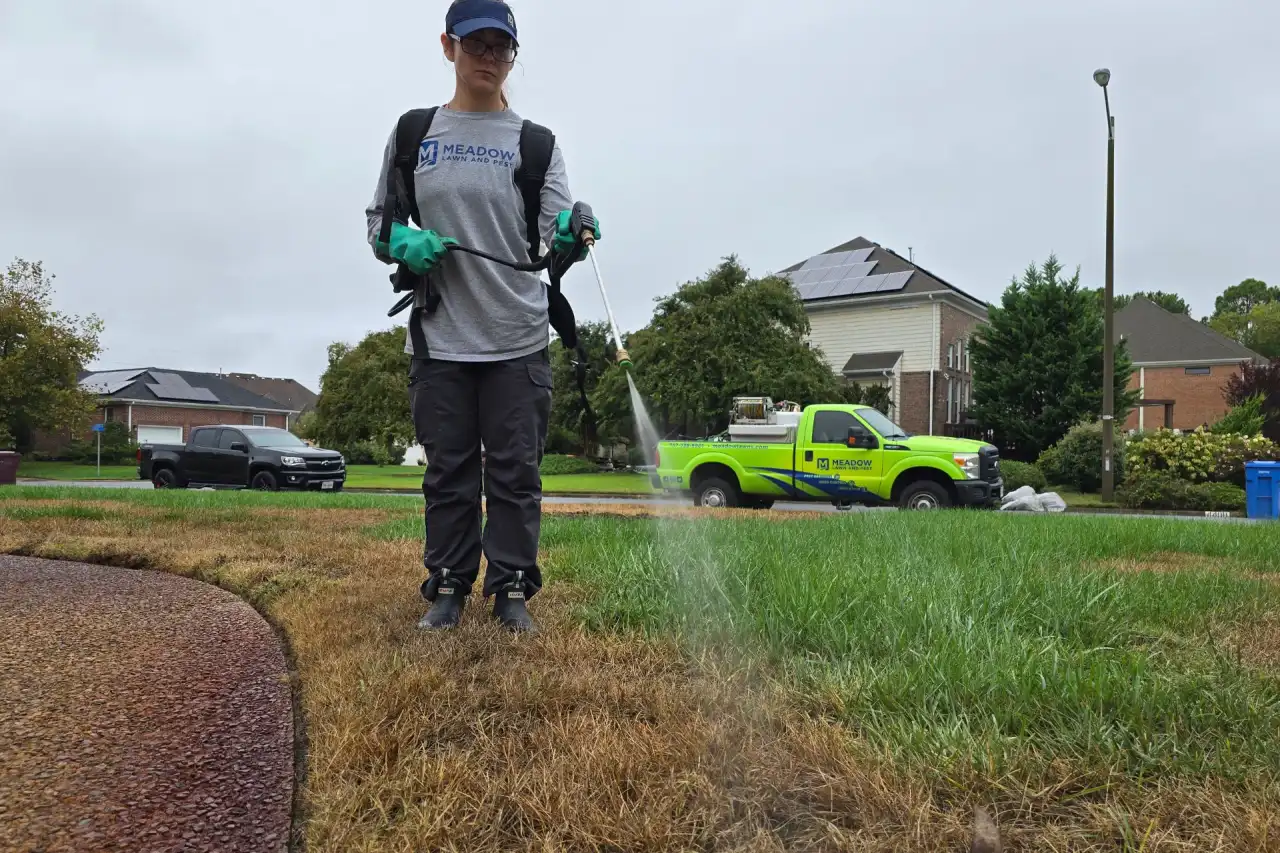
When weeds are established in an Isle of Wight County lawn, post-emergent herbicides target and remove them without harming the turf. Selective products kill broadleaf weeds like dandelion, clover, plantain, and thistle while leaving fescue unaffected. Wild violet is a stubborn invader in shaded areas and may need multiple treatments across consecutive seasons to achieve full control. Crabgrass that escapes the Prodiamine barrier can be treated post-emergently in early summer before it matures and drops seed. Most broadleaf weeds show visible decline within 7–14 days of a correctly applied treatment at temperatures between 55 and 85°F. Our re-treatment policy waits 21 days before a complimentary spot re-service. Nutsedge and dallisgrass need specialty chemistry and are quoted separately.
Get A Quote
Ready to get started? Fill out the form or contact us at the phone number below to get started.
Typical Weeds in Isle of Wight County Lawns
Isle of Wight County lawns face weed pressure from woodlands, farm fields, and the many wet low areas near rivers and streams. Crabgrass is the most persistent summer annual, appearing wherever thin or bare turf with sun exposure exists. Nutsedge is common in lower, poorly drained spots and requires specialty chemistry quoted separately. Dandelion, plantain, and clover are widespread in both older lawns and newer developments across the county. Wild garlic and wild onion appear in late winter and spring in many fescue lawns. Thistle is a problem along edges and fencelines. Common chickweed carpets bare ground during fall and winter. Understanding which weeds are present — and why — shapes the most efficient control strategy for each property.
Fall Lawn Care for Isle of Wight County Properties
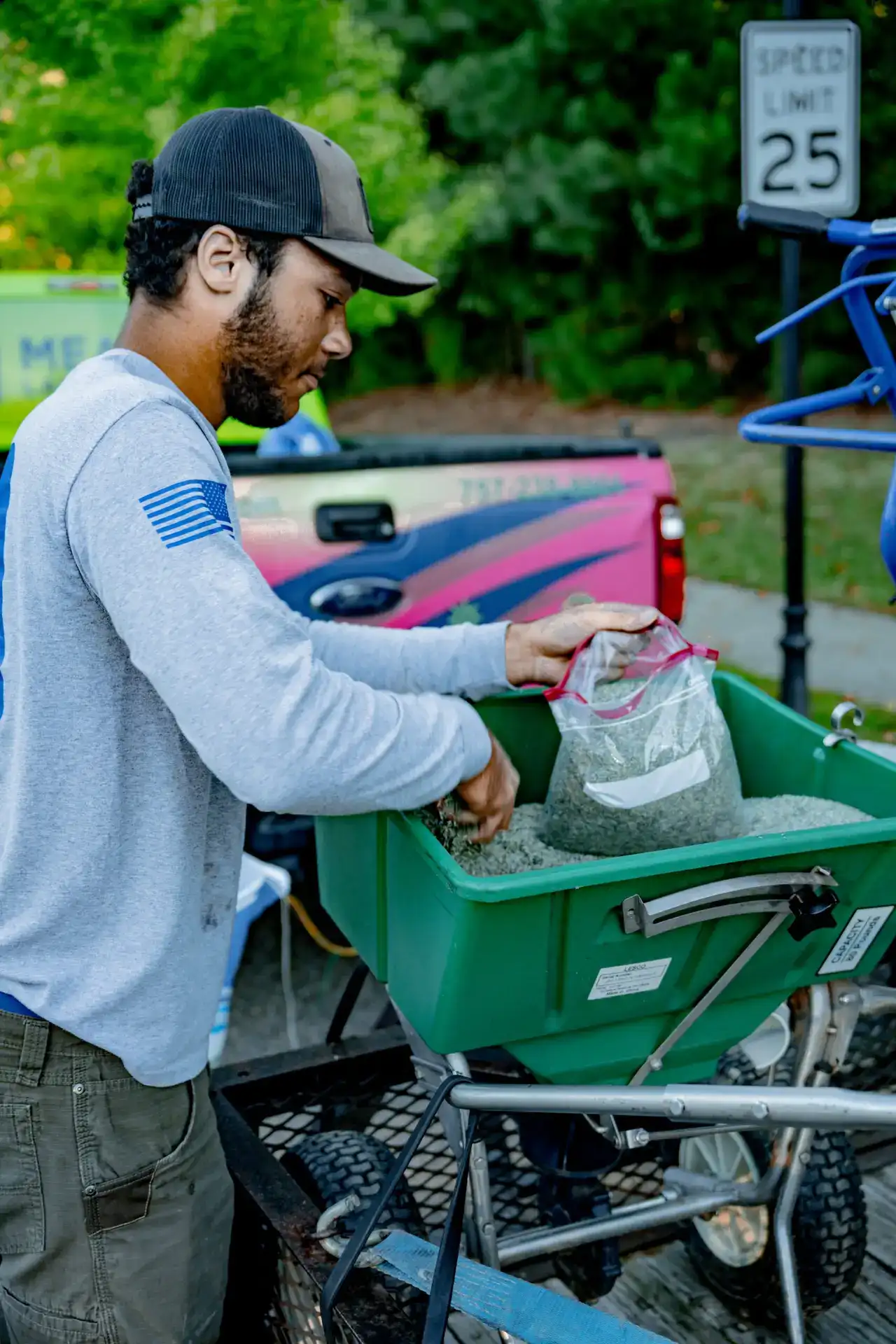
Fall is the cornerstone of a successful cool season lawn program in Isle of Wight County. September through November brings ideal growing conditions — cooler temperatures, adequate rainfall, and the right soil temperatures for deep root development. Round 6 of our 7-round program (October–November) is a 32-0-15 slow-release fertilizer that promotes root development and winter hardiness; it is timed after aeration and overseeding and intentionally omits herbicide so newly seeded areas are protected. Herbicide can be included in Round 6 on request if no overseeding is planned. Round 7 in November / December adds nitrogen plus a post-emergent for winter annuals. Customers who prioritize fall care consistently outperform those who wait until spring.
Spring Weed and Fertilizer Services in Isle of Wight County
Spring care in Isle of Wight County focuses on breaking dormancy with the right fertilizer boost, blocking warm-season weeds before they germinate, and cleaning up any winter weeds before they go to seed. Round 1 of our 7-round program (late January / February) combines nitrogen with Prodiamine pre-emergent and post-emergent herbicides. Round 2 (March / April) adds a second nitrogen application and a second Prodiamine application for continuous spring coverage. Round 3 (late April / May) uses slow-release nitrogen with iron for green color and potassium for stress tolerance, plus spot treatment for breakthrough weeds. Spring is also the time to assess winter damage and plan overseeding or aeration for early fall. A proactive spring program keeps the lawn competitive from day one.
Soil Health Across Isle of Wight County
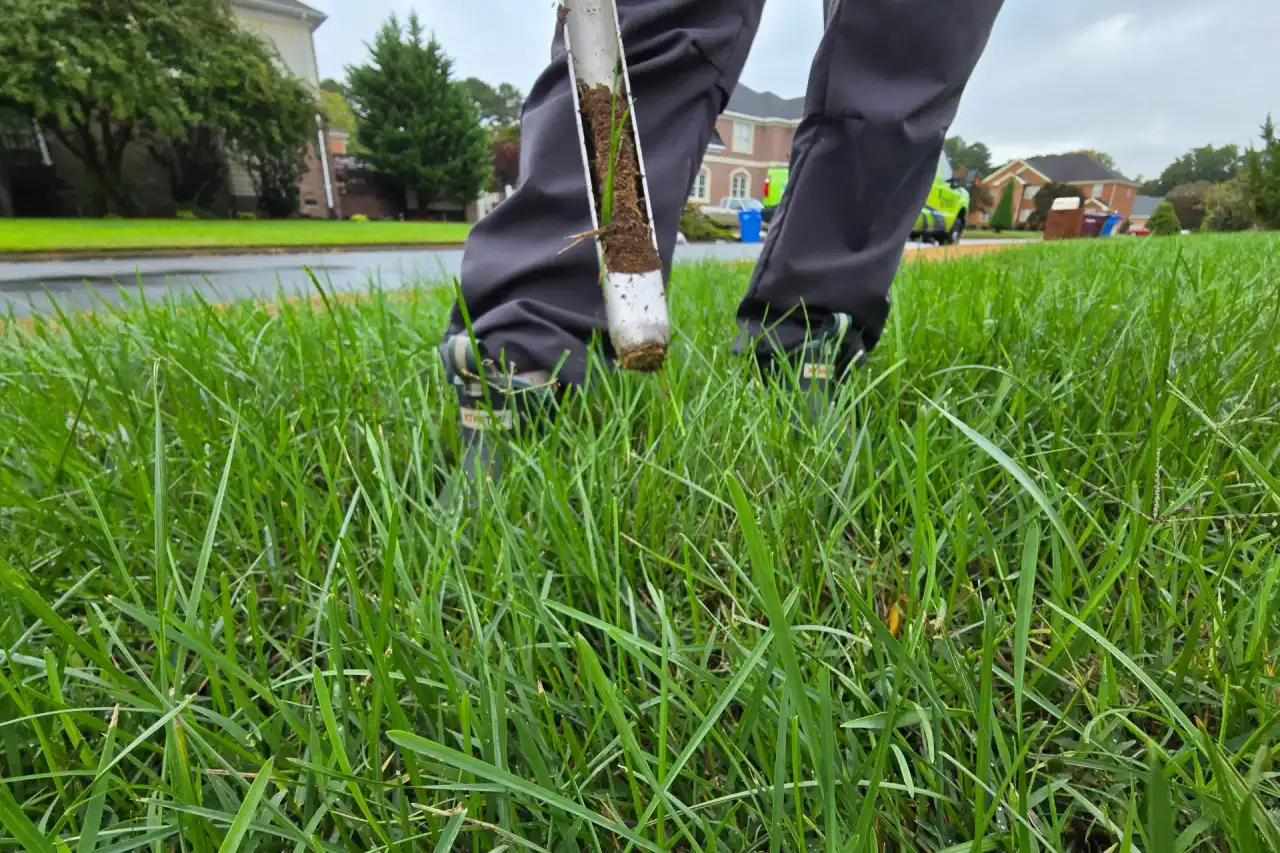
Isle of Wight County soils reflect the area’s position between coastal lowlands and the Piedmont transition zone, producing a range of soil textures from sandy loam in well-drained areas to heavy clay in bottomlands near rivers. Clay soils compact over time, reducing root depth and limiting fertilizer effectiveness. Sandy soils drain quickly but can leach nutrients before the lawn fully uses them. Soil pH is a universal concern — fescue lawns perform best between 6.0 and 7.0, and Isle of Wight County soils can drift acidic over time without corrective liming. Every lawn enrolled in the 7-round program starts with a free soil test that checks pH, N-P-K, organic matter, and micronutrients, with written results reviewed with the customer before the first round.
Safe Lawn Treatments for Isle of Wight County Families
Whether your property is a small suburban lot or a larger rural estate, the same care and safety standards apply to every treatment across Isle of Wight County. All products are EPA-registered and applied at label-specified rates and methods — federal law (“the Label is the Law”) prohibits any deviation. Liquid herbicide treatments require keeping people and pets off the lawn until dry — typically 1–2 hours. Granular fertilizer is safe once watered in. We follow strict weather restrictions: no applications with winds over 15 mph, within 2 hours of forecast rain, above 90°F, or below 32°F for post-emergents. Near water features, drainage areas, and wooded buffers common on Isle of Wight County properties, we adjust application methods accordingly. Documentation is provided on every application on request.