Cool Season Lawn Fertilization Weed Control in Portsmouth
Urban Lawn Care Tailored for Portsmouth
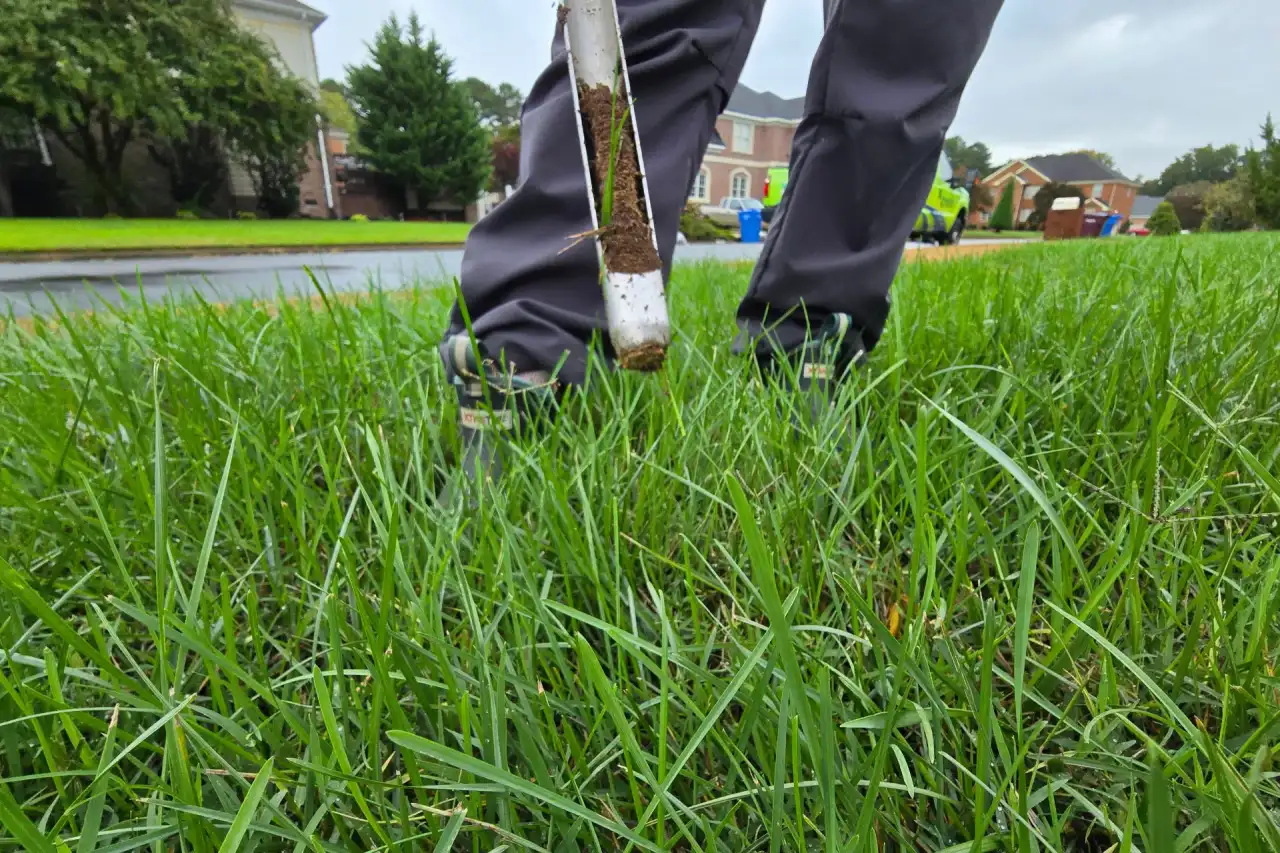
Portsmouth is a compact, historic city with older tree-lined neighborhoods and smaller residential yards near the Elizabeth River, which means salt air, urban soil compaction, and patchy turf from years of traffic are part of the baseline conditions here. Cool season grasses — primarily tall fescue — can hold up well in Portsmouth when they are supported by a 7-round fertilization and weed control program timed to real conditions, not a generic calendar. Every Portsmouth program begins with a free soil test and lawn inspection so fertilizer rates, pH corrections, and herbicide timing are tuned to the specific yard. We focus on building turf density on smaller urban lots where weed seeds move easily between neighboring properties.
Cool Season Grass Varieties That Work in Portsmouth
Tall fescue is the most reliable cool season grass in Portsmouth because it handles the area’s hot, humid summers better than most other cool season varieties and its deep roots let it stay green longer during dry spells. Fine fescue works well in the many shaded yards common in Portsmouth’s older tree-lined neighborhoods. Both grasses grow most actively when soil temperatures run between 50 and 65°F, primarily in fall and early spring — the same windows our 7-round program is built around. Summer heat naturally slows them, which is normal. Knowing which grass type you have allows us to time fertilizer precisely and select selective herbicides that hit the weed without harming the fescue.
Best Fertilization Timing for Portsmouth Lawns
For Portsmouth cool season lawns, the most effective fertilization windows are fall (September through November) and early spring (late February through April). Fall is the most critical — this is when fescue roots grow deep and absorb slow-release nitrogen that sustains the lawn through winter and fuels a fast spring green-up. Our 7-round program begins in late January / February with Round 1 for an early-season jump-start and continues through the year with applications matched to real soil temperatures and growth cycles. Round 6 in October–November is timed after any aeration or overseeding so newly seeded areas are protected. Portsmouth’s mild coastal winters mean lawns often stay partially green, so keeping the fall and spring timing right is especially important.
Pre-Emergent Weed Control in Portsmouth
Pre-emergent weed control is especially valuable in Portsmouth’s urban setting, where weed seeds move easily between neighboring yards and along sidewalks. We use Prodiamine, a long-running pre-emergent that creates a soil barrier preventing crabgrass, foxtail, and spurge from establishing. A single Prodiamine application provides 6–8 weeks of control, which is why Round 1 (late January / February) and Round 2 (March / April) both include it — overlapping applications keep a continuous barrier through the critical spring germination window. A fall pre-emergent knocks out winter annuals like annual bluegrass and chickweed. Timing is driven by soil temperature — typically mid-March in Portsmouth for the spring application.
Treating Active Weeds in Portsmouth Yards
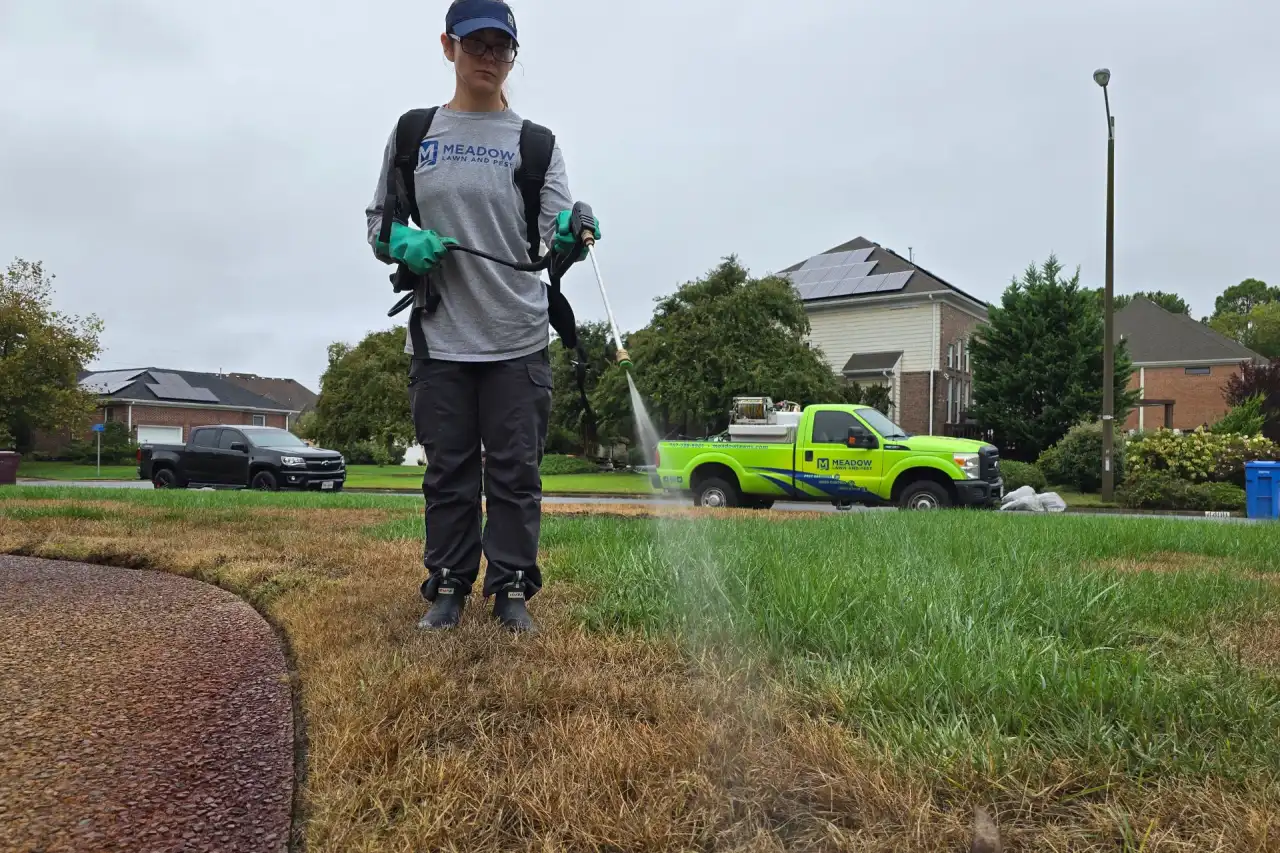
In Portsmouth yards where weeds are already growing, post-emergent herbicides are the appropriate tool. These selective products target weeds without harming surrounding fescue. Dandelion, clover, broadleaf plantain, and chickweed are commonly treated in Portsmouth cool season lawns. Wild violet is a persistent challenge in the shaded spots under mature trees. Most broadleaf weeds show visible decline within 7–14 days of a correctly applied treatment under the right temperature conditions (ideally 55– 85°F). Some stubborn species need the full 21 days to die, which is why our re-treatment policy waits 21 days before a complimentary spot re-service. Nutsedge and dallisgrass require specialty herbicides and are quoted separately from the standard 7-round program.
Get A Quote
Ready to get started? Fill out the form or contact us at the phone number below to get started.
Weeds That Challenge Portsmouth Lawns
Portsmouth’s combination of urban compaction, humidity, and older thinner turf makes it vulnerable to a wide range of weeds. Dandelion thrives in disturbed soils and reproduces aggressively by seed. Clover spreads in lawns with low nitrogen, which is often a signal that fertilization has a gap. Annual bluegrass turns large sections of lawn light-green during cooler months. Crabgrass fills in through summer wherever turf is thin. Wild violet builds colonies in shady corners and resists standard broadleaf herbicides. Chickweed carpets bare ground through fall and winter. A consistent combination of Prodiamine pre-emergent and targeted post-emergent applications is the most reliable way to keep weed pressure manageable over time — addressing thin turf itself is just as important.
Fall Lawn Care for Portsmouth Homes
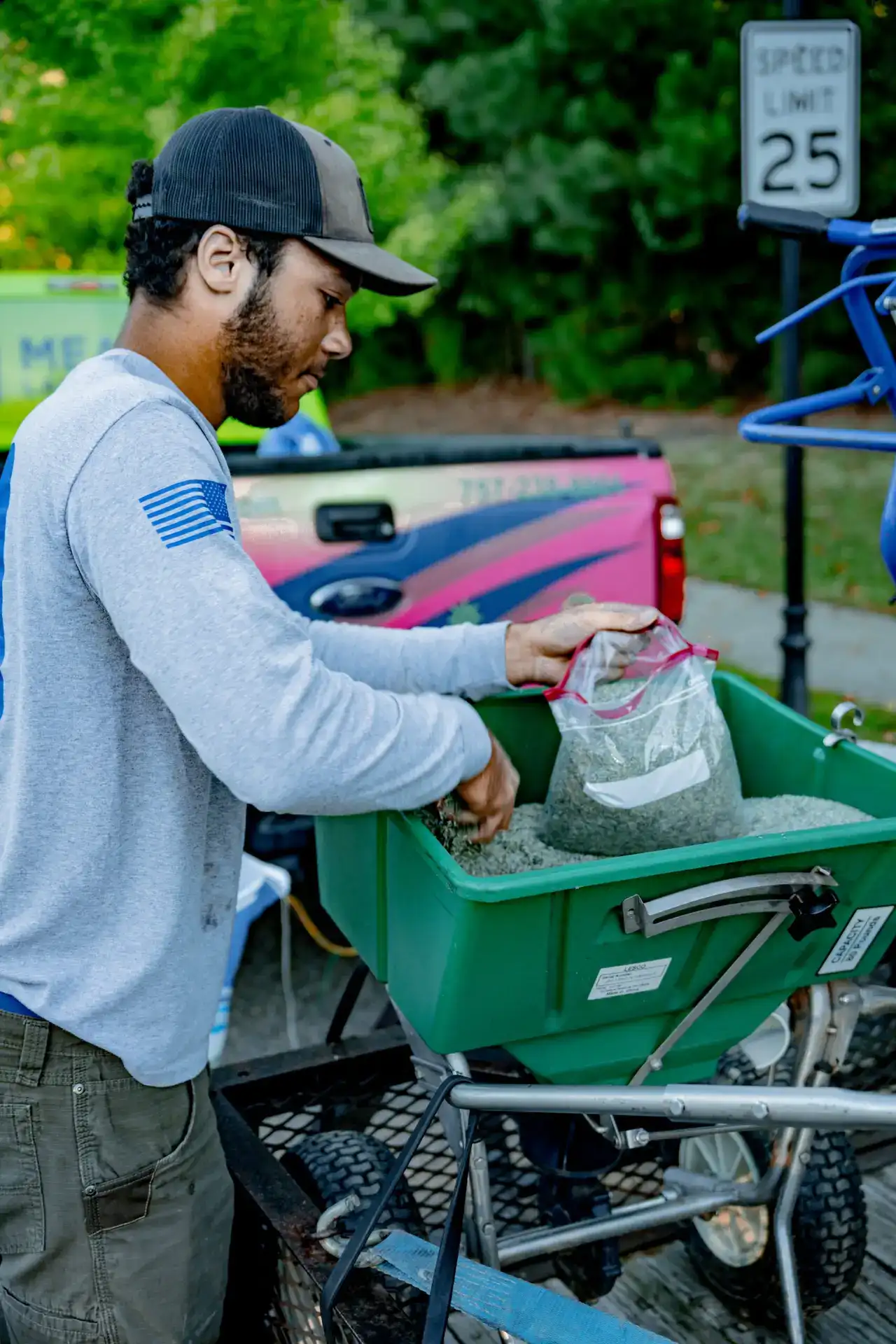
Fall is the highest-value season for lawn investment in Portsmouth. Cool season grasses grow actively from September through November, which makes this the ideal window to fertilize, overseed thin areas, and apply weed control. Round 6 of our 7-round program (October–November) uses 32-0-15 slow-release fertilizer to build roots and winter hardiness; it is timed after aeration / overseeding and intentionally skips herbicide so newly seeded areas are protected (if you’re not overseeding, we can include herbicide in Round 6 on request). Round 7 in November or December layers in nitrogen and a post-emergent to eliminate winter annuals like henbit and chickweed. For thin Portsmouth yards, early-fall overseeding produces the best germination results. Fall investment is what drives a strong following spring.
Spring Weed and Fertilizer Treatments in Portsmouth
Spring lawn care in Portsmouth focuses on getting cool season grasses growing strong and preventing warm-season weeds from establishing. Round 1 (late January / February) combines nitrogen with Prodiamine pre-emergent and post-emergent herbicides to eliminate winter weeds. Round 2 (March / April) adds a second nitrogen application and another Prodiamine pre-emergent for continuous spring coverage — this is critical because Prodiamine provides 6–8 weeks of control per application. Round 3 (late April / May) uses slow-release nitrogen plus iron for deep green color and potassium for stress tolerance, with spot treatment for any breakthrough weeds. Bare spots from winter should be addressed in early fall rather than spring since spring-seeded areas often struggle before summer heat arrives.
Soil Conditions in Portsmouth Neighborhoods
Soil quality in Portsmouth varies across neighborhoods, but urban soils in older parts of the city often show compaction, pH imbalance, and low organic matter after decades of use. Compacted soil reduces water infiltration and root depth, which weakens turf and makes fertilizer less effective. Heavy foot traffic on smaller Portsmouth lots accelerates compaction. Core aeration can relieve compaction and improve both root growth and fertilizer uptake significantly. Soil pH in urban environments can drift due to aging construction materials, salt exposure, and runoff — when pH moves outside the 6.0–7.0 range, nutrients become unavailable even when fertilizer is applied. Every Portsmouth lawn starts with a free soil test that checks pH, N-P-K, organic matter, and micronutrients; results guide the plan.
Product Safety for Portsmouth Families
Your Portsmouth yard is a living space, and we treat it that way. Every product we apply is EPA-registered, and applications follow strict federal label guidelines for rate and re-entry timing — “the Label is the Law.” After a liquid herbicide treatment, we recommend keeping children and pets off the lawn until dry (typically 1–2 hours under normal conditions). Granular fertilizer applications do not require a waiting period beyond watering in. We never over-apply products, which protects your turf from burn and reduces runoff into Portsmouth’s waterways and storm drains. We also follow strict weather rules: no applications with winds over 15 mph, within 2 hours of forecast rain, above 90°F, or on saturated lawns. Safety data sheets are available on request.