Cool Season Lawn Fertilization Weed Control in Rescue
Cool Season Lawn Care for Rescue, Virginia
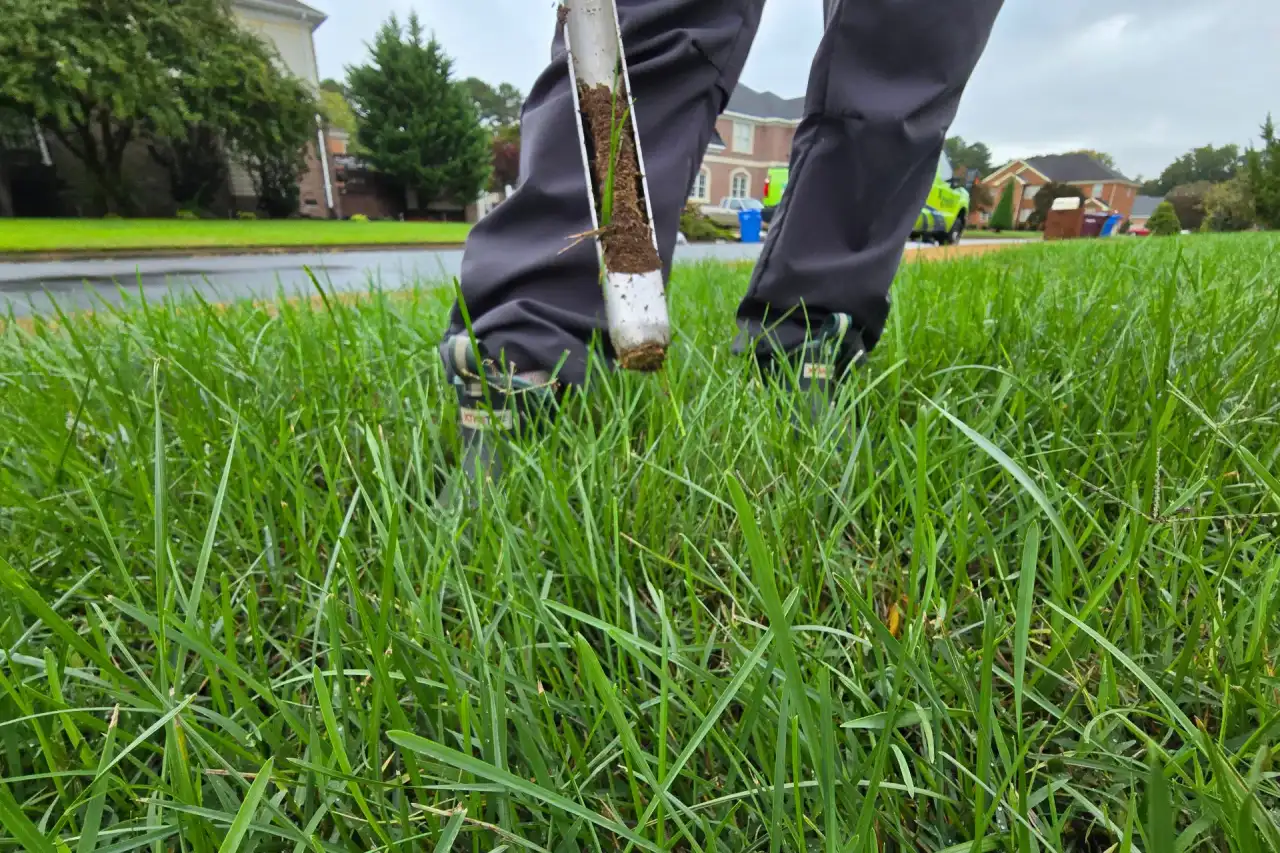
Rescue is a rural community in Isle of Wight County where larger lots, open land, and field-and-wood edges define the landscape. That rural setting changes the lawn care picture — soils vary widely across a single property, and weed seeds arrive in steady waves from neighboring fields and wooded boundaries. Tall fescue performs well in Rescue when supported by a 7-round fertilization and weed control program tailored to the specific property. Every Rescue program starts with a free soil test and inspection to identify grass type, pH, nutrient levels, and existing weed pressure so each application is based on what your lawn actually needs. We adjust timing and product selection through the year based on observed soil temperature and lawn response.
Cool Season Grasses in Rescue Lawns
Tall fescue is the most successful cool season grass planted across Rescue’s rural properties, valued for its deep root system and tolerance for the heat and occasional dry conditions that come with summer in this area. Fine fescue is a practical choice in heavily shaded areas under the mature hardwoods common across Isle of Wight County. Both grow most actively when soil temperatures fall in the 50–65°F range, which aligns with fall and early spring in Rescue. During warm summer months, growth naturally slows — expected behavior rather than a problem. Identifying your exact grass type up front is how we make sure the 7-round program is timed to when your turf can actually absorb and respond to every input.
When to Fertilize Cool Season Lawns in Rescue
The best fertilization windows for cool season lawns in Rescue are fall (September through November) and spring (late February through April). Fall is the most valuable application of the year — this is when roots grow deep and store energy for winter. A slow-release nitrogen application in early fall feeds the lawn through winter and powers strong spring green-up. Our 7-round program runs with those cycles: Round 1 in late January / February jumpstarts growth, Rounds 2 and 3 carry through spring, Rounds 4 and 5 use a 5-0-30 slow-release through summer heat to support roots, and Rounds 6 and 7 in fall build the foundation for next year. On Rescue’s larger rural lots, getting the timing right the first time is essential because every application is a meaningful investment.
Pre-Emergent Weed Control in Rescue
Rescue’s rural setting means weed seeds arrive from field edges, wooded borders, and neighboring properties on a regular basis. Pre-emergent herbicide applications — we use Prodiamine — create a soil barrier that stops these seeds from germinating before they can establish. Spring Prodiamine goes down in early to mid-March in Rescue to prevent crabgrass, foxtail, and other summer annuals. Because Prodiamine provides 6–8 weeks of control, our 7-round program applies it in Round 1 and Round 2 for continuous coverage through the critical spring window. A fall pre-emergent in late August or early September stops winter annuals like annual bluegrass and chickweed. Larger rural lots with heavy neighboring seed pressure can benefit from split applications for extended coverage.
Post-Emergent Weed Control for Rescue Lawns
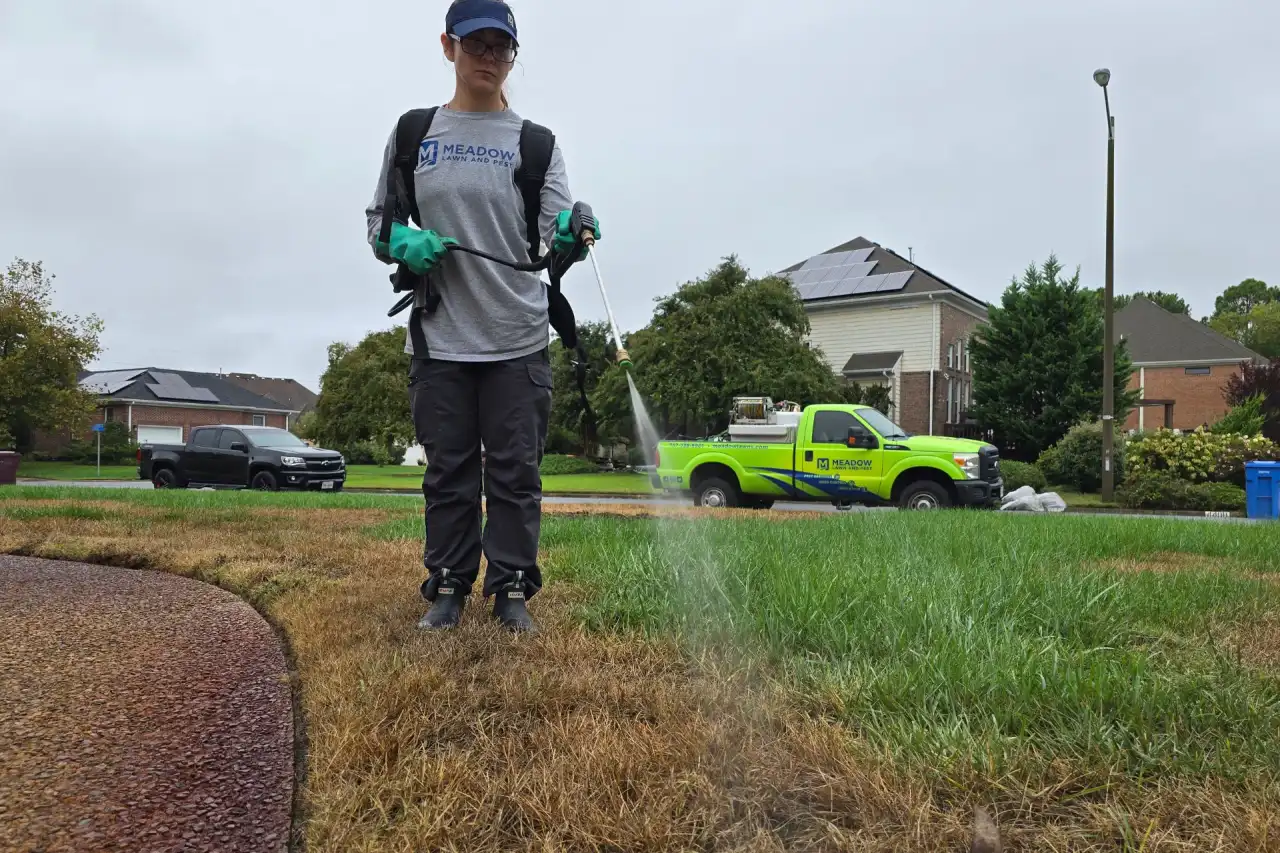
When weeds are already growing in a Rescue lawn, post-emergent herbicides are applied selectively to remove them without harming the turf. We identify every visible weed species before selecting a product, ensuring the right chemistry for the right target. Dandelion, clover, plantain, and thistle respond well to standard broadleaf herbicides. Thistle and wild violet are persistent in rural settings and may require repeat treatments across consecutive seasons. Crabgrass caught early in summer can be addressed with a post-emergent before it deposits seed. Most broadleaf weeds show visible decline within 7–14 days of a correctly timed treatment at temperatures between 55 and 85°F. Our re-treatment policy waits the full 21 days before a complimentary spot re-service, per product label requirements.
Get A Quote
Ready to get started? Fill out the form or contact us at the phone number below to get started.
Weeds That Challenge Rescue Lawns
Rescue’s rural landscape makes its lawns especially susceptible to weed pressure from multiple directions. Field edges and treelines provide a constant source of new weed seeds. Thistle and dock invade from open farm areas. Crabgrass fills thin spots rapidly in summer heat. Nutsedge thrives in any area with wet or compacted soil — specialty chemistry required, quoted separately. Wild violet spreads in shaded areas under the property’s older trees. Annual bluegrass carpets bare areas in fall and winter. Clover is widespread in lawns without consistent nitrogen. Dandelion and broadleaf plantain appear year-round. On rural properties where a single application covers significant acreage, accurate identification and efficient product selection is what keeps treatment costs reasonable while achieving strong control.
Fall Lawn Treatments for Rescue Properties
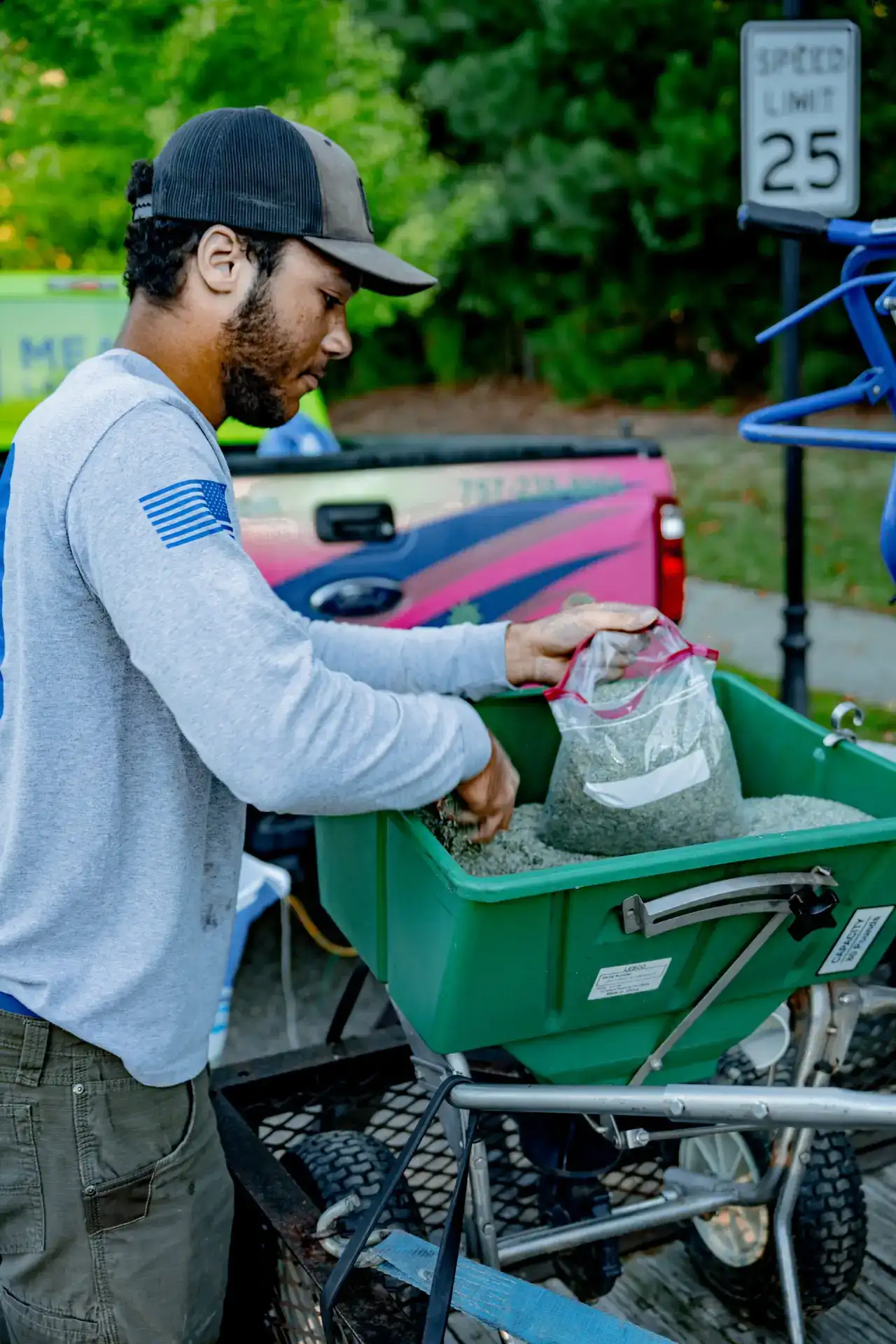
Fall is the most important season for building a strong lawn on rural Rescue properties. September through November brings the right combination of soil temperature, moisture, and air temperature to drive deep root growth in cool season grasses. Round 6 of our 7-round program (October–November) uses 32-0-15 slow-release fertilizer to build root depth and winter hardiness; it is timed after aeration and overseeding and skips herbicide so newly seeded areas are protected (herbicide can be added in Round 6 on request if no overseeding is planned). Round 7 in November / December adds nitrogen plus a post-emergent for winter annuals like henbit and chickweed. For thin or bare areas on larger Rescue properties, early-fall overseeding with a quality tall fescue blend produces strong germination.
Spring Lawn Treatments for Rescue
Spring care in Rescue focuses on helping cool season grasses break dormancy with the right nutritional support and blocking summer weeds before they germinate. Round 1 of our 7-round program (late January / February) pairs nitrogen with Prodiamine pre-emergent and post-emergent herbicides to eliminate any winter weeds still active. Round 2 (March / April) adds a second nitrogen application and another Prodiamine application for continuous spring coverage — Prodiamine provides 6–8 weeks of control per application, which is why two overlapping applications are used. Round 3 (late April / May) layers in slow-release nitrogen with iron and potassium plus spot treatment for breakthrough weeds. On larger rural lots, spring is a good time to identify areas that need attention before summer weed pressure arrives.
Soil Conditions Across Rescue Properties
Rescue’s rural landscape includes a range of soil types that vary across individual properties. Areas with a history of agricultural use may have compacted subsoils or pH that has drifted from amendments applied in past farming years. Wooded edges often have more acidic soils due to leaf litter accumulation. Open lawn areas in full sun may have sandier, faster-draining soil than shaded or low-lying sections. Soil pH affects how well nutrients are absorbed by grass roots — even a well-designed fertilizer program will underperform on acidic or compacted soil. Every Rescue lawn starts with a free soil test that checks pH, N-P-K, organic matter, and micronutrients, with written results reviewed before Round 1. Lime applications, core aeration, and targeted amendments follow from what the test reveals.
Safe Lawn Treatments in Rescue
We take product safety seriously on every Rescue property we care for, whether it is a small yard near the road or a large rural lawn with livestock in adjacent fields. All products are EPA-registered and applied at label rates and methods — federal law under FIFRA (“the Label is the Law”) allows no deviation. After liquid herbicide treatments, people and pets should stay off treated areas until dry (typically 1–2 hours). Granular fertilizer is safe once watered in. On rural Rescue properties near wooded edges, drainage channels, or field borders, we maintain appropriate buffers and adjust application methods near sensitive areas. Weather restrictions are enforced: no applications with winds over 15 mph, within 2 hours of forecast rain, above 90°F, or below 32°F for post-emergents. Documentation is always available.