Cool Season Lawn Fertilization Weed Control in Seaford
Cool Season Lawn Care for Seaford, Virginia
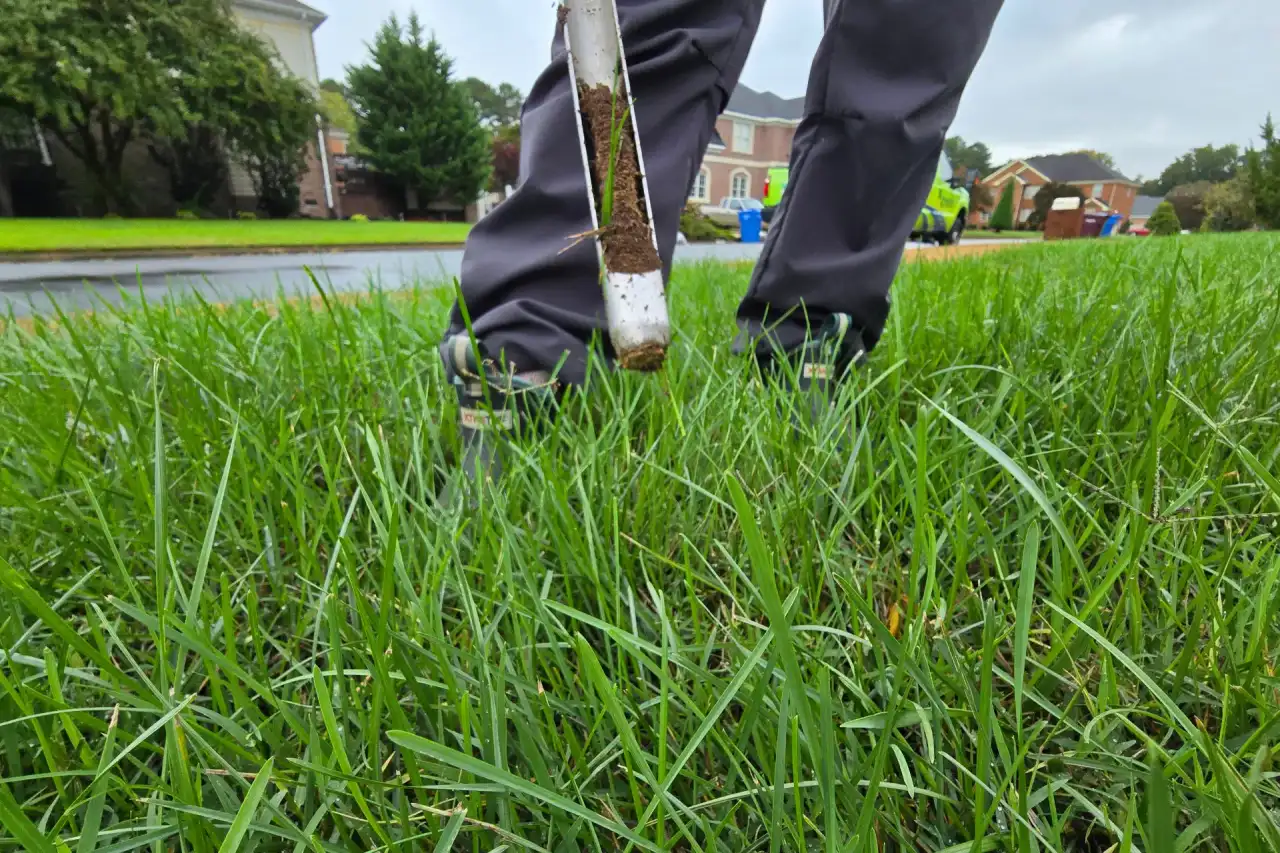
Seaford is a residential community in York County where suburban neighborhoods and a quieter rural character exist side by side. Properties range from established homes with mature trees and fully developed soil to newer lots where turf is still building density and the soil is still finding its balance. Tall fescue and fine fescue can perform beautifully in Seaford when supported by a 7-round fertilization and weed control program designed around the specific conditions of the property. Every Seaford program starts with a free soil test and on-site inspection so the first-year plan is based on your pH, NPK levels, grass type, and weed pressure — not a generic template. We adjust each round across the year based on how the lawn is actually responding.
Cool Season Grasses in Seaford Lawns
Tall fescue is the most planted cool season grass in Seaford and performs well in York County’s climate with proper care. Its deep root system is more drought-tolerant during summer dry spells than shallow-rooted alternatives, and its ability to stay green through fall and into winter makes it a reliable choice for Seaford homeowners. Fine fescue is used in areas with heavier shade under the mature trees common across the community. Both varieties actively grow and benefit most from fertilizer and weed control inputs when soil temperatures fall between 50 and 65°F, primarily in fall and early spring. During summer they slow growth — completely normal. Identifying your grass type up front ensures every treatment is correctly timed and formulated.
Best Times to Fertilize Seaford Lawns
For Seaford’s cool season lawns, the most effective fertilization windows are fall (September through November) and early spring (late February through April). Fall is the priority application of the year — fescue roots grow most vigorously then, drawing up nutrients and building the reserves that carry the lawn through winter and produce a strong spring green-up. Our 7-round program runs with that biology: Round 1 in late January / February jumpstarts growth, Rounds 2 and 3 carry through peak spring, Rounds 4 and 5 use a 5-0-30 slow-release blend through summer to support roots without forcing top growth, and Rounds 6 and 7 in fall and early winter build reserves for the following year.
Pre-Emergent Weed Control in Seaford
Pre-emergent herbicide creates a barrier in the soil that prevents weed seeds from germinating before they can root and establish. In Seaford, we use Prodiamine and time the spring application to soil temperatures approaching 55°F in mid-March to block crabgrass, foxtail, and summer annual weeds. Because Prodiamine provides 6–8 weeks of control per application, our 7-round program applies it in Round 1 and Round 2 — overlapping coverage through the critical spring window. A late-summer or early-fall application in August / September stops winter annuals like annual bluegrass and chickweed. Seaford properties with thinner turf coverage rely on pre-emergent to protect open soil, while established lawns benefit from maintained suppression.
Post-Emergent Weed Treatments for Seaford Lawns
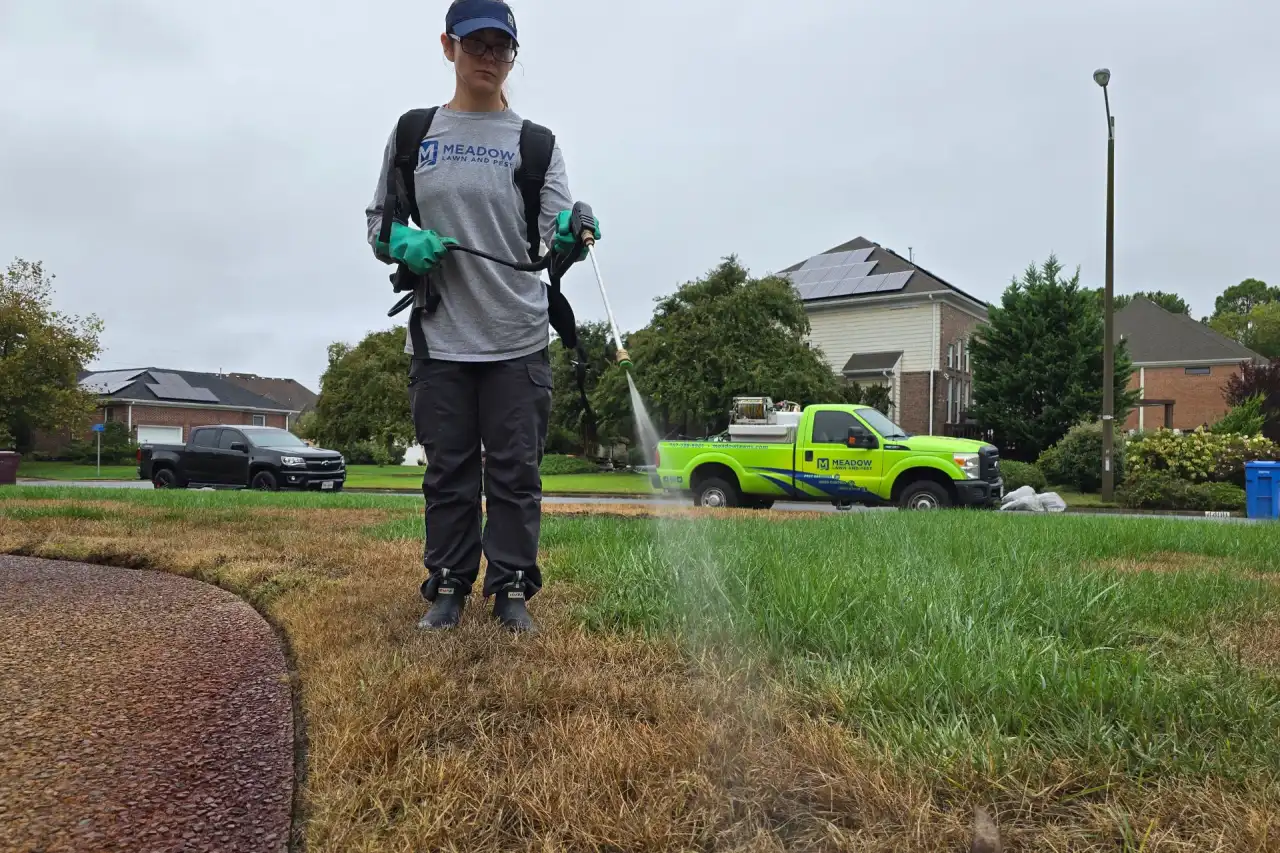
When weeds are already growing in a Seaford lawn, post-emergent herbicides are used to eliminate them selectively without harming the surrounding turf. We identify every weed species present before selecting a product so that the most effective chemistry is matched to each specific target. Dandelion, clover, and plantain respond well to selective broadleaf herbicides. Wild violet in shaded areas under Seaford’s trees is persistent and often requires specialty products applied across multiple visits. Crabgrass can be treated post-emergently if caught early before it matures. Most broadleaf weeds show visible decline within 7–14 days of a correctly applied treatment at temperatures between 55 and 85°F. Our re-treatment policy waits 21 days before a complimentary spot re-service. Nutsedge and dallisgrass are quoted separately.
Get A Quote
Ready to get started? Fill out the form or contact us at the phone number below to get started.
Weeds That Appear in Seaford Lawns
Seaford lawns face a typical range of York County weed challenges shaped by humidity, tree cover, and a mix of soil types. Crabgrass is the dominant summer annual, taking advantage of any thin or stressed areas in full sun. Dandelion and clover are present in most yards throughout the year. Annual bluegrass invades in fall and colonizes cool, open areas through winter. Wild violet builds colonies in shaded spots and resists standard herbicide programs, requiring specialty treatment and patience over multiple seasons. Nutsedge appears in low spots or areas with wet soil conditions and requires specialty chemistry quoted separately. Chickweed carpets bare ground from fall through early spring. On properties with thinner turf, Prodiamine pre-emergent is especially valuable for preventing these weeds from establishing.
Fall Lawn Care Is Essential in Seaford
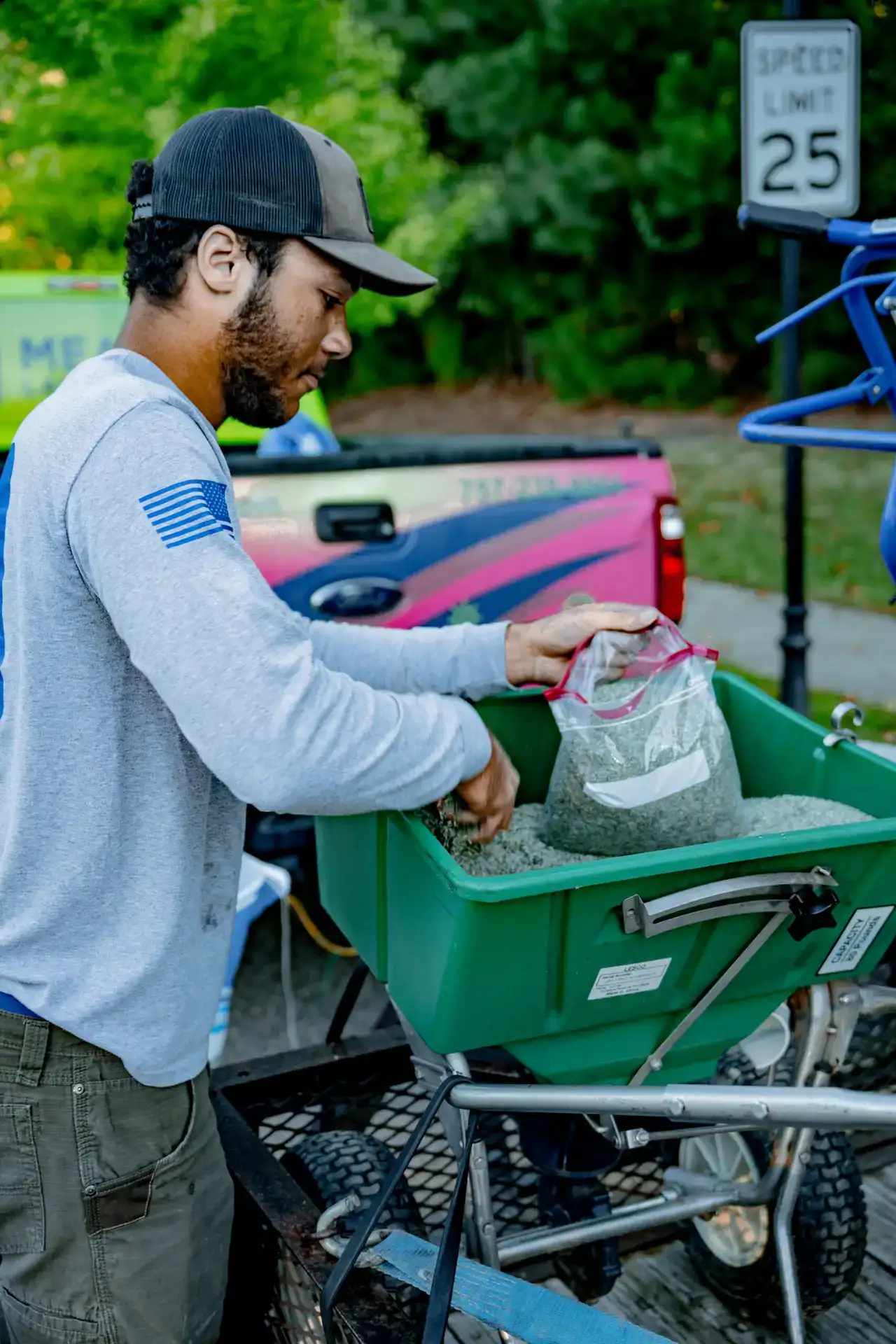
Fall is the foundation season for cool season lawn programs in Seaford. From September through November, tall fescue grows roots most actively and absorbs nutrients most efficiently. Round 6 of our 7-round program (October–November) uses 32-0-15 slow-release fertilizer to build root depth and winter hardiness; it is timed after aeration and overseeding and skips herbicide so newly seeded areas are protected (herbicide can be added in Round 6 on request if you’re not overseeding). Round 7 in November / December adds nitrogen plus a post-emergent for winter annuals like henbit and chickweed. For Seaford properties with thin or bare spots from summer stress, early-fall overseeding combined with starter fertilizer produces excellent results while soil remains favorable.
Spring Lawn Care for Seaford Properties
Spring care in Seaford focuses on helping cool season grasses break dormancy with proper nutritional support and blocking summer weeds before they germinate. Round 1 (late January / February) combines nitrogen with Prodiamine pre-emergent and post-emergent herbicides to eliminate any winter weeds still active. Round 2 (March / April) adds a second nitrogen application plus another Prodiamine application for continuous spring coverage. Round 3 (late April / May) uses slow-release nitrogen with iron and potassium plus spot treatment for breakthrough weeds. Spring is also when we evaluate any winter damage and make recommendations for overseeding or aeration before the heat of summer arrives. Getting the lawn growing densely in spring is the best strategy for minimizing the weed pressure that builds through the warm months ahead.
Soil Health in Seaford Properties
Seaford’s soils vary across the community, with some older established properties having relatively good soil structure and organic matter, while newer lots may have compacted subsoil with thin topsoil that limits root growth. Heavy clay soils common in York County compact under foot traffic and equipment, reducing water infiltration and fertilizer effectiveness. Soil pH drift is common and frequently goes undetected — when pH falls below 6.0, grass roots cannot absorb nutrients efficiently even when fertilizer is applied correctly. Core aeration relieves compaction and improves water and nutrient movement. Every Seaford lawn starts with a free soil test that checks pH, N-P-K, organic matter, and micronutrients, with written results reviewed before Round 1 applications begin.
Safe Lawn Applications for Seaford Families
Every product we apply in Seaford is EPA-registered and used strictly according to label guidelines for rate and method — federal law (“the Label is the Law”) prohibits deviation. After liquid herbicide treatments, people and pets should stay off treated areas until the product dries — typically 1–2 hours in normal weather. Granular fertilizer is safe for foot traffic once watered into the turf. We maintain complete application records for your property and will answer any question about ingredients, safety data, or re-entry timing. Near drainage areas and any Seaford properties adjacent to waterways or wetlands in the York County watershed, we are mindful of application buffers and choose products with minimal environmental impact. Weather restrictions are enforced: no applications with winds over 15 mph, within 2 hours of forecast rain, above 90°F, or below 32°F for post-emergents.