
5 Homeowner Behaviors That Undermine Professional Lawn Care
Meadow Lawn & Pest • June 2026 • Carrollton, VA
Even homeowners with professional lawn care programs sometimes unintentionally undermine their own lawn through five common behavior patterns. Each is easy to fix once you know to look for it — and together they can be the difference between a lawn that thrives all summer and one that struggles despite a good professional program.
Why Your Lawn Struggles Despite a Professional Program
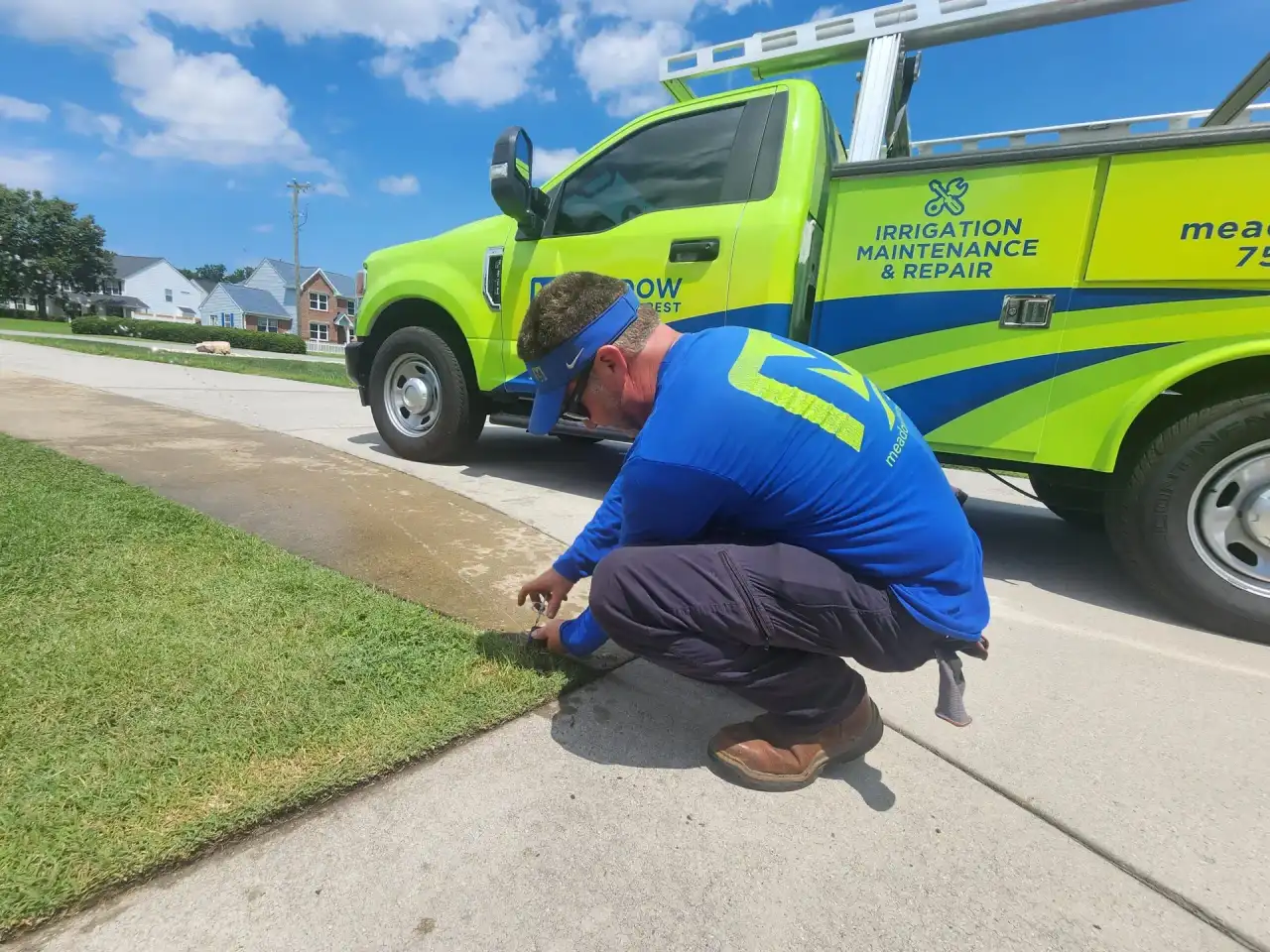
If you are paying for a professional lawn care program and your lawn still struggles through Hampton Roads summer, the problem may not be the program. Sometimes homeowner behaviors between professional visits undermine everything the program is doing. We see this pattern across Newport News, Norfolk, Virginia Beach, and Chesapeake every summer. The good news: each of these behaviors is easy to fix. Here are the five most common ones we see and why they matter.
The 5 Behaviors
1. Evening Watering
Irrigation running between 4 p.m. and midnight keeps the canopy wet overnight — the single biggest driver of brown patch disease. You may be paying for a fungicide program while simultaneously creating the conditions that produce the disease. The fix: switch to early morning watering (4 to 8 a.m.). The change takes 60 seconds on your controller and the effect on disease pressure is dramatic.
2. Mowing Too Short
Cool-season grass (tall fescue, Kentucky bluegrass) should be mowed at 3.5 to 4 inches in summer. Warm-season grass (Bermuda, zoysia, St. Augustine) should be at 2.5 to 4 inches. Short mowing produces shallower roots, more weed pressure, more disease pressure, and more heat stress. The fix: raise the mower deck to the appropriate height for your grass species.
3. Extra Fertilizer Between Visits
Your professional program is calibrated to deliver the right amount of nitrogen and nutrients across the season. Adding more without coordination often creates soft, over-stimulated growth that increases disease pressure, pest pressure, and stress. The fix: if you want to add anything between visits, ask your provider first.
4. Ignoring Early Signs of Pests and Disease
Early intervention is dramatically cheaper and more effective than late intervention. Homeowners often see early signs — yellowing patches, browning at sunny edges, mycelium on dewy mornings — and assume the lawn will recover. What would have been a $90 spot treatment can become a $500 rescue project. The fix: walk the lawn 2 to 3 times per week during summer. Call your provider when something looks off, even if it seems minor.
5. Pressure Washing Concrete Onto the Lawn
Running pressure wash runoff onto the lawn can damage grass in multiple ways — high-pressure water uproots seedlings and crowns, detergents harm turf, and concentrated debris smothers the grass. Within a week we often see brown stripes along driveways where runoff concentrated. The fix: direct runoff away from the lawn during pressure washing. Avoid detergents near the lawn entirely.
Other Behaviors Worth Watching
Storing Equipment on the Lawn
A car, trailer, or piece of equipment parked on the lawn for a few days kills the grass underneath. Storage on the lawn for any length of time is bad practice.
Concentrated Dog Use
Multiple dogs in a small yard concentrate urine and traffic damage. Rotating use areas or adding designated dog zones reduces damage significantly.
Salt Damage Near Walkways
Winter salt can persist into spring and summer, damaging adjacent turf. Flush salt-affected areas with deep watering as part of spring cleanup.
Cigarette Butts and Trash
Beyond the appearance issue, cigarette butts contain chemicals that affect soil health and turf quality over time.
How to Audit Your Own Habits
Spend 10 minutes thinking honestly about your routines. What time does your irrigation run? What height do you mow at? Do you apply any products between professional visits? When was the last time you walked the lawn looking for problems? Where does pressure wash runoff go? Most homeowners discover they are doing at least one or two of the behaviors above. Changing them is free and produces measurable improvement.
The Compound Effect
Lawns whose owners practice all five harmful behaviors look meaningfully worse over a season than lawns whose owners avoid them — even when both are on the same professional program. Over multiple years, the difference compounds further. The lawns that look great in our area are not just well-treated. They are also well-handled by owners who avoid these mistakes.
Frequently Asked Questions
What is the single biggest behavior change to make?
Switch evening watering to early morning. Free, takes 60 seconds, dramatically reduces disease pressure.
How quickly will I see improvement?
Watering and mowing changes: 3 to 6 weeks for visible improvement. Avoiding extra fertilizer: noticed in stress periods. Better monitoring: depends on when the first issue appears that you catch early.
Will my lawn care provider tell me about these issues?
Good providers will if they see them. If your provider has never mentioned watering timing or mowing height, ask them what they recommend for your specific lawn.
Get a Professional Walk-Through
If you would like a professional walk-through to identify which of these behaviors apply to your specific situation and discuss what to change first, we are glad to come look. The conversation costs nothing and the changes are free. We serve Hampton Roads communities including Newport News, Norfolk, Virginia Beach, Chesapeake, Suffolk, Smithfield, Carrollton, and Isle of Wight County.