
Pest Control
Quarterly Pest Control or a One Time Treatment? Which You Actually Need
Meadow Lawn & Pest • October 2026 • Carrollton & Hampton Roads, VA • 7 min read
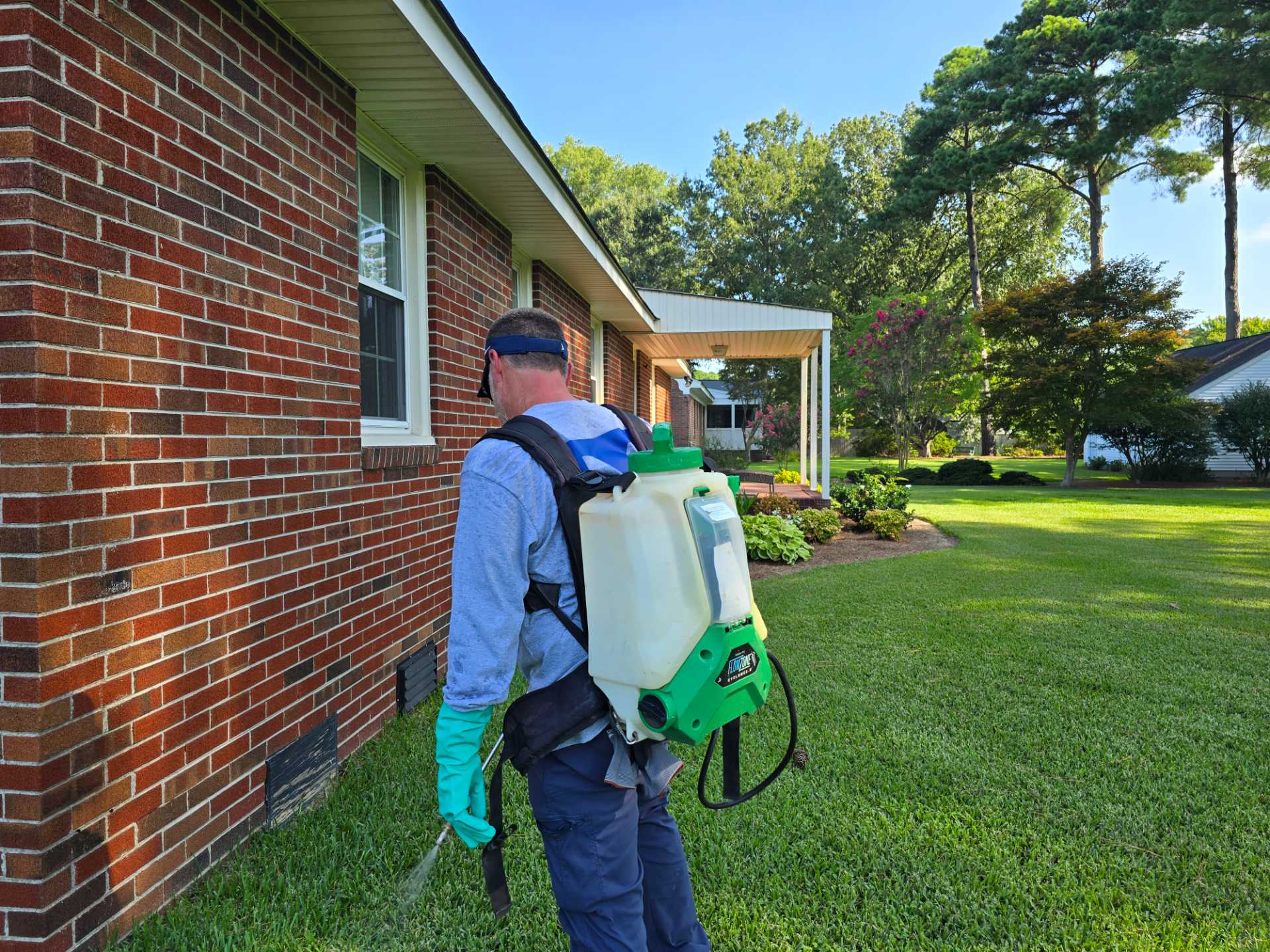
Short Answer: A one time treatment is the right answer for a defined problem with a clear end, such as a wasp nest, an ant trail, or a single obvious entry point. Ongoing service is the right answer when pressure is continuous, which in coastal Virginia it usually is. The deciding question is whether your pests are arriving from a source you can eliminate or from the surrounding environment. Woods, marsh, water, and mild winters all mean continuous pressure, and treatment applied once wears off in weeks.
Pest companies sell ongoing plans, which gives them an obvious interest in recommending one. That makes the advice hard to weigh, so here is the version with the reasoning shown, including the situations where a single treatment is genuinely all you need.
The answer turns on one question about your particular property, and once you can answer it the choice is usually clear.
The Question That Decides It
Is your pest problem arriving from a source you can eliminate, or from the environment around you?
Some problems have a source with an end. A wasp nest under the eave is a discrete thing. Treat it, remove it, and that particular problem is over. An ant trail leading to a specific colony can be eliminated. A single gap letting mice into a garage can be sealed.
Other problems arrive continuously. If your property backs onto woods, marsh, a tidal ditch, or a field, the surrounding environment is producing pests indefinitely and sending them toward the nearest structure. Nothing you do to your house changes what is happening outside your property line.
In Hampton Roads, most properties fall into the second category. This is a coastal region with extensive wetlands, wooded lots, high humidity, and winters mild enough that pest activity never fully stops. That is continuous pressure by definition.
Why Treatments Wear Off
Understanding this prevents the most common disappointment with a one time service.
Residual products break down. Sunlight degrades them, rain washes them off, and irrigation does the same. Depending on the product, the surface, and exposure, a treated band is meaningfully effective for a matter of weeks rather than months.
Our climate accelerates it. Heat, sustained humidity, and heavy rainfall including tropical systems all shorten the effective window compared to a drier region.
So a single treatment creates a period of protection and then it ends. If the environment is still producing pests when it ends, they resume arriving. That is not a product failure, it is how residual treatment works, and any company suggesting one application solves a continuous problem for a year is overselling.
Quarterly scheduling exists because the interval roughly matches how long protection lasts combined with how seasonal pest pressure shifts.
When One Time Genuinely Works
We would rather name these clearly than imply everything needs a plan.
A wasp or hornet nest is a defined problem. Treat and remove it and you are done, though a property with good nesting sites may get a new one next season.
A specific ant trail with a findable colony can be eliminated. Odorous house ants and similar species can be baited out rather than merely suppressed.
A single clear entry point with a small rodent problem can be handled by trapping and sealing, and if the gap was genuinely the only route, sealing it ends it.
A pre sale or pre purchase concern, where someone wants a property inspected and treated before a transaction, is a legitimate one time need.
And a one time treatment is a reasonable way to test a company before committing to anything ongoing. Any reputable operation will do the work without requiring a plan, and how they handle a single visit tells you a fair amount about how they would handle a year of them.
When Ongoing Service Earns Its Cost
Several situations make continuous coverage the better value rather than the upsell.
Properties adjacent to woods, water, marsh, or open field receive continuous immigration. That describes a large share of this service area.
Homes with crawl spaces, which is most of them here, have an ongoing vulnerability that benefits from regular inspection as much as from treatment. Moisture conditions change, vapor barriers tear, and vents get blocked.
Recurring seasonal pressure is another. If you get stink bugs every October and ants every spring, those are predictable cycles that scheduled service addresses preventively rather than reactively.
And households with low tolerance for finding things indoors, which frequently means young children or someone with a genuine aversion, are paying for a standard rather than for a fix.
The regular inspection is the part people undervalue. A technician at the property four times a year notices the failed garage seal, the wasp nest starting under the deck, the moisture in the crawl space, and the carpenter bee galleries in the fascia. Catching those early is frequently worth more than the treatment itself.
What Each Costs
Worth putting numbers against, since the comparison is the point.
A one time treatment for a typical Hampton Roads home generally runs $150 to $350 depending on the size of the structure and the scope of the problem. A specific issue like a wasp nest may be less.
Quarterly service commonly runs $100 to $175 per visit, frequently with a higher initial service that includes a more thorough treatment and the exterior work that sets the baseline. That works out to roughly $400 to $700 annually.
So the comparison is not one treatment against four. It is one period of protection against continuous coverage plus four property inspections, and whether that is worth it depends entirely on whether your pressure is continuous.
Bundling matters here too. Companies that also handle mosquito control, lawn care, or irrigation frequently price combined services better than separate ones, which is worth asking about if you use more than one. It also means one company that knows the property rather than three that each see a slice of it.
Questions Worth Asking Before Signing
Ongoing plans vary in ways that the monthly figure does not reveal.
What happens between visits if pests appear. A plan that includes return visits at no additional charge is meaningfully different from one that does not, and this is the provision that determines whether the plan is a service or a schedule.
What specifically is covered and what is excluded. Termites, mosquitoes, wildlife, and bed bugs are commonly outside general pest plans, and in Tidewater Virginia termites in particular deserve their own conversation given how heavy pressure is here.
Is there a contract with a term, and what is required to cancel. Some plans are month to month and some are annual agreements with early termination provisions.
Is interior service included when needed or billed separately. And does the technician walk the property and report conducive conditions, or apply and leave.
The Middle Option People Overlook
The choice is usually presented as quarterly or nothing, and there is a reasonable position between them.
Some households do well with two seasonal treatments rather than four, timed to the two periods when pressure actually peaks here. A fall service ahead of the indoor migration and a spring service as ants, wasps, and general activity resume covers the two transitions that generate most calls.
That approach suits a property with moderate pressure, meaning one not backing directly onto woods or marsh, where the owner is willing to handle the occasional between times issue themselves. It costs less than quarterly and considerably more than reacting after the fact.
It is worth asking any company whether they offer it, since it is frequently available and rarely advertised.
What to Do Next
Answer the framing question for your own property. Walk the perimeter and look at what borders you. Woods, marsh, water, a ditch, or open field on any side means continuous pressure and points toward ongoing service. A house surrounded by other houses in an established neighborhood with no adjacent habitat is a better candidate for reactive treatment.
Look at your own history. If the same problem recurs every year at the same time, that is a cycle rather than an incident, and treating it once each time it appears is the more expensive way to manage it.
If you are unsure, start with a one time treatment and see how long it holds. That is genuine information about your property rather than a guess, and it costs less than committing to a year.
Whichever you choose, do the free work. Seal the gaps, fix the garage seal, pull mulch back from the foundation, and address crawl space moisture. Those reduce pressure permanently in a way no treatment does.
To discuss which approach fits your property, call Meadow Lawn and Pest at 757-238-8901 or visit meadowlawnandpest.com. We serve Carrollton, Smithfield, Windsor, Suffolk, Chesapeake, Hampton, Newport News, Poquoson and York County, and we will tell you honestly when a single treatment is all you need.