
Pest Control
The Fall Pests Moving Into Hampton Roads Homes Right Now
Meadow Lawn & Pest • October 2026 • Carrollton & Hampton Roads, VA • 7 min read
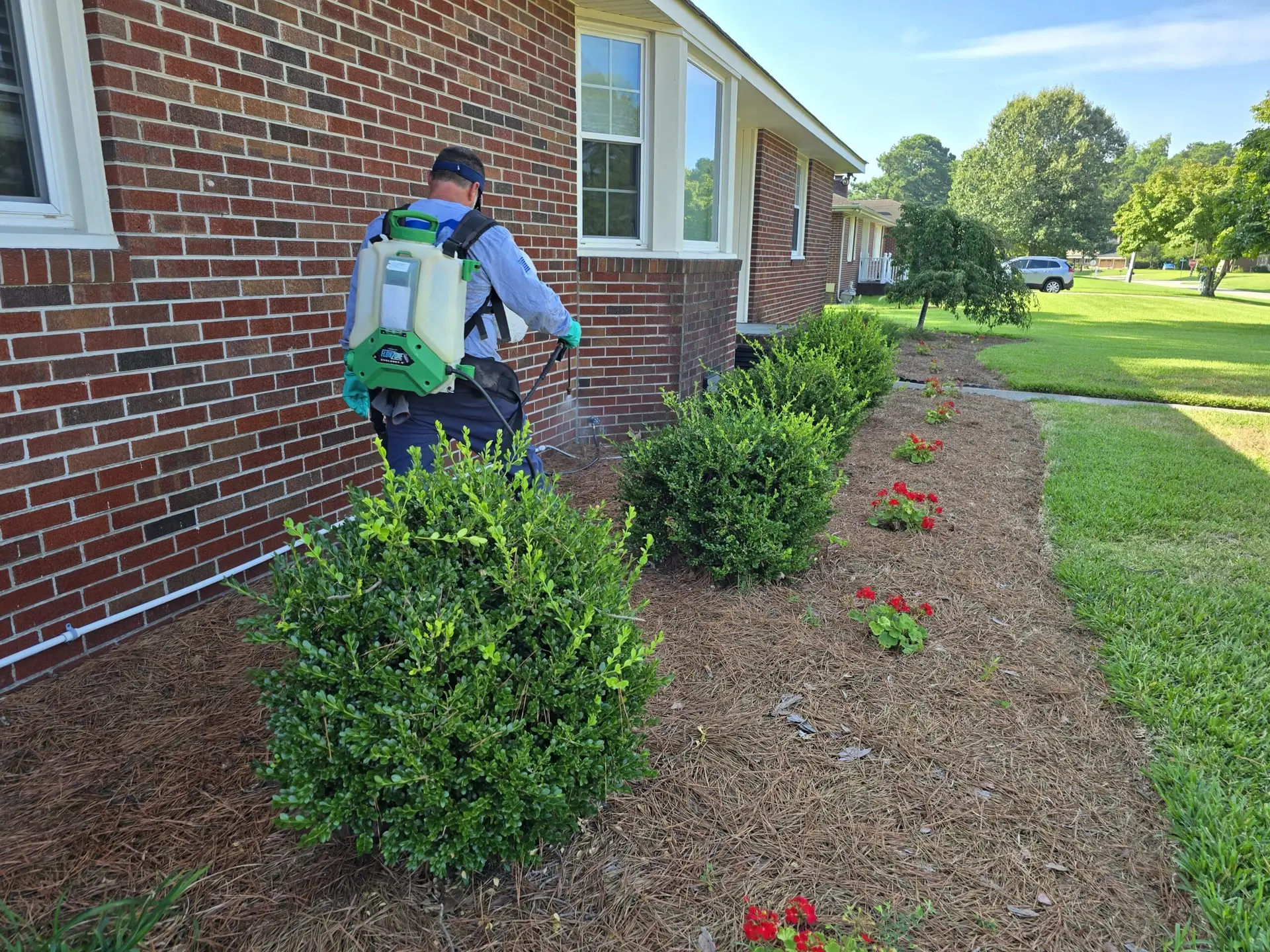
Short Answer: As nights drop into the fifties and forties, insects and rodents that spent the summer outdoors start looking for somewhere warm, and your house is the nearest option. In Hampton Roads the main arrivals are brown marmorated stink bugs, Asian lady beetles, camel crickets, mice, and spiders. They use gaps most homeowners never look at, including the space around utility penetrations, worn garage door seals, and crawl space vents. Treatment works far better applied before they get in than after.
There is a predictable rhythm to pest calls in this region, and October is when it changes character. Through summer, most of what we treat is an outdoor problem. Then the first real cool front arrives and within a week or two the calls move indoors.
None of that reflects a dirty house. It is a seasonal migration that happens every year on roughly the same schedule, and it is one of the few pest problems you can genuinely get ahead of. Here is what is arriving and where it is getting in.
What Changes When It Cools
Most of the insects around your home are cold blooded, so their activity and survival track the air around them. All summer, outdoor conditions suit them. As nights fall into the fifties and then the forties, outdoor living gets harder and the instinct that keeps them alive is to find somewhere warmer and more stable.
Your house is a heat source with a foundation touching the ground, gaps around every pipe and wire, doors that open several times a day, and in most Hampton Roads homes a crawl space underneath. From an insect's perspective it is the most attractive structure on the block.
Rodents run the same calculation with more determination, and they are also looking for food and nesting material. A mouse needs a gap about the width of a pencil.
The timing follows temperature rather than the calendar, which is why some years the shift comes in late September and other years it holds off into November. Watching overnight lows predicts it better than any date.
Brown Marmorated Stink Bugs
These are the signature fall invader across Virginia and they behave differently from most pests, which is why they frustrate people so much.
They aggregate, meaning they gather in large numbers rather than arriving individually. They are drawn to warm sunlit surfaces, so you see them clustering on south and west facing walls on warm afternoons in fall, then working their way into siding gaps, around window frames, and into attic and wall voids.
Once inside a wall void they overwinter there, and on warm days through winter and early spring some of them wake up and emerge into living space. That is why people find them in February and assume they came in then.
They do not bite, they do not damage the structure, and they do not reproduce indoors. They are a nuisance rather than a hazard, though the odor when disturbed is genuinely unpleasant, which is where the name comes from.
Exterior treatment applied to those sunny walls before they move in is far more effective than anything done after they are in the walls. Once they are inside the void, there is very little to be done until they emerge.
Camel Crickets and the Crawl Space
Anyone who has lived in Virginia knows these, usually under a different name. Spider crickets, sprickets, cave crickets. They are the humpbacked, long legged, alarming jumpers that turn up in crawl spaces and basements.
They matter here specifically because so many Hampton Roads homes are built over crawl spaces, and a damp crawl space is exactly the habitat they want. Dark, humid, undisturbed, with organic material to feed on.
They are harmless in the sense that they do not bite or carry disease, though they will chew fabric and paper, and a large population is genuinely unsettling to encounter.
The durable answer is moisture rather than product. A crawl space with a proper vapor barrier, adequate drainage, and downspouts discharging away from the foundation is far less hospitable than one with standing water and exposed soil. Treatment helps and it addresses the symptom.
Since this is the region where crawl space moisture is a near universal condition, it is worth looking at yours this fall rather than assuming it is fine because nobody goes down there.
Mice
Rodent activity indoors climbs sharply once nights get cold, and the first sign is almost always droppings or sound rather than a sighting.
Garages are the most common entry point, and worn or missing garage door seals are the most common route. The seal at the bottom of a garage door is the single largest gap on most houses, and it degrades over the years without anyone noticing.
From the garage, mice move into the house through the gap under the connecting door, through utility penetrations, and along wall voids. Crawl space vents and foundation gaps are the other principal routes.
Mice cannot be treated out of a structure the way an insect problem can be suppressed. They require monitoring to establish what is present and where, sealing the entry point, and removal. Anyone proposing to solve a rodent problem with a perimeter spray is not describing a solution.
That is also why fall is the right time to look at gaps. Sealing before they get in is dramatically easier than removing them afterward.
Spiders and Everything Else
Spider calls climb in fall for two reasons. Some species move toward structures as it cools, and some are simply more visible because they have grown to full size by autumn.
Most spiders found in Virginia homes are harmless and are in fact eating other insects. Black widows are present in the region and prefer undisturbed protected spaces, meaning woodpiles, crawl spaces, sheds, and the backs of storage areas, so caution in those places is reasonable.
Spiders concentrate where their food does, which is near lights and under overhangs. That is why eave and soffit treatment and physical removal of webbing matter, and why a service that only treats ground level leaves the spider problem largely untouched.
Asian lady beetles arrive alongside the stink bugs and behave similarly, aggregating on warm walls and moving into voids. Various beetles, wasps looking for overwintering sites, and the occasional snake seeking warmth round out the list.
Prevention Beats Reaction
The single most useful thing to understand about fall pest pressure is that the timing of the response matters more than the products used.
A treatment applied before the weather turns intercepts pests during the migration, while they are still outside and crossing treated surfaces. A treatment applied after you have seen mice in the pantry or stink bugs in the bedroom is addressing an established population inside a structure, which is a harder and slower problem with different tools.
October is generally the right month here. Warm enough that pests are still active outdoors and moving through treated areas, late enough that the migration is beginning.
Sealing works alongside it rather than instead of it. Treatment reduces pressure at entry points. Sealing removes them. The items worth checking are door sweeps and garage seals, gaps around pipes and cables which fill well with steel wool and sealant, torn window and crawl space vent screens, and foundation cracks.
What to Do Next
Walk your foundation and garage this week with a flashlight. Check the garage door seal along its full width, the gaps where utilities enter, the dryer vent, and the crawl space vents and access door. Note anything you can slide a pencil into.
Look at your eaves and overhangs for webbing, and at south and west facing walls on a warm afternoon for stink bug clustering. Both tell you what is currently working on your house.
Look in the crawl space, or have someone look, specifically for standing water, a torn or missing vapor barrier, and whether downspouts discharge away from the foundation. That single inspection addresses camel crickets, spiders, and a good deal else.
Then get the exterior treated before the cold arrives rather than after something turns up indoors. Prevention and reaction are genuinely different jobs and the first one is easier and cheaper.
To have someone walk the property, treat the full envelope, and tell you which gaps actually matter, call Meadow Lawn and Pest at 757-238-8901 or visit meadowlawnandpest.com. We serve Carrollton, Smithfield, Windsor, Suffolk, Chesapeake, Hampton, Newport News, Poquoson and York County.