Sprinkler Blowouts
Why Your Sprinkler System Needs a Blowout Before Winter
Meadow Lawn & Pest • September 2026 • Hampton Roads, VA • 7 min read
Short Answer: A sprinkler system blowout is the process of clearing all the water out of your irrigation lines before winter, using compressed air, so that no water is left to freeze. It matters because water expands when it freezes, and any water trapped in your pipes, valves, or sprinkler heads can freeze, expand, and crack or burst those components. Even in Hampton Roads, where winters are milder than up north, we get hard freezes that can do this damage. A blowout, done before the first freeze, protects an expensive irrigation system from costly winter damage. Skipping it is a gamble that can lead to broken pipes and repairs come spring.
Your in-ground sprinkler system is a significant investment, and it has an off-season vulnerability a lot of homeowners do not think about until it is too late. Water left sitting in the lines through winter can freeze, and when it does, it can crack pipes, split valves, and damage sprinkler heads. A blowout is how you prevent that, and getting it done before the first freeze is one of the most important things you can do for your system.
At Meadow Lawn & Pest, we winterize irrigation systems for homeowners across Carrollton, Smithfield, Suffolk, and the greater Hampton Roads area. Here is why a sprinkler blowout matters and why timing it right is so important.
What a Blowout Actually Is
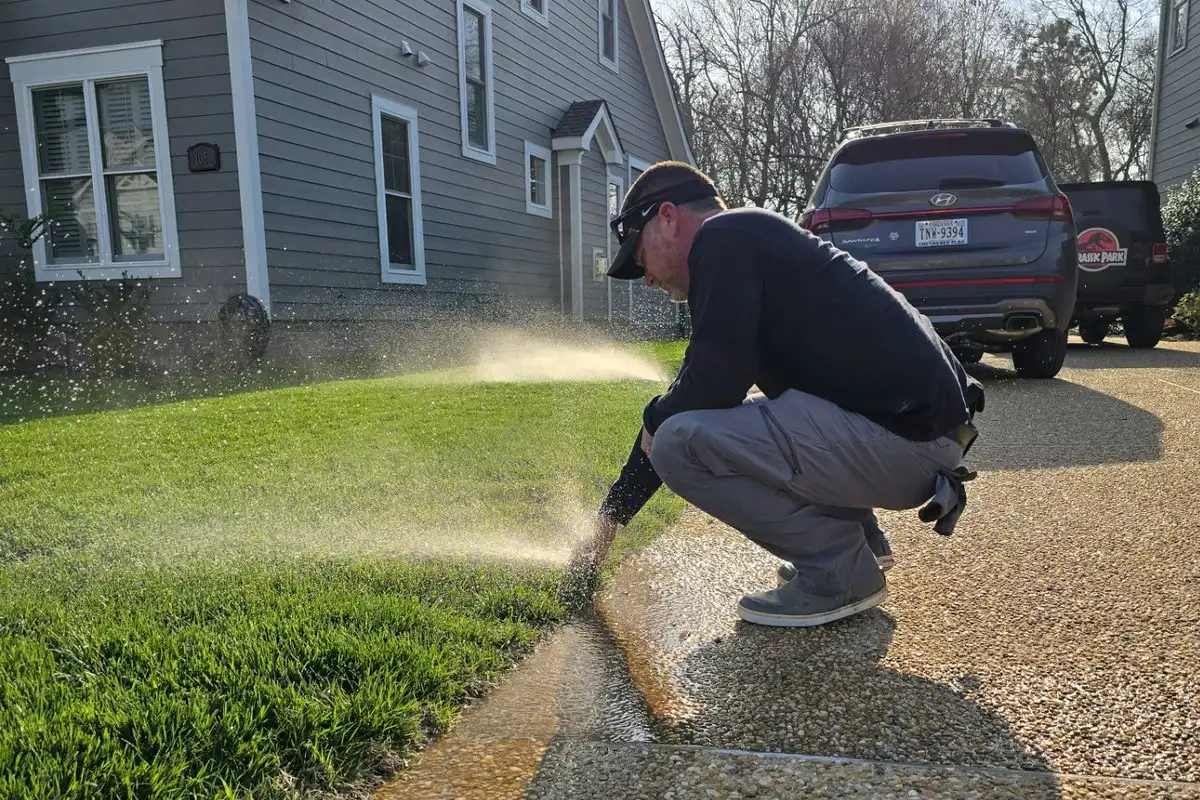
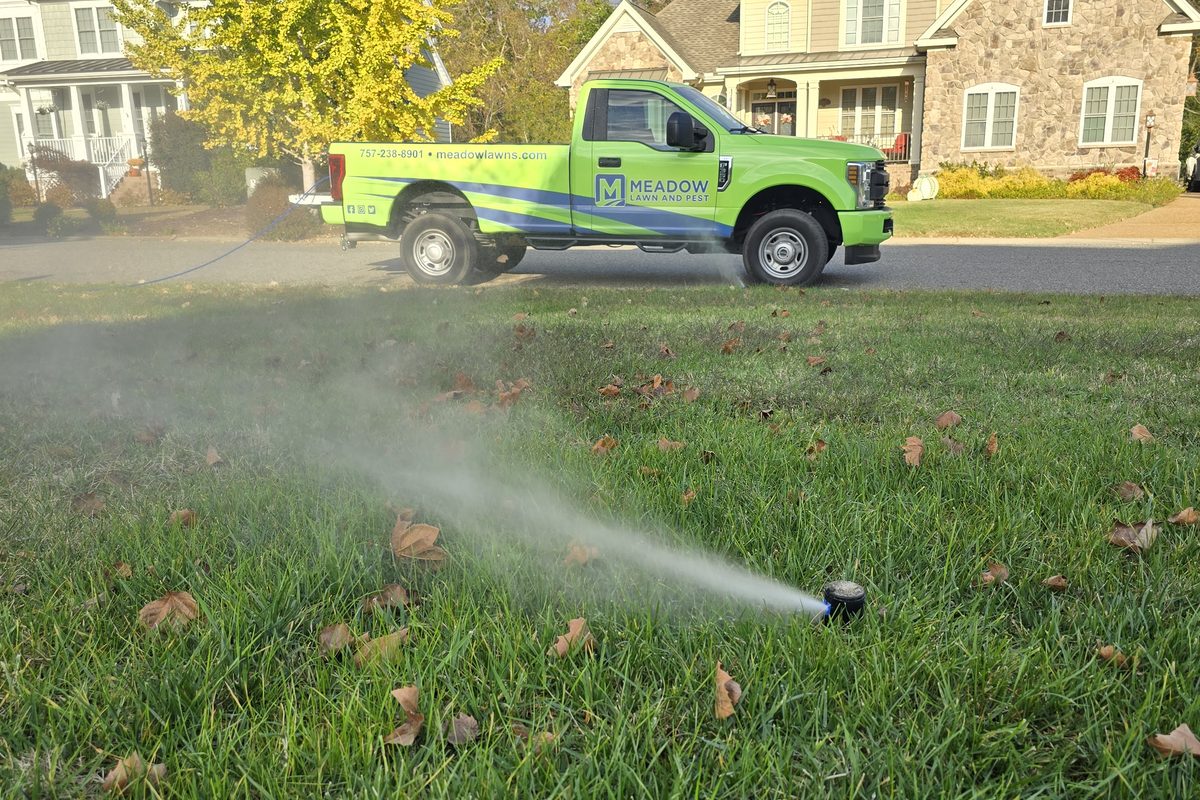
A sprinkler system blowout, also called irrigation winterization, is the process of clearing all the water out of your irrigation system before winter. It is done by connecting an air compressor to the system and using compressed air to push the remaining water out through the sprinkler heads, zone by zone, until the lines are clear.
The goal is simple: remove the water so there is nothing left in the pipes, valves, and heads to freeze. Even after you shut the system off for the season, water remains sitting in the underground lines, and that trapped water is the problem. A proper blowout clears it out, leaving the system empty and protected for the cold months ahead.
Why Freezing Water Is So Damaging
The reason this matters comes down to basic physics: water expands when it freezes. Any water left in your irrigation lines, valves, or sprinkler heads can freeze in a cold snap, and as it turns to ice and expands, it puts tremendous pressure on whatever is containing it. That pressure can crack or burst pipes, split valves, and break sprinkler heads and other components.
The damage from a hard freeze can be extensive and expensive. A cracked underground pipe, a burst valve, or a damaged backflow preventer can mean digging up parts of your yard and paying for significant repairs. And because much of the system is underground, you often will not discover the damage until you try to start the system up in spring, only to find leaks and broken components. Prevention is far cheaper than the repair.
Yes, It Matters in Hampton Roads
Some homeowners assume that because our Hampton Roads winters are milder than they are up north, freezing is not a real concern here. That is a costly misunderstanding. While our winters are relatively mild, we absolutely get hard freezes and cold snaps where temperatures drop well below freezing, and it does not take a long, harsh winter to freeze the water in your lines and cause damage.
It only takes one good freeze to crack a pipe or burst a valve, and those cold nights are a regular part of our coastal Virginia winters. So while you may not need the extensive winterization someone in a frigid northern climate does, protecting your system from our freezes is still important. Assuming a mild-winter area is safe is exactly how homeowners end up with cracked pipes come spring.
Timing It Before the First Freeze
The key to a blowout is timing, and the rule is simple: it needs to be done before the first hard freeze of the season. Once a freeze hits with water still in your lines, the damage may already be done. So the safe approach is to have your system winterized in the fall, ahead of the cold, rather than waiting until winter is already here.
Because that first freeze can arrive earlier than expected, it is wise not to put the blowout off. Scheduling it in the fall, while the weather is still mild, ensures your system is protected before any cold snap can catch it with water in the lines. Waiting too long is a gamble against the weather, and it is one that is easy to avoid by planning ahead.
Why It Is Worth Doing Right
A blowout involves compressed air and knowing how to run it through the system safely, which is why it is best handled properly. Too much air pressure, or doing it incorrectly, can actually damage the very system you are trying to protect, harming heads, valves, or seals. Getting the pressure and the process right is what makes a blowout effective and safe for your equipment.
That is what professional winterization brings: the right equipment, the correct process, and the experience to clear the system thoroughly without harming it. For the modest cost of a blowout, you protect a much more expensive system from freeze damage and the disruptive, costly repairs that come with it. It is one of those small seasonal steps that quietly saves you from a big headache.
Protecting Your Investment
At the end of the day, a sprinkler blowout is about protecting the investment you made in your irrigation system. A quality in-ground system is a significant expense and a real convenience, keeping your lawn healthy and green, and letting a freeze damage it over something as preventable as leftover water in the lines is a shame. Winterizing it is simply good maintenance.
Think of it the same way you think about other seasonal protection for your home. A blowout is a routine, preventive step that keeps your system working reliably year after year, so it is ready to go when you need it again in spring. For Hampton Roads homeowners with in-ground irrigation, it is a small, worthwhile part of putting the yard to bed for winter.
What Winterizing Involves Beyond the Blowout
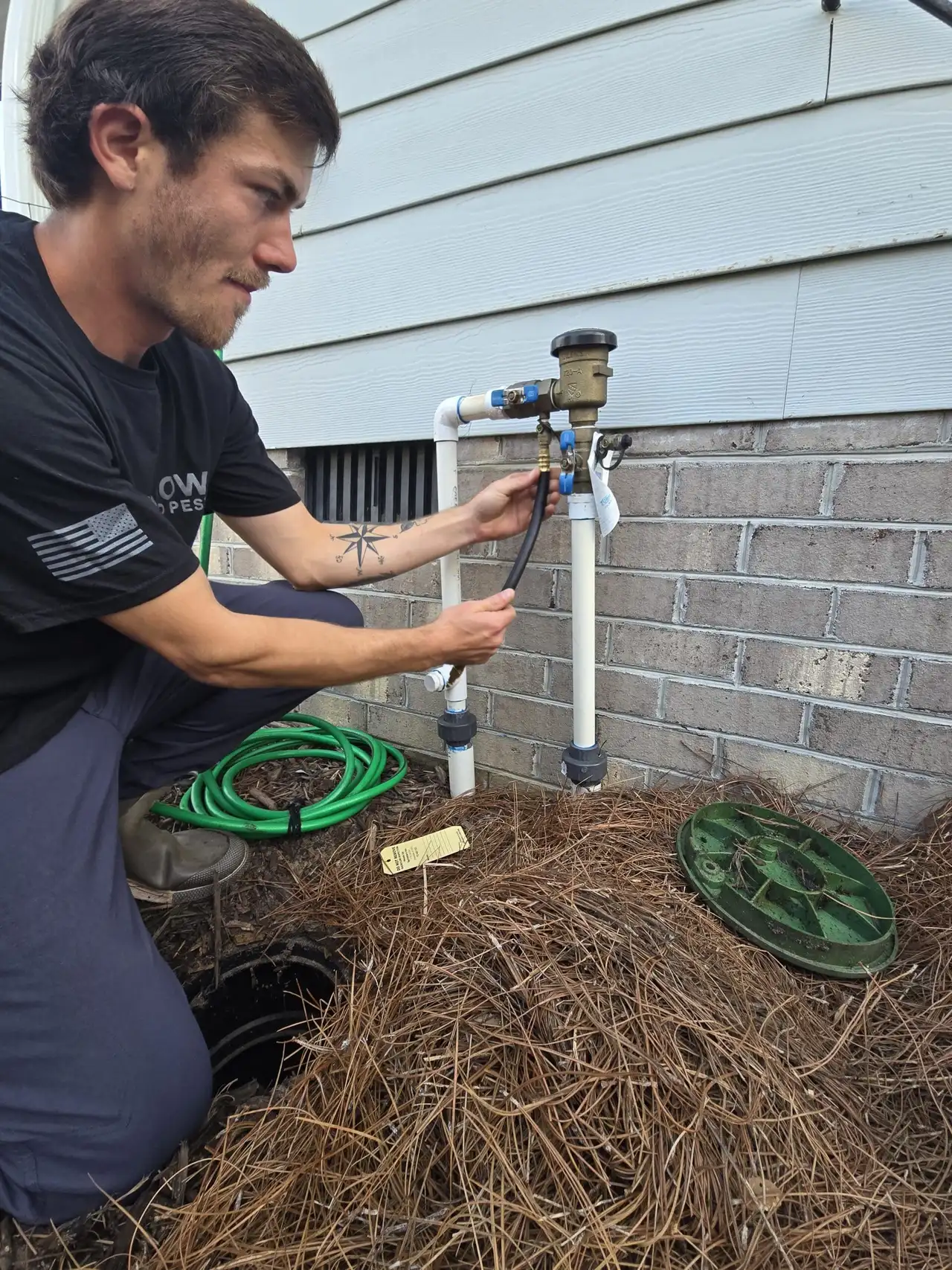
A proper winterization is usually more than just running air through the lines. It also includes shutting off the water supply to the irrigation system so no new water can enter and refill the pipes, and turning off or protecting the system's controller for the season. Some setups also call for protecting or insulating the exposed above-ground components, like the backflow preventer, which is especially vulnerable to freezing since it sits above the surface.
Handling these steps together is what fully prepares the system for winter, not just clearing the water once. A blowout that leaves the supply on, or ignores an exposed backflow preventer, only does part of the job. This is another reason professional winterization is worthwhile, since a technician knows the specific components on your system and makes sure each one is properly shut down and protected before the cold sets in.
It is also a good moment to catch small issues before they sit all winter. While winterizing your system, a technician often notices things worth addressing, a head that is not seating right, a zone that seems weak, a minor leak, so they can be flagged and handled rather than forgotten until spring. Pairing the blowout with that quick once-over means your system goes into winter both protected and in known good shape, ready to start cleanly when the warm weather returns.
What to Do Next
If you have an in-ground sprinkler system, do not let leftover water sitting in the lines turn into cracked pipes this winter. A blowout clears the water out and protects your system from freeze damage, and it needs to be done before the first hard freeze. The best next step is to schedule your winterization in the fall, so your system is protected before the cold arrives.
At Meadow Lawn & Pest, we winterize and blow out irrigation systems for homeowners across Carrollton, Smithfield, Suffolk, and the greater Hampton Roads area. If you want to protect your sprinkler system from a hard freeze this winter, we are here for that. Call us at 757-238-8901 or visit meadowlawnandpest.com to schedule your blowout before the first freeze.