
Soil Testing & Analysis
What Is the Soil Testing & Analysis Program?
Meadow Lawn & Pest’s Soil Testing & Analysis Program is a professional diagnostic service that measures the chemical and physical properties of your lawn or ornamental bed soil — giving you and our technicians the precise, data-driven information needed to make effective fertilization and amendment decisions. Without a soil test, fertilization is largely guesswork. With one, every treatment is targeted to what your specific soil actually needs. Our program uses a professional soil probe to collect samples from 6 to 10 locations across your property, which are combined and submitted to a certified regional laboratory specializing in Southeast Virginia soil types. Results are returned in 2 to 3 business days from lab receipt and include a detailed explanation of your soil’s current condition and a customized set of corrective recommendations. Soil testing is available as a complimentary service for enrolled fertilization program clients and as a standalone service for $75.
Why Soil Testing Matters — Especially in Southeast Virginia
Southeast Virginia’s soils are among the most variable in the Hampton Roads region — ranging from dense, nutrient-retaining clay in inland areas to sandy, rapidly draining soils near the coast and tidal waterways. Both extremes create nutrient availability challenges that fertilization alone cannot fully address without knowing the soil’s actual baseline. Soil pH is the most critical variable: even when the right nutrients are present in adequate quantities, a pH that is too high or too low prevents grass and plants from absorbing them. This condition — nutrient lockout — means fertilizer money is spent without the expected results. Iron deficiency is the most common micronutrient problem identified in Southeast Virginia soils and a leading cause of yellowing turf and ornamental plants in Hampton Roads. A soil test identifies these problems directly so they can be corrected efficiently, rather than treated through trial and error over multiple seasons.
What Your Soil Test Measures
Meadow Lawn & Pest’s soil testing program measures a comprehensive panel of soil properties critical to lawn and ornamental plant health. The test analyzes soil pH — the most impactful single variable affecting nutrient availability — along with all three primary macronutrients: nitrogen, phosphorus, and potassium. Secondary nutrients calcium, magnesium, and sulfur are also measured, as deficiencies in these elements are common in Hampton Roads and directly affect turf color, cell strength, and stress tolerance. The micronutrient panel covers iron, manganese, zinc, copper, and boron — trace elements that play essential roles in photosynthesis, enzyme function, and plant development. Organic matter content is measured to assess soil biological activity and water-holding capacity. Cation Exchange Capacity (CEC) is also evaluated, providing insight into the soil’s ability to retain and release nutrients over time — a key factor in fertilization program design.
Contact Us To Get Started Today
We’re the most trusted lawn & pest company in the Chesapeake and surrounding areas.
How Samples Are Collected
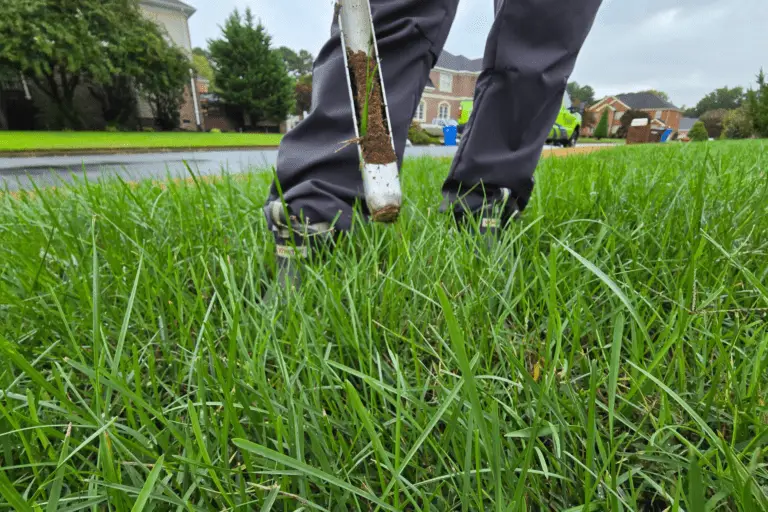
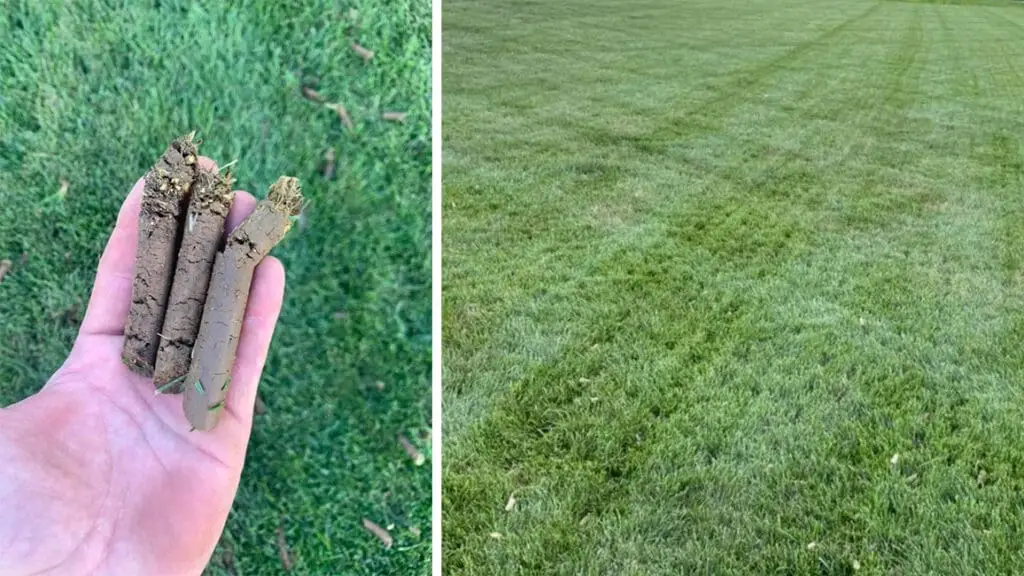
Accurate soil testing requires proper sample collection, and Meadow Lawn & Pest uses professional equipment and technique to ensure representative results. Our technicians use a stainless steel soil probe — not a shovel or trowel — to collect clean, undisturbed cores. For turf areas, cores are extracted to a depth of 3 to 4 inches, which represents the active root zone for lawn grasses. For ornamental planting beds, cores are taken to 6 to 8 inches to capture the root zone of shrubs and perennials. Samples are collected from 6 to 10 evenly distributed locations across the target area to account for natural soil variability across the property. Individual cores are combined into a single composite sample, thoroughly mixed, and submitted to the laboratory as a representative average of the entire area. Separate samples are taken for distinct zones — for example, a turf area and an ornamental bed are submitted as separate tests if both are being evaluated.
Understanding Your Results: pH, Nutrients & What They Mean
When your soil test results are returned, Meadow Lawn & Pest provides a full written explanation of what each measurement means for your lawn or landscape — not just raw numbers. Soil pH is reviewed first, as it controls nutrient availability across the entire panel. The ideal pH range for most Hampton Roads lawn grasses and ornamental plants is 6.0 to 7.0. Values below 6.0 indicate acidic conditions that limit phosphorus, calcium, and magnesium uptake and favor weed establishment. Values above 7.0 indicate alkaline conditions that restrict iron, manganese, and zinc availability — commonly causing the yellowing and chlorosis seen in many Hampton Roads landscapes. Each macronutrient and micronutrient reading is evaluated against established sufficiency ranges for your specific grass type or plant material. Iron deficiency, the most frequently identified micronutrient deficiency in Southeast Virginia, is flagged directly along with the recommended corrective approach.
Get A Quote
Ready to get started? Fill out the form or contact us at the phone number below to get started.
Soil Amendment Guidance & What Happens After Your Test
The most valuable output of a soil test is the customized amendment plan that follows it. Based on your results, Meadow Lawn & Pest provides specific written recommendations covering which amendments are needed, at what rate, and in what application sequence. Common recommendations for Hampton Roads properties include agricultural lime to raise pH in acidic soils, elemental sulfur to lower pH in alkaline soils, gypsum to improve clay soil structure and add calcium and sulfur without affecting pH, micronutrient supplementation for iron or manganese deficiencies, organic matter incorporation to improve water retention and biological activity in sandy soils, and fertilization program adjustments to address macronutrient imbalances. Amendment applications are quoted as a separate service from the soil test itself and are not included in the testing price. Corrective actions typically require 3 to 6 months to measurably shift soil chemistry, after which follow-up testing is recommended to confirm the adjustments have taken effect.
When Is Soil Testing Performed?
Soil testing can be performed at any time of year, as soil chemistry does not change dramatically with the seasons. That said, the most strategically valuable testing windows align with upcoming service timing. For cool season lawns, testing in late summer — July through August — provides enough lead time to apply any recommended amendments before fall aeration and overseeding in September and October. For warm season lawns, late winter testing — January through February — allows amendments to be applied and begin working before the spring growing season begins. For new construction properties or sites undergoing lawn renovation, testing before any seed or sod installation is strongly recommended to identify and correct soil deficiencies before establishment begins. Results are typically returned within 2 to 3 business days from the date the sample is received at the laboratory. Our technicians will contact you directly with your results and recommendations.
Follow-Up Testing & Routine Retesting Intervals
A single soil test provides a snapshot of current conditions, but soil chemistry changes over time — particularly after corrective amendments are applied. Meadow Lawn & Pest recommends follow-up testing approximately 6 months after any significant corrective actions, such as lime or sulfur applications, to verify that pH and nutrient levels have shifted to the target range and determine whether additional amendments are needed. Follow-up retesting within 12 months of an initial test is available at a discounted rate of $50. For ongoing maintenance, routine retesting intervals depend on soil type: sandy soils, which are more dynamic and prone to leaching, should be retested every 2 years. Clay-dominant soils, which retain amendments longer and change more slowly, are typically retested every 3 years. Enrolled fertilization program clients receive guidance on retesting timing as part of their ongoing service relationship with Meadow Lawn & Pest.