
Soil Amendments & conditioning
What Is the Soil Amendment & Conditioning Program?
Meadow Lawn & Pest’s Soil Amendment & Conditioning Program is a corrective and preventative service that improves the physical and chemical properties of your lawn or landscape soil — addressing the root-level problems that prevent grass and plants from thriving regardless of how much fertilizer is applied. Amendments work differently than fertilizers: they change what the soil is rather than just adding nutrients to it. This program is always based on a prior soil test and is customized to the specific deficiencies and imbalances identified in your results. Depending on what the test reveals, treatment may involve raising or lowering pH, improving clay soil structure, correcting micronutrient deficiencies, increasing organic matter content, or a combination of approaches. Results develop gradually over weeks to months as soil chemistry shifts. Follow-up soil testing 6 to 12 months after treatment is recommended to confirm that target ranges have been achieved.
Soil Amendments vs. Fertilizer — What’s the Difference?
Fertilizers add nutrients to soil. Amendments change the soil itself — and that distinction matters. A lawn can receive all the right fertilizer applications and still perform poorly if the underlying soil pH, structure, or micronutrient availability is limiting the grass’s ability to absorb what’s being applied. This is called nutrient lockout, and it’s one of the most common and least recognized causes of poor lawn performance in Hampton Roads. Lime and sulfur don’t feed the grass — they adjust pH so the grass can feed itself. Gypsum doesn’t add major nutrients — it breaks up clay structure so roots can penetrate, water can drain, and nutrients can move through the soil profile. Organic matter doesn’t replace fertilizer — it builds the biological activity and water-holding capacity that makes fertilizer more effective. Amendments and fertilization work together, and the best results come from addressing both rather than treating fertilization as the only lever available.
The Amendment Products We Use and What They Do
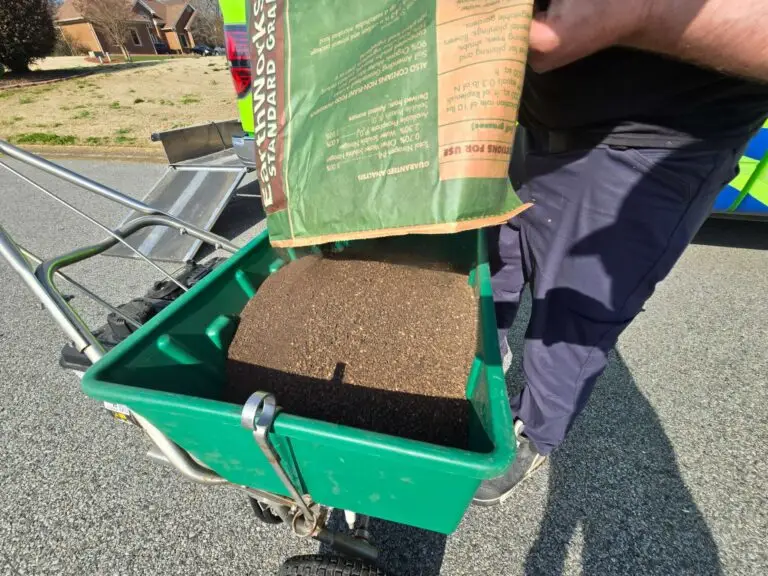
Meadow Lawn & Pest applies a range of professional-grade soil amendments based on soil test findings. Agricultural lime raises pH in acidic soils at rates of 25 to 50 pounds per 1,000 square feet, improving calcium and magnesium availability while reducing aluminum and manganese toxicity. Elemental sulfur lowers pH in alkaline soils at 5 to 20 pounds per 1,000 square feet, unlocking iron, manganese, and zinc that alkalinity has made unavailable. Gypsum improves clay soil structure and adds calcium and sulfur at 40 to 60 pounds per 1,000 square feet without affecting pH. Iron sulfate corrects iron deficiency — the most common micronutrient deficiency in Southeast Virginia — at 3 to 5 pounds per 1,000 square feet, restoring green color in yellowing turf. Epsom salt supplies magnesium at 2 to 3 pounds per 1,000 square feet. Manganese sulfate addresses manganese deficiency at 1 to 2 pounds per 1,000 square feet. Compost and organic matter are incorporated at 1 to 2 cubic yards per 1,000 square feet to improve biological activity and water retention.
Contact Us To Get Started Today
We’re the most trusted lawn & pest company in the Chesapeake and surrounding areas.
Signs Your Lawn or Landscape May Need Soil Amendments
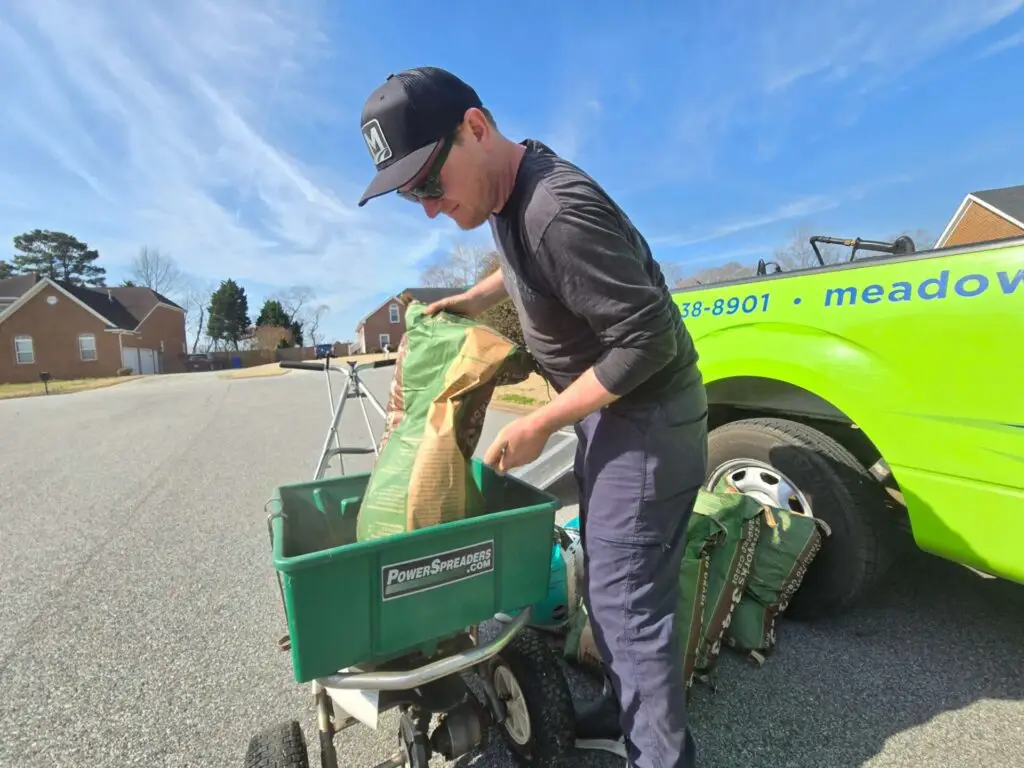
Several visible symptoms commonly point to underlying soil chemistry problems that amendments — not more fertilizer — are the solution for. Persistent yellowing or chlorosis in turf or ornamental plants despite regular fertilization often indicates iron deficiency or pH-driven nutrient lockout. Thin, weak grass that never thickens despite proper care in a heavily clay soil area typically signals compaction and poor drainage that gypsum and organic matter can address. Weeds like clover, which fix their own nitrogen and thrive in acidic soils, often indicate pH that is too low for competitive turf. Excessive thatch buildup and slow decomposition of organic material can reflect low soil biological activity. Sandy soils that dry out rapidly and fail to hold nutrients through normal rain events benefit from organic matter incorporation to improve water and nutrient retention. A soil test is the only reliable way to confirm which amendment is actually needed — symptoms often overlap, and applying the wrong amendment can make conditions worse.
The Amendment Process — From Soil Test to Application
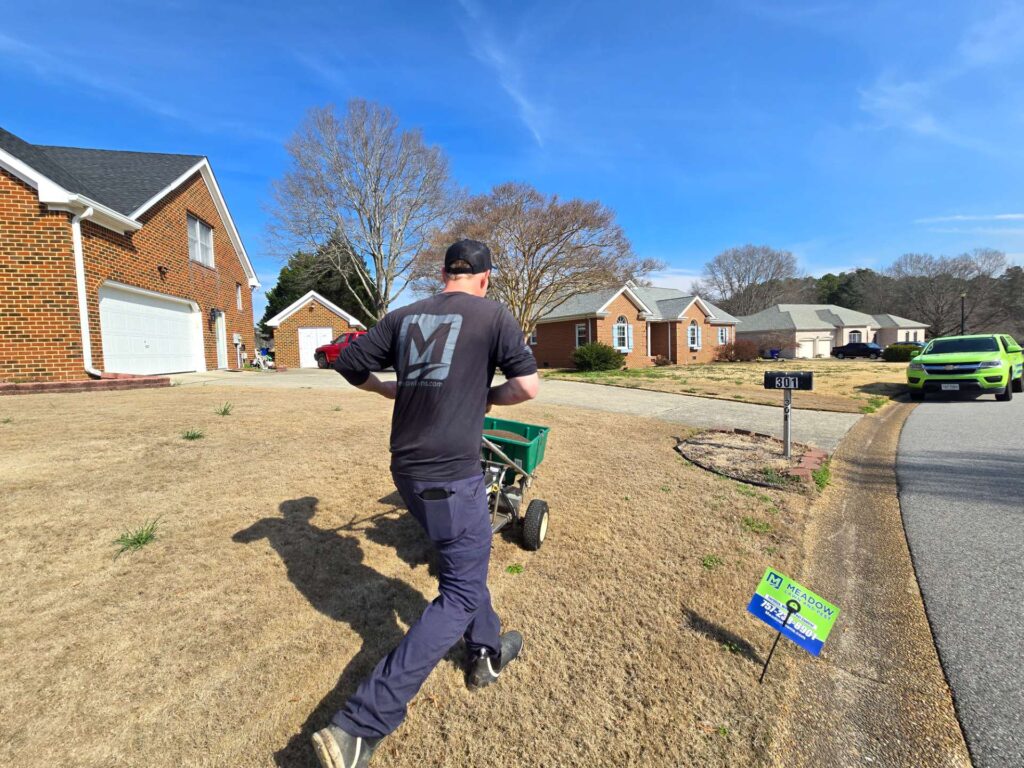
Every soil amendment recommendation at Meadow Lawn & Pest follows directly from soil test results — we do not apply amendments without a prior test. Once results are reviewed, our technicians determine which amendments are indicated, calculate the correct application rate for your lawn’s measured area, and calibrate equipment to deliver that rate accurately. Granular amendments like lime, sulfur, and gypsum are applied with spreaders using multiple overlapping passes to ensure even distribution. Liquid amendments such as iron sulfate are applied with sprayers for faster absorption through leaf tissue and soil uptake. Watering instructions are provided for each product applied — some amendments require irrigation to activate, while others should not be watered for a period after application. After service is complete, written documentation of exactly what was applied, at what rate, and when to follow up is provided to every client. This record is essential for tracking progress and scheduling retesting at the appropriate interval.
Get A Quote
Ready to get started? Fill out the form or contact us at the phone number below to get started.
Timing: When Each Amendment Is Applied
Amendment timing varies by product and purpose. Agricultural lime is ideally applied in fall — September through November — or early spring — February through March — so it has time to react with soil moisture and begin shifting pH before the growing season begins. Elemental sulfur follows the same seasonal windows as lime. Gypsum can be applied at virtually any time the ground is not frozen, as it does not require specific seasonal conditions to begin working. Iron sulfate is most effective when applied during active growth — spring and fall for cool season grasses, summer for warm season turf — so that both foliar absorption and root uptake are operating at peak efficiency. Organic matter incorporation is most beneficial when done in fall or early spring, timed to work into the soil ahead of the primary growing season. Applications are never performed on frozen ground, over snow cover exceeding 20 percent of the lawn area, or when wind speeds, rain, or saturated soil conditions would compromise safety or product effectiveness.
What to Expect After Treatment — A Realistic Timeline
Soil amendment results develop gradually, and setting realistic expectations is an important part of this program. Agricultural lime begins reacting with soil moisture immediately but produces noticeable pH change over 3 to 6 months, with full effect taking 12 to 18 months depending on application rate and soil buffering capacity. Elemental sulfur acts more quickly — measurable pH reduction typically appears within 2 to 4 months. Iron sulfate produces the fastest visible response, with yellowing turf often showing green-up within 2 to 4 weeks of application. Gypsum improves clay soil structure gradually, with measurable drainage and root penetration improvement typically visible within 2 to 3 months of a full-rate application. Organic matter amendments improve soil biology and water retention over a 6 to 12 month period as microorganisms process and incorporate the material. Follow-up soil testing 6 to 12 months after treatment is the only reliable way to confirm that target pH and nutrient ranges have been achieved and determine whether additional applications are warranted.
Service Requirements & Weather Restrictions
To ensure both safety and product effectiveness, soil amendment applications are subject to specific site and weather requirements. Applications are not performed when wind speeds exceed 15 miles per hour for granular products or 10 miles per hour for liquid applications, as drift can damage ornamental plants and neighboring lawns. Granular applications are postponed when rain is expected within 4 hours; liquid applications require a 2-hour rain-free window. Applications are not made to frozen ground, in temperatures below 40 degrees, or when snow covers more than 20 percent of the treatment area. Saturated soil from recent heavy rain also prevents accurate and safe application of granular products. On service day, ensure all gates are unlocked, pets are secured indoors, and irrigation systems are off during treatment and for 2 to 4 hours afterward unless the technician advises otherwise for specific products. Clear heavy debris covering more than 30 percent of the lawn before service. A $50 rescheduling fee may apply after two or more reschedules due to client unpreparedness.