
Warm Season Fertilization & Weed Control
What Is the Warm Season Grass Fertilization & Weed Control Program?
Meadow Lawn & Pest’s Warm Season Grass Fertilization & Weed Control Program is a 7-round annual treatment plan designed specifically for Bermuda, Zoysia, Centipede, and St. Augustine lawns throughout Hampton Roads. Unlike cool season grasses, warm season turf has a single peak growing period from late spring through summer and goes fully dormant in winter — requiring a fertilization and weed control strategy built around that cycle. This program combines pre-emergent crabgrass and grassy weed prevention, post-emergent weed control, and seasonally timed fertilization to build a thick, healthy, weed-resistant lawn year after year. Every program begins with a complimentary soil test and lawn inspection to confirm grass type, measure pH and nutrient levels, and identify weed pressure before any applications are made. Treatment rounds run from late January through December, with per-application pricing starting at $64.35 for lawns up to 5,000 square feet of treatable turf.
Rounds 1 & 2: Late January Through April
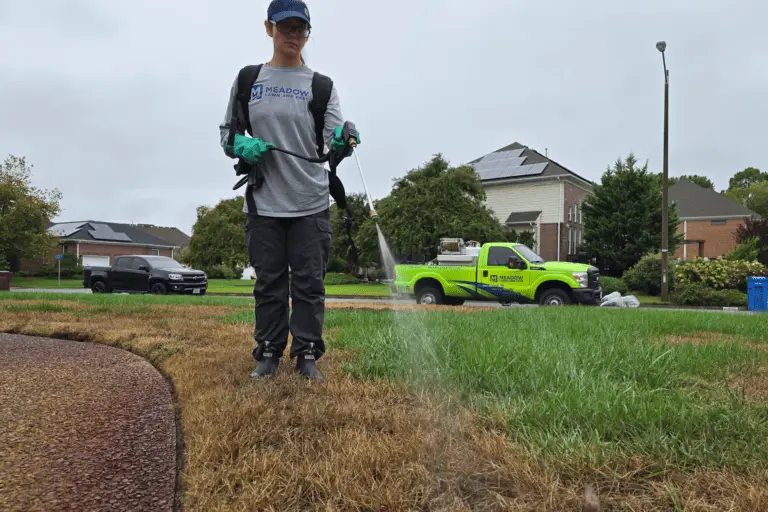
The first two rounds focus exclusively on weed prevention before the warm season growing period begins. Round 1, applied late January through February, uses Prodiamine pre-emergent herbicide to stop crabgrass seeds from germinating as soil temperatures rise in spring. Princep is also applied in Round 1 as a pre- and post-emergent treatment targeting grassy weeds already present or about to emerge. No fertilizer is applied in Round 1 because warm season grasses are still dormant and cannot utilize nutrients effectively this early. Round 2, applied March through April, re-applies Prodiamine to maintain continuous crabgrass protection through peak germination season — a second application is essential because a single pre-emergent breaks down before the full risk window closes. Post-emergent herbicide in Round 2 eliminates any grassy and broadleaf weeds that have emerged since Round 1. Together, these two rounds establish the weed control foundation the entire season depends on.
Rounds 3 & 4: April Through June
Rounds 3 and 4 shift the program into active spring and early summer fertilization as warm season grasses break dormancy and enter vigorous growth. Round 3, applied April through May, delivers a 28-0-3 fertilizer blend — a nitrogen, iron, and potassium formula that drives strong spring green-up, deepens turf color, and builds root mass during the lawn’s most active growth phase. Post-emergent herbicide is spot-applied in Round 3 to address any grassy or broadleaf weeds visible at the time of service. Round 4, applied in June at peak growing season, uses Earthworks Organic 8-2-2 — a natural organic fertilizer providing balanced, slow-release nutrition during the hottest months. Organic feeding in mid-summer delivers steady nutrients without pushing the excessive top growth that nitrogen-heavy formulas can cause during periods of extreme heat and humidity. Post-emergent spot treatment in Round 4 addresses any weeds persisting through peak growing conditions.
Contact Us To Get Started Today
We’re the most trusted lawn & pest company in the Chesapeake and surrounding areas.
Round 5: July Through August
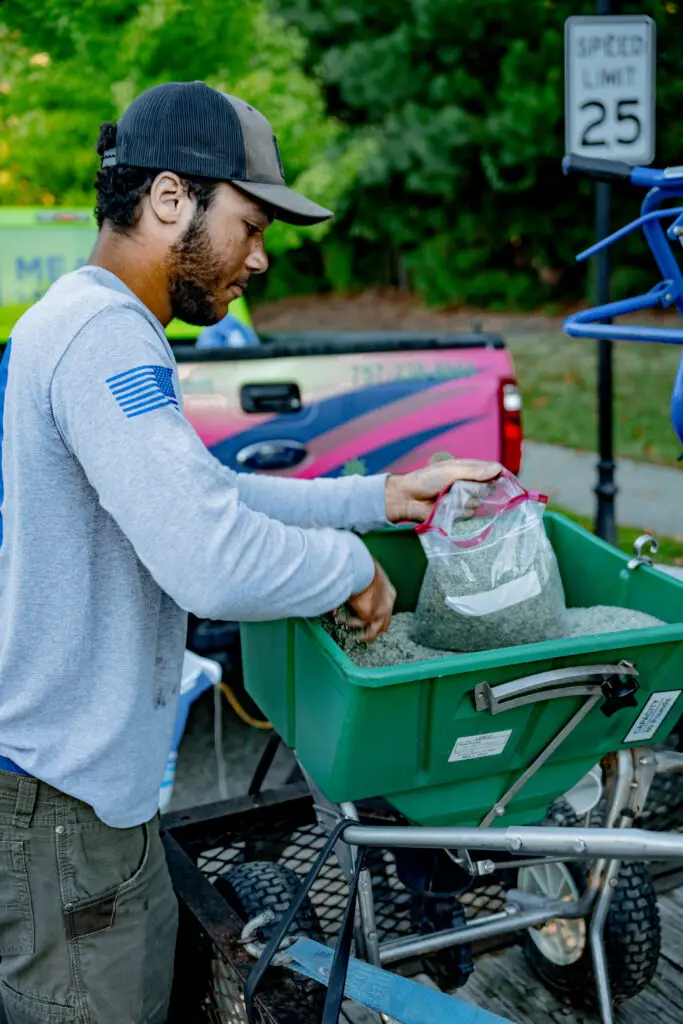
Round 5, applied July through August, maintains turf health and color through the most demanding period of the Hampton Roads growing season. A 28-0-3 nitrogen, iron, and potassium blend provides the nutrients warm season grasses need to stay dense, green, and competitive during peak summer heat. Iron deepens turf color without pushing excessive top growth during the highest-stress months, while potassium improves drought tolerance and cell wall strength — helping Bermuda, Zoysia, Centipede, and St. Augustine lawns withstand the temperature and moisture fluctuations that Hampton Roads experiences from July through September. Post-emergent herbicide spot treatment in Round 5 addresses summer annual weeds and any grassy weeds that have established through the growing season. Application timing within the July–August window is adjusted based on current weather and turf conditions. Service is postponed when temperatures exceed 90 degrees or wind speeds exceed 15 miles per hour to protect turf and ensure product effectiveness.
Rounds 6 & 7: October Through December
The final two rounds prepare warm season grasses for dormancy and protect against cool season weed invasion. Round 6, applied October through November, re-establishes pre-emergent protection using Prodiamine and Princep to create a barrier against winter annual weeds — particularly annual bluegrass (Poa annua), henbit, and chickweed — before they germinate as temperatures cool in fall. No fertilizer is applied in Round 6 to avoid stimulating growth as the lawn naturally transitions into dormancy. Round 7, the program’s final application running November through December, uses a 0-0-50 pure potassium winterization formula with no nitrogen and no phosphorus. This winterizer strengthens root systems and cell walls, improves cold hardiness, and builds the nutrient reserves that fuel strong spring green-up when warm season grasses break dormancy. Together, Rounds 6 and 7 close out the year by protecting the lawn through winter and setting it up for a healthy restart in spring.
Get A Quote
Ready to get started? Fill out the form or contact us at the phone number below to get started.
Weed Control — What to Expect
This program’s weed control combines pre-emergent prevention with post-emergent treatment for weeds that break through. Pre-emergent applications prevent 85 to 95 percent of targeted weeds when properly timed. Post-emergent treatments cause visible decline in most weeds within 7 to 14 days, though some species require the full 21 days to fully die. If treated weeds are still present after 21 days, contact us for a complimentary re-spray at no additional cost. Re-sprays cannot be performed before 21 days as required by federal pesticide label law. Two specialty weeds — nutsedge and dallisgrass — are not included in the standard program because they require separate herbicide chemistry and specialized timing. Both are available as add-on services. Rain within 2 hours of application can reduce product effectiveness — contact us immediately if this occurs so we can assess and reschedule if needed. A $50 rescheduling fee may apply if service is rescheduled more than twice due to client unpreparedness.
Your Free Soil Test & Initial Lawn Inspection
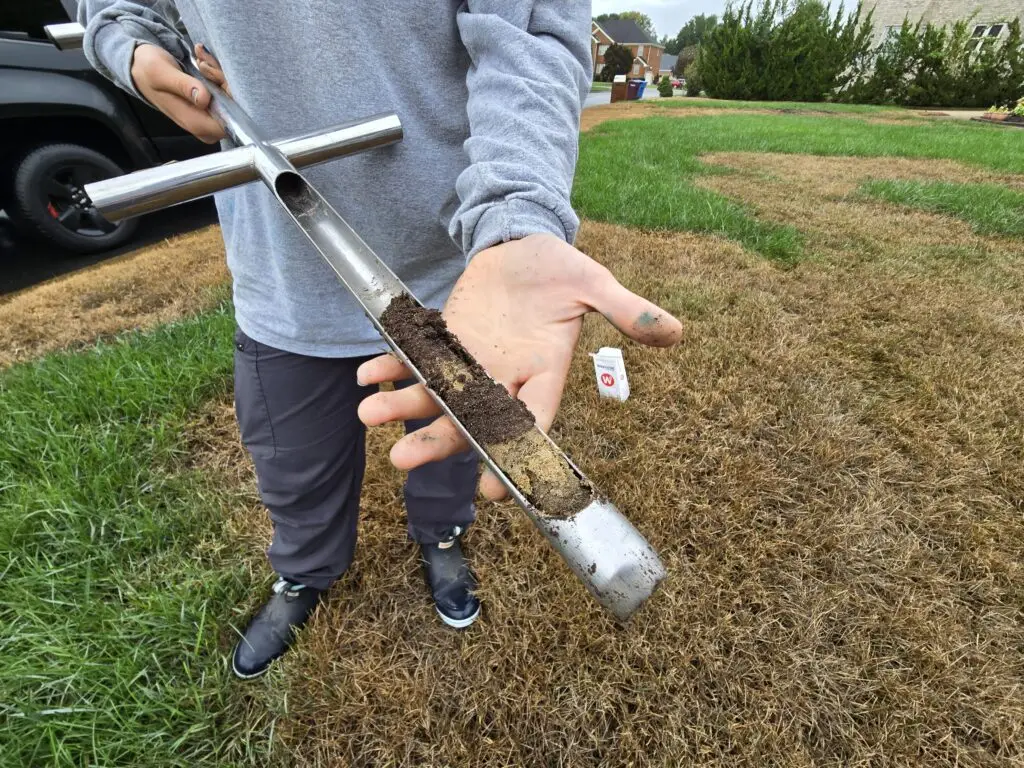
Every new Warm Season program begins with a complimentary soil test and professional lawn inspection before Round 1. Soil testing measures pH, nitrogen, phosphorus, potassium, organic matter, and micronutrient levels — providing the data needed to customize your program from the start rather than applying a generic formula. Soil pH is critically important for warm season grasses: Bermuda and Zoysia both perform best at a pH between 6.0 and 7.0, and imbalances at either end limit the lawn’s ability to absorb nutrients regardless of how much fertilizer is applied. Your technician also performs a full visual inspection to confirm grass type, evaluate existing weed pressure, assess turf density, and identify any bare or problem areas. A written summary and customized treatment plan are provided before any work begins. Soil test results are typically available within 7 to 10 business days and are reviewed with you before treatments start.
Is This Program Right for My Lawn?
This program is designed exclusively for warm season grasses — Bermuda, Zoysia, Centipede, and St. Augustine — which are common throughout Hampton Roads in sun-exposed lawns, coastal areas, and newer construction where warm season turf is frequently installed. If you’re unsure which grass type you have, your complimentary initial inspection will identify it before any treatments begin. This program works best on established turf. For thin or bare areas, spring aeration and overseeding in late spring to early summer is the recommended approach for warm season grasses, and it pairs well with the fertilization program to restore density where coverage is lacking. Customers with a history of fungal disease — including large patch, dollar spot, or gray leaf spot — should consider adding the Preventive Fungicide Program, which is highly recommended for warm season lawns in Hampton Roads’ humid climate. Soil pH imbalances or nutrient deficiencies found in the initial soil test may warrant soil amendment treatments before or alongside early program rounds.