
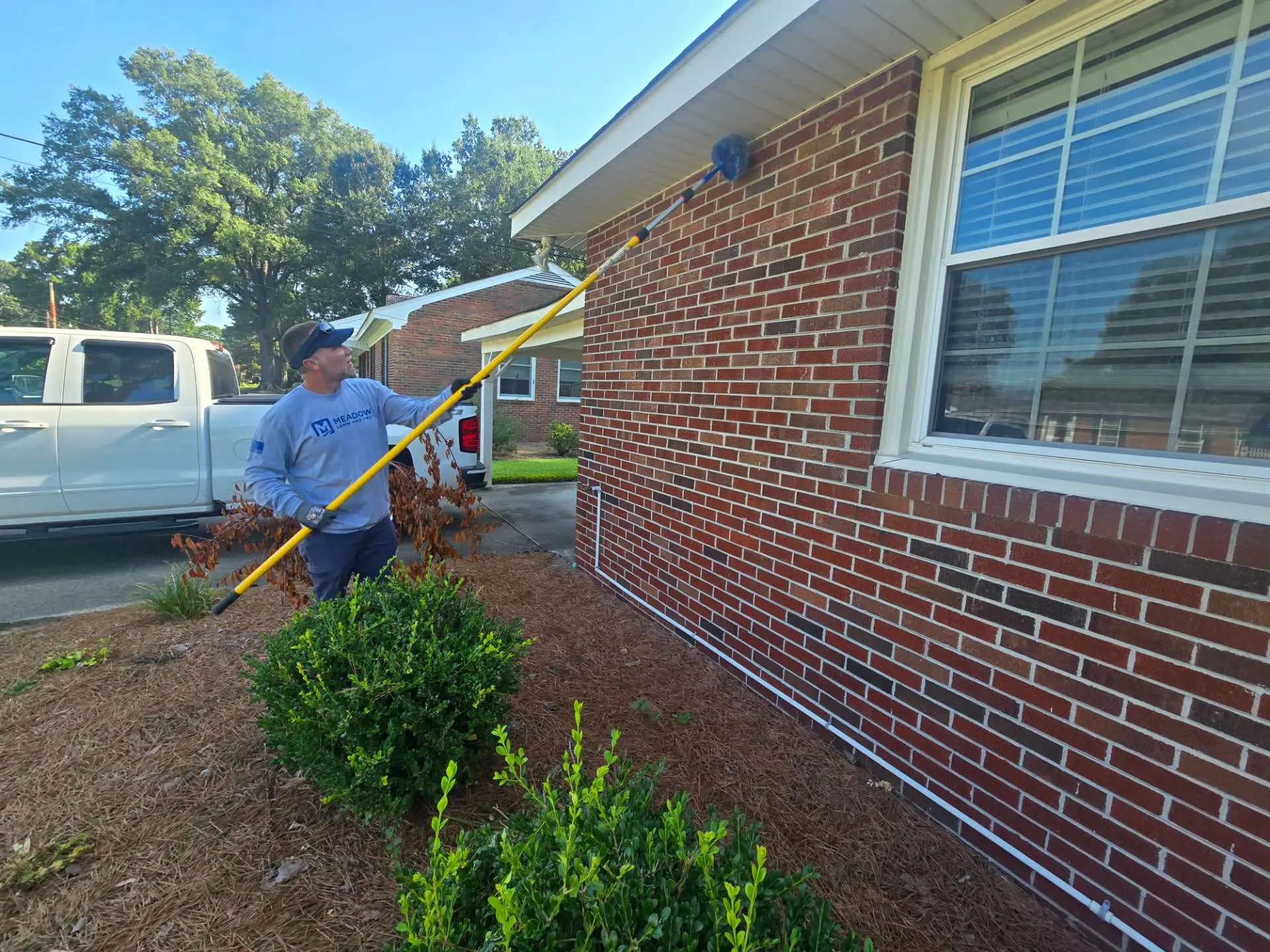
Short Answer: Coastal Virginia summer brings several stinging and damaging insects worth understanding. Carpenter bees damage wood structures and warrant treatment when active. Paper wasps build small visible nests on eaves and porches and are generally manageable. Yellow jackets build ground or wall nests with hundreds to thousands of workers and are aggressive when disturbed. Each requires different identification, different treatment, and different risk assessment. Some you should treat, some you should leave alone, and some you should never approach yourself.
If you live in Hampton Roads, you have already seen flying stinging insects around your home this summer. We get questions every June about what to treat, what to ignore, and what is actually dangerous. The honest answer depends entirely on what species you are dealing with.
We want to walk through the most common ones, how to identify them, and what response is appropriate for each.
Carpenter Bees: Slow Damage to Wood
Carpenter bees look similar to bumblebees but with a shiny black abdomen rather than fuzzy yellow. They are large (about 1 inch long) and impressive-looking. Males have white faces and can be aggressive in flight but cannot sting. Females have black faces and can sting but rarely do.
The damage carpenter bees do is structural rather than from stings. Females bore round holes about half an inch in diameter into wood (especially eaves, decks, fence posts, and porch ceilings) and excavate galleries inside. Multiple generations can use the same gallery system for years, gradually weakening the wood.
Treatment: targeted insecticide applied directly into each hole, then the holes plugged with caulk or wood filler after the bees have died. Painted wood is significantly less attractive to carpenter bees than unfinished wood. Cedar and pressure-treated lumber resist them better than untreated softwoods.
Worth treating: yes, especially on prominent wooden structures. The damage compounds over years if left untreated.
Paper Wasps: Visible Nests, Manageable
Paper wasps are slender, about 1 inch long, brown or reddish-brown. They build small (3 to 6 inches across) open-celled nests on eaves, porches, deck railings, and similar locations. The nests look like upside-down umbrella structures with visible hexagonal cells.
Paper wasps are typically not aggressive unless their nest is directly threatened. They serve as beneficial predators of caterpillars and other garden pests. Many homeowners leave low-traffic paper wasp nests alone.
Treatment: aerosol wasp spray applied to the nest at dusk or dawn when the wasps are clustered on it. The treatment kills the wasps quickly. Remove the empty nest after a day or two to prevent rebuilding.
Worth treating: only when the nest is in a high-traffic area (porch entrances, common pathways, near where kids play). Otherwise consider leaving them alone.
Yellow Jackets: Aggressive Ground Dwellers
Yellow jackets look superficially like wasps but with brighter yellow and black banding and a stockier body. The key behavioral difference is aggression. Yellow jackets attack quickly when their nest is disturbed and can sting repeatedly. A single nest can hold hundreds to thousands of workers.
Most yellow jacket nests are underground (in old rodent burrows, under tree roots, in wall voids). The entrance is a small hole with constant traffic of workers coming and going. Activity peaks in the late afternoon and at dusk.
Treatment: dangerous and best handled by professionals when the nest is large or in difficult locations. Do not attempt yellow jacket nest treatment without proper protection. Even with proper gear, treatment should happen at night when activity is lowest.
Worth treating: almost always, because of the safety risk. Nests near walkways, in lawn areas where kids play, or near home entrances are high priority. Yellow jacket stings can cause severe reactions in people with bee allergies.
Bumblebees: Beneficial and Worth Protecting
Bumblebees are large (1 to 1.5 inches), fuzzy, with distinctive yellow and black coloration. They are important pollinators and generally docile. Unless they have nested in a high-traffic area of your home, they are worth leaving alone.
Bumblebee nests are typically in protected ground locations (old rodent burrows, under sheds, in compost piles). The colonies die out naturally in fall and do not return to the same location.
Treatment: avoid unless the nest creates a real safety issue. Pollinator populations have declined significantly and bumblebees are particularly valuable.
Honeybees: Definitely Protect
Honeybees are smaller than bumblebees, golden-brown rather than yellow and black banded. Wild honeybee swarms occasionally appear in residential areas, typically clustered on a tree branch or structure while they search for a permanent nest location.
Treatment: never use insecticide on honeybees. Contact a local beekeeper who will typically remove the swarm at no charge. The Hampton Roads area has multiple beekeeping associations whose members are happy to collect swarms.
Cicada Killers: Intimidating but Harmless
Cicada killers are very large wasps (1.5 to 2 inches long) that appear in late June and July. They are intimidating to look at but rarely sting people. The males are aggressive in flight defending territory but lack stingers. The females do have stingers but use them only on cicadas.
Cicada killers dig burrows in sandy areas. The burrow openings are large (about an inch diameter) with crescent-shaped soil mounds.
Treatment: usually not necessary. The wasps are seasonal and benefit gardens by reducing cicada populations. Treat only if nests are in lawn areas where kids play.
Mud Daubers: Generally Harmless
Mud daubers build tube-shaped mud nests on walls, eaves, and under porches. They are solitary wasps (not colony-forming) and rarely sting. They are actually beneficial because they prey on spiders, including black widows.
Treatment: usually not necessary. Knock down nests that are in unsightly locations but otherwise leave them alone.
Safety Considerations
For homeowners with bee or wasp allergies, all stinging insect identifications matter more. Even single-sting species can produce dangerous reactions in sensitive individuals. Carry an EpiPen if prescribed. Avoid yard work near nests during peak activity hours.
For children playing outside, walk the yard periodically to identify any nests in play areas. Address them promptly even if they would otherwise be tolerable in adult-only areas.
For pets, particularly dogs that chase flying insects, multiple stings can cause serious reactions. Watch for swelling around the face or neck after outdoor time and seek veterinary care if symptoms develop.
When to Call a Professional
Yellow jacket nests, especially large ones or those in difficult locations. Honeybee swarms (call a beekeeper, not an exterminator). Any nest where personal safety risk seems high. Nests in walls or other inaccessible locations that DIY treatment cannot reach.
Most paper wasp and carpenter bee situations can be handled DIY with appropriate products and timing. Yellow jackets and bee swarms warrant professional help.
Honeybee Considerations for Hampton Roads Homeowners
Honeybee populations have declined significantly over the past 20 years. For Hampton Roads homeowners who encounter honeybees on their property, the best response is almost always to call a local beekeeper rather than treating with insecticide. Local beekeeping associations have members willing to collect swarms at no charge. The Tidewater Beekeepers Association and similar regional groups maintain swarm hotlines during active swarming season. Saving a honeybee colony is both environmentally responsible and the simplest path to resolving the situation.
Frequently Asked Questions
What time of day is safest to treat a nest?
Dusk and dawn when activity is lowest. Never midday when most workers are out foraging.
How do I prevent stinging insects from establishing on my property?
Reduce attractive harborage (woodpiles, abandoned structures, exposed wood). Eliminate standing water and food sources (uncovered trash, fallen fruit). Paint and seal wooden structures.
Are wasps and yellow jackets dying off due to climate change?
Some species are declining in some areas but yellow jacket populations in our region remain robust. Climate effects on stinging insect populations are complex and species-specific.
What if I find a nest but no insects?
Last year’s paper wasp and yellow jacket nests are abandoned in winter. They will not be reused next year. Removal is optional and purely aesthetic.
Working With Neighbors on Stinging Insect Issues
Yellow jacket nests, in particular, often span property lines or are located on one property but affect the neighboring property. Open communication with neighbors helps everyone. Notify them if you are treating a nest that could affect their pets or kids. Ask them about activity on their side of the fence. Sharing costs for treatment of nests that span properties is reasonable and often appreciated. Neighborhood coordination is more effective than individual responses for some stinging insect issues.
What to Do Next
If you have identified a stinging insect issue on your Hampton Roads property and want professional treatment, we are glad to help. We handle yellow jacket nests, carpenter bee infestations, and other stinging insect situations across Hampton Roads.
Call us at 757-238-8901 or visit meadowlawnandpest.com. We serve Newport News, Norfolk, Virginia Beach, Chesapeake, Suffolk, Smithfield, Carrollton, Isle of Wight County, and surrounding communities.