
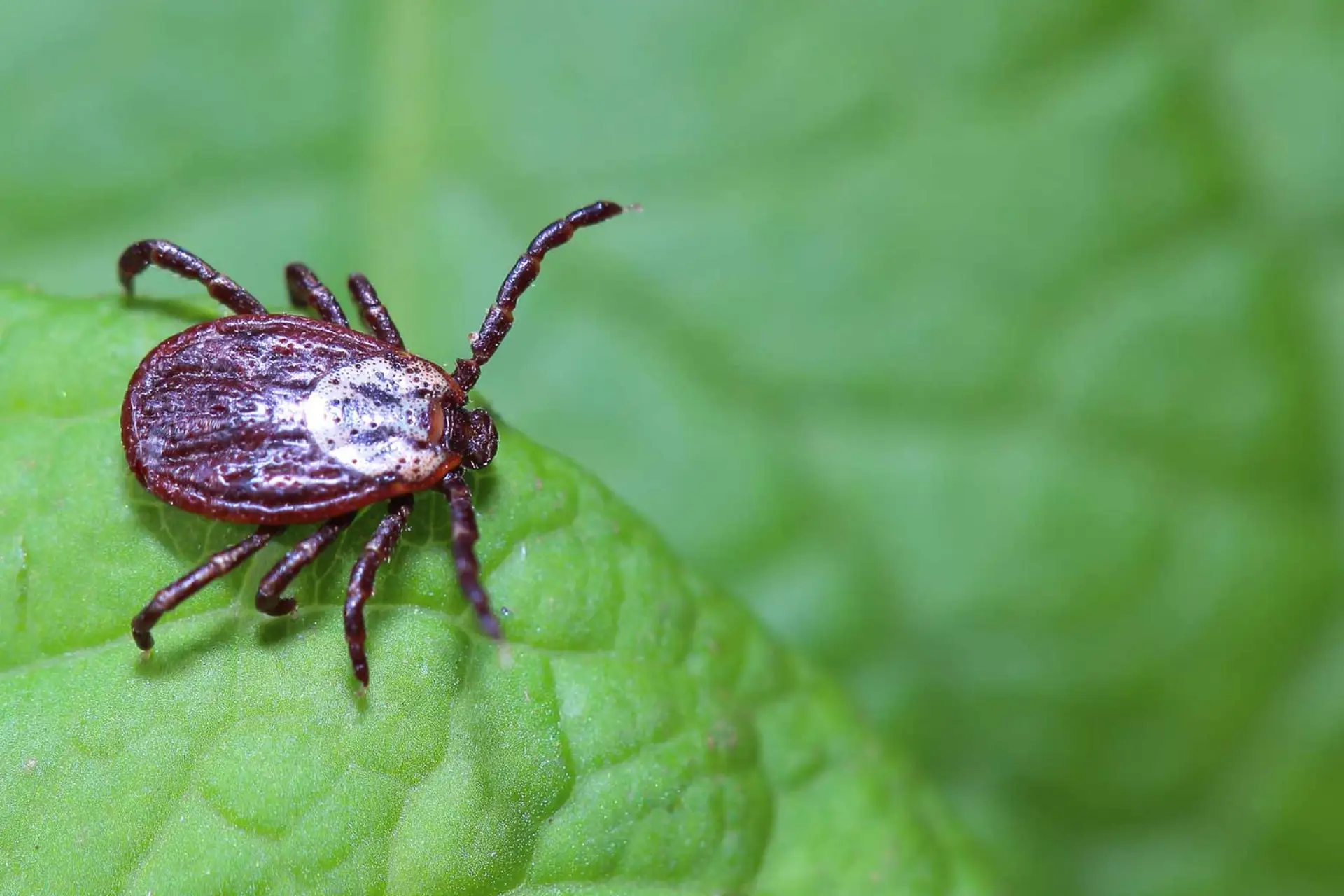
Short Answer: Tick pressure in Hampton Roads is heavier than most homeowners realize, particularly on properties bordering woods, water, or tall grass. The three species we deal with most often are the lone star tick, the American dog tick, and the blacklegged (deer) tick. The most effective management combines habitat modification (a clear three-foot transition zone between lawn and woods, mowed edges, and reduced ground cover), targeted barrier treatments every 30 days from April through October, and a few personal-protection habits when you spend time outdoors. You can dramatically lower the tick population on a property, but you cannot eliminate it. Knowing what to expect helps you plan.
This is one of the topics that comes up most often when we sit down with new customers in Smithfield, Suffolk, Windsor, and the rural edges of Chesapeake. Parents with kids who want to play in the yard. Dog owners who do not want to do a tick check every time the dog comes inside. Folks who used to garden but stopped because they were finding ticks on themselves week after week. We hear these stories all the time, and we want to be honest with you about what is possible and what is not.
Tick management is real, and it works. A property under a proper program will have a fraction of the tick activity of an untreated one. But “tick-free” is not a number we will promise you, because no responsible company can. What we can do is reduce the population to a point where you stop finding them on yourself, your kids, and your pets, and where the risk of a bite drops dramatically. Here is how we get there.
The Three Tick Species That Matter Most in Hampton Roads
The lone star tick is the most common one we see on Hampton Roads properties. It is the aggressive species with a single white dot on the back of the female (which is where the name comes from). Lone star ticks actively hunt, meaning they will move toward you rather than wait for you to brush past them. They are responsible for several disease risks including ehrlichiosis and the alpha-gal red meat allergy that has become more common in our region.
The American dog tick is the larger brown-and-white-mottled species. It prefers grassy fields and edges of wooded areas. Dog ticks transmit Rocky Mountain spotted fever (yes, despite the name, it is more common on the East Coast) and tularemia. They are the ticks most commonly found on dogs after a romp through tall grass, which is where the name comes from.
The blacklegged tick (often called the deer tick) is smaller than the other two and harder to spot, which is part of why it matters. It is the primary carrier of Lyme disease, anaplasmosis, and babesiosis. Hampton Roads has historically had lower deer tick numbers than New England or the Mid-Atlantic suburbs north of us, but the population has been increasing steadily over the last decade, and we are seeing more of them on properties near wooded creek systems.
What Makes a Hampton Roads Property a Tick Hot Spot
Ticks need three things to thrive: hosts (deer, mice, birds, dogs, people), humidity, and shade. Our region delivers all three in abundance. The summer humidity that stresses your lawn is exactly what ticks love. The mature tree canopy in places like Windsor, the wooded edges of Suffolk, the wetland borders in Chesapeake, and the creek-front properties around Carrollton and Smithfield all create ideal tick habitat.
The specific features that create heavy tick pressure: woods or tree line bordering the lawn, leaf litter accumulated against fences or in beds, tall grass at the property edge, ground cover plantings like English ivy or pachysandra that hold moisture at ground level, brush piles, stone walls or wood piles, bird feeders that attract small mammals, and standing or stagnant water (less for the ticks directly, more for the wildlife hosts that water draws in).
If your property has three or more of those features, you are almost certainly working with a high tick load whether you have noticed yet or not.
Habitat Modification: The Step Most Homeowners Skip
This is the unglamorous part of tick control, and it is also where the biggest gains come from. A perimeter spray on a property full of leaf litter and dense ground cover is fighting a losing battle. Some of the modifications we recommend are quick weekend projects. Others are longer-term landscape decisions.
Create a three-foot transition zone between any wooded area and your lawn. Mulch, gravel, or even just bare soil works. Ticks struggle to cross dry, open ground, and that simple barrier dramatically reduces migration from woods into the yard.
Remove leaf litter, particularly from areas adjacent to the lawn. Leaves hold humidity at ground level, and that humid microclimate is where ticks survive between feedings.
Mow tall grass at property edges down to lawn height. The “rough” areas at property lines are often where tick populations are densest.
Move bird feeders, woodpiles, and compost away from the main outdoor living areas. Mice and other small mammals are the primary hosts for juvenile ticks, and anything that draws them to the yard increases tick density.
Consider replacing English ivy, pachysandra, and other dense low ground covers with options that hold less moisture at ground level. We can advise on alternatives that look good and reduce tick habitat.
The Barrier Treatment Program
Once habitat is in better shape, the barrier treatment program does the rest of the work. We apply a perimeter treatment focused on the transition zones between lawn and woods, the lawn edge, foundation plantings, dense ground cover, and any other identified tick refuges. The active ingredients are professional-grade pyrethroids that bind to vegetation and provide 21 to 30 days of residual control.
The visit cycle is every 30 days from April through October, which is the active period for ticks in Hampton Roads. Each visit takes roughly 30 to 45 minutes for a typical residential property. The treatment is safe for pets and family once it has dried, which is usually about an hour after application.
One thing we want to be honest about: a single tick treatment is not magic. The first application knocks down the active population, but ticks dropping off deer, birds, and other wildlife will continue to repopulate the property between visits. That is why the monthly cadence matters. Skipping months opens windows where the population rebuilds, and you lose the benefit of the season-long program.
For properties with particularly heavy pressure (think large lots adjacent to wooded creek systems near the Northwest River, the Pagan River, or the Great Dismal Swamp), we sometimes recommend a two-week interval during peak summer months. We will tell you straight if your property is in that category.
Personal Protection Habits That Still Matter
Even with the best treatment program, please do not skip these simple habits. They cost nothing and they meaningfully reduce your risk.
Do a tick check after spending time outdoors, particularly if you have been in tall grass, leaf litter, or wooded areas. Focus on the warm, hidden spots: behind the ears, the hairline, the armpits, the waistband, the backs of the knees, between the toes.
Check your dog after every outdoor session. Run your fingers through the coat against the grain, paying attention to the ears, neck, between the toes, and around the tail. Talk to your vet about an oral or topical preventive product. The yard treatment and the personal protection work together, not one in place of the other.
If you find a tick attached, remove it with fine-tipped tweezers, grasping as close to the skin as possible and pulling straight out without twisting. Save the tick in a small bag or bottle in case identification matters later. Watch the bite site for the next several weeks for any rash or expanding redness, and see your doctor if you develop unusual symptoms.
What About Tick Tubes and Other Add-Ons
Tick tubes (cardboard tubes containing permethrin-treated cotton that mice carry back to their nests) can be a useful supplement on properties with heavy mouse activity. They specifically target the juvenile tick population that feeds on mice in early summer. We can include them as part of a broader program where it makes sense.
Granular treatments are sometimes used as a supplement on properties with very heavy ground-level tick populations. They are not a replacement for the liquid barrier treatment but can add an extra layer of control in specific situations.
We are skeptical of essential-oil based products marketed as “all natural tick control.” Some of them work modestly, most do not, and almost none provide the residual control you need to keep tick populations down through the Hampton Roads summer. If you want a softer-profile approach, we can talk about what is actually proven and what is marketing.
What to Do Next
If you have been finding ticks on yourself, your kids, or your pets, that is a signal worth acting on now rather than after a bite that lands someone in urgent care. Call (757) 238-8901 or visit stg-5eq9zo.elementor.cloud/request-a-quote and we will come out, walk the property with you, identify the conditions creating tick pressure, and put together a plan that combines habitat work and treatment.
With 17+ years of pest experience in Hampton Roads, we have seen what works and what does not on properties like yours. We are not going to oversell the program, and we are not going to underplay the risks. We are going to give you a clear picture and an effective plan. That is what we would want from a service provider, and it is what we try to deliver every day.