
Aeration & Overseeding
What Is Core Aeration & Overseeding?
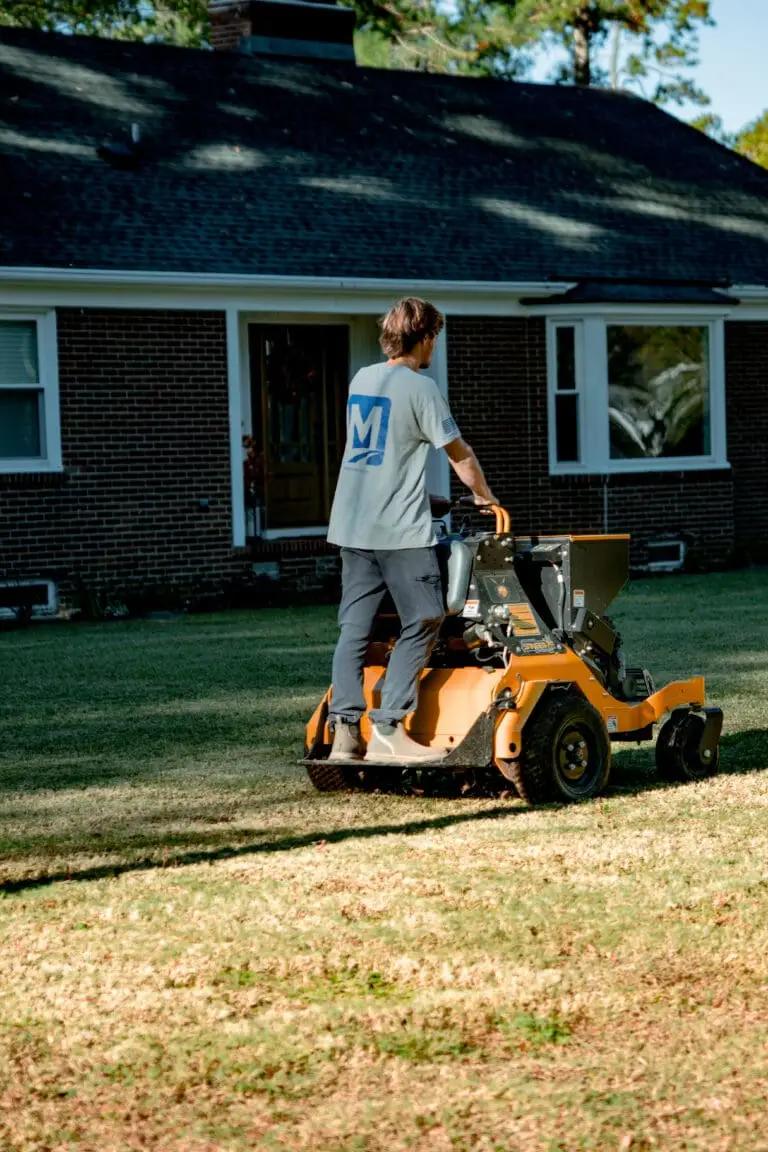
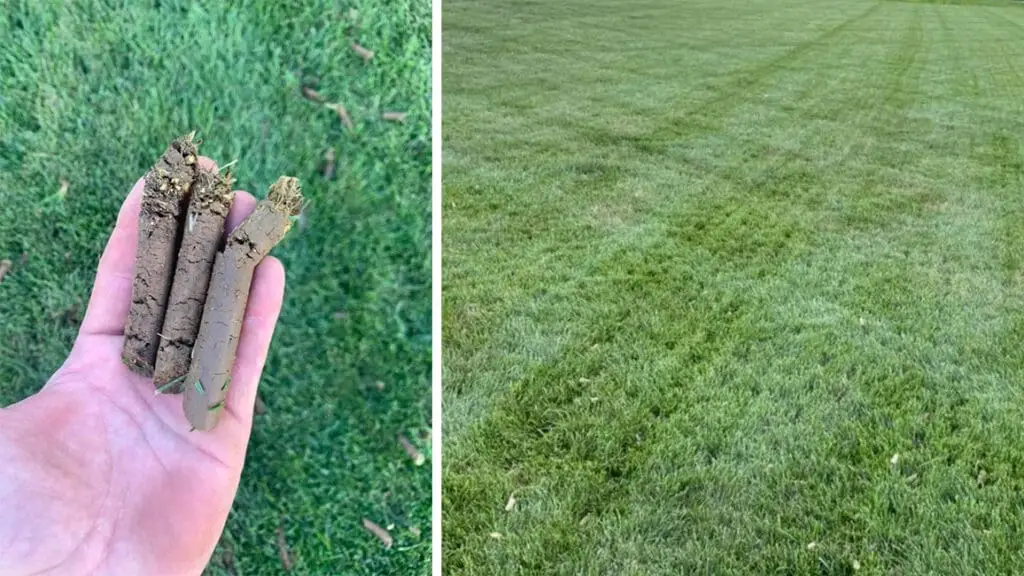
Meadow Lawn & Pest’s core aeration and overseeding service revitalizes cool season tall fescue lawns by improving soil health and introducing premium grass seed for a thicker, healthier turf. Core aeration uses a mechanical aerator to pull plugs from the lawn, creating channels that allow air, water, and nutrients to penetrate deep into the root zone. This reduces compaction, improves drainage, enhances nutrient uptake, promotes deeper rooting, and increases oxygen availability to grass roots. Immediately following aeration, we apply certified Blue Tag Tall Fescue seed at 7 pounds per 1,000 square feet — equivalent to 6 pounds of Pure Live Seed at a 90 percent germination rate. The combination of mechanical aeration and premium overseeding is the single most impactful annual service available for cool season lawns throughout Hampton Roads, and produces the most visible improvement in lawn density and health of any service we offer.
Why Fall Is the Best Time to Aerate & Overseed
Timing is everything with aeration and overseeding, and fall is the optimal window for tall fescue lawns in Hampton Roads. We schedule this service from early September through October, with extended availability into early November when conditions allow. Tall fescue overseeding performs best when air temperatures range between 60 and 80 degrees — which Hampton Roads consistently delivers in fall. Fall conditions provide optimal soil temperatures for germination, reduced competition from warm season weeds slowing down for winter, adequate seasonal rainfall, and enough time for new grass to establish strong roots before dormancy. Attempting aeration and overseeding in spring or summer dramatically reduces success rates for tall fescue — the heat, humidity, and weed pressure of Hampton Roads summers work directly against establishment. Fall is the single best investment window for cool season lawns, and scheduling fills quickly.
Certified Blue Tag A-List Seed — What We Use and Why
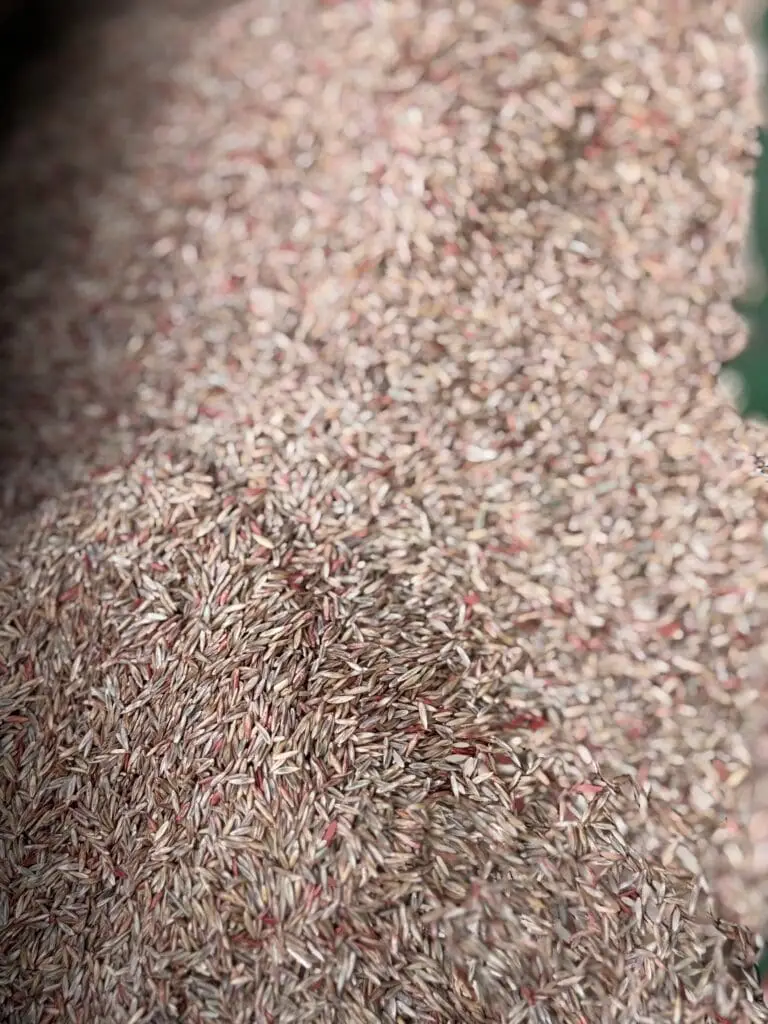
Not all grass seed is equal, and Meadow Lawn & Pest uses only certified Blue Tag A-List Tall Fescue — the highest quality standard available. Blue Tag certification guarantees genetic purity, meaning the bag contains exactly the grass variety named on the label. Certified seed must meet strict weed content standards of less than 0.25 percent, compared to up to 2.0 percent for non-certified seed, and guarantees zero contamination from other crop grasses such as orchardgrass or bentgrass. A-List seed technology takes quality further — each seed is pre-treated with surfactants, proteins, natural growth promoters, nitrogen, phosphorus, potassium, humic acids, and a full micronutrient package. This pre-treatment requires less water for germination, accelerates establishment, builds cell wall strength for survivability, and supports self-repair through lateral spread over time. We apply seed at 7 pounds per 1,000 square feet and leave every client a complimentary 5-pound bag of the same premium seed for touch-ups.
Contact Us To Get Started Today
We’re the most trusted lawn & pest company in the Chesapeake and surrounding areas.
How the Service Works
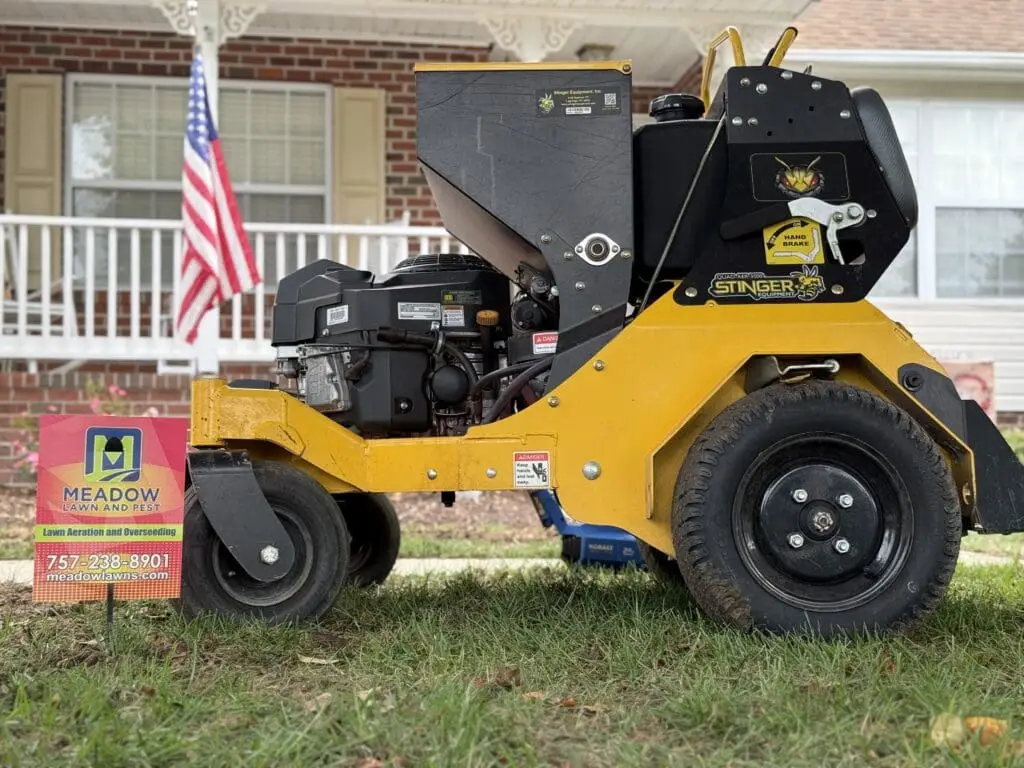
We perform core aeration using a Stinger aerator with an integrated seed box — a one-pass machine that aerates and seeds simultaneously at a consistent rate regardless of operator speed. The seed box is positioned in front of the core tines, so seed drops into the soil at the exact moment plugs are extracted, creating direct seed-to-soil contact that maximizes germination. Each pass overlaps the previous one to ensure complete, consistent coverage across the entire lawn. For areas the mechanical aerator cannot reach — around flower beds, foundations, mailboxes, and narrow strips along curbs — we use hand aerator tools and drop spreaders to ensure every part of the lawn receives treatment. The machine’s tires and tines push seed below the surface throughout the process, and seed contact with loosened soil dramatically improves germination rates compared to surface-only seeding methods. A complimentary 5-pound bag of seed is left with every client at the end of service.
How to Prepare Your Lawn Before Service Day
Proper preparation is critical for the best results. Mow your lawn to 1.5 to 2 inches — shorter than your normal cutting height — in the days before service. Reduce height gradually over two or three mows to avoid stressing the turf, and bag or rake excess clippings so they don’t block seed-to-soil contact on service day. If there has been no recent rain, lightly water your lawn before we arrive and then turn off your irrigation system. Clear all furniture, toys, hoses, and movable objects from the lawn, and ensure all gates are unlocked. Most importantly, flag all underground systems: mark sprinkler heads and valve boxes, place wire flags every 2 to 3 feet along invisible dog fence lines, and mark any shallow electrical, drainage, or water lines using flags available at hardware stores. Contact Miss Utility for main utility lines. Meadow Lawn & Pest is not responsible for damage to unmarked underground components. Service may be rescheduled if preparation requirements are not met.
Get A Quote
Ready to get started? Fill out the form or contact us at the phone number below to get started.
The Critical 28-Day Watering Schedule
Watering correctly after aeration and overseeding is the single most important factor in germination success. On service day, water thoroughly to saturate the soil and create a deep moisture reserve for the seed bed. During Days 2 through 14 — the critical germination phase — water 2 to 4 times daily for 5 to 10 minutes per session, keeping the top inch of soil consistently moist without letting it dry out between waterings. From Days 14 through 21, reduce to 1 to 2 times daily for 15 to 20 minutes as new seedlings develop shallow root systems. From Days 21 through 28, water once daily for 20 to 30 minutes to encourage roots to extend deeper into the soil profile. After Day 28, transition to your normal watering schedule of approximately 1 to 1.5 inches per week delivered through deep, infrequent sessions. Failure to follow this watering schedule is by far the most common cause of poor germination results after aeration and overseeding.
When to Mow Again — and What to Do About Weeds
Wait 21 to 28 days before mowing after aeration and overseeding. New seedlings must germinate and grow to 3 to 4 inches before the first cut — mowing too soon can uproot seedlings before their roots have anchored into the soil. It is completely normal to see weeds appearing in the weeks after aeration. The aerator disturbs the soil and brings millions of dormant weed seeds already present in the ground to the surface, where exposure to air, moisture, and sunlight triggers germination. These weeds come from the existing seed bank in your soil, not from the grass seed we apply, which is certified to contain less than 0.25 percent weed content. Do not panic and do not apply herbicide to the new turf. Wait 6 to 8 weeks after germination when new grass is established, then address weeds through your fall fertilization and weed control program. Applying herbicide before new grass is fully rooted will damage the seedlings.
Service Requirements & Scheduling
To achieve the best results, certain conditions must be met on service day. We will not perform aeration and overseeding if the lawn has not been mowed to 1.5 to 2 inches as requested, if heavy leaf debris is covering the lawn surface, if heavy downpours are forecast within 3 hours of service, if gates are locked and the full lawn is inaccessible, or if an invisible dog fence is present and has not been marked with wire flags every 2 to 3 feet. Heavy rain immediately after seeding can wash or displace seeds, creating uneven coverage. Weed control treatments are not applied on the same day as aeration and overseeding unless specifically arranged in advance. A $50 rescheduling fee may apply if service must be rescheduled more than twice due to client unpreparedness. We can notify you of your approximate stop number for the service day, but cannot guarantee exact arrival times as technicians typically complete 12 to 18 stops daily.