
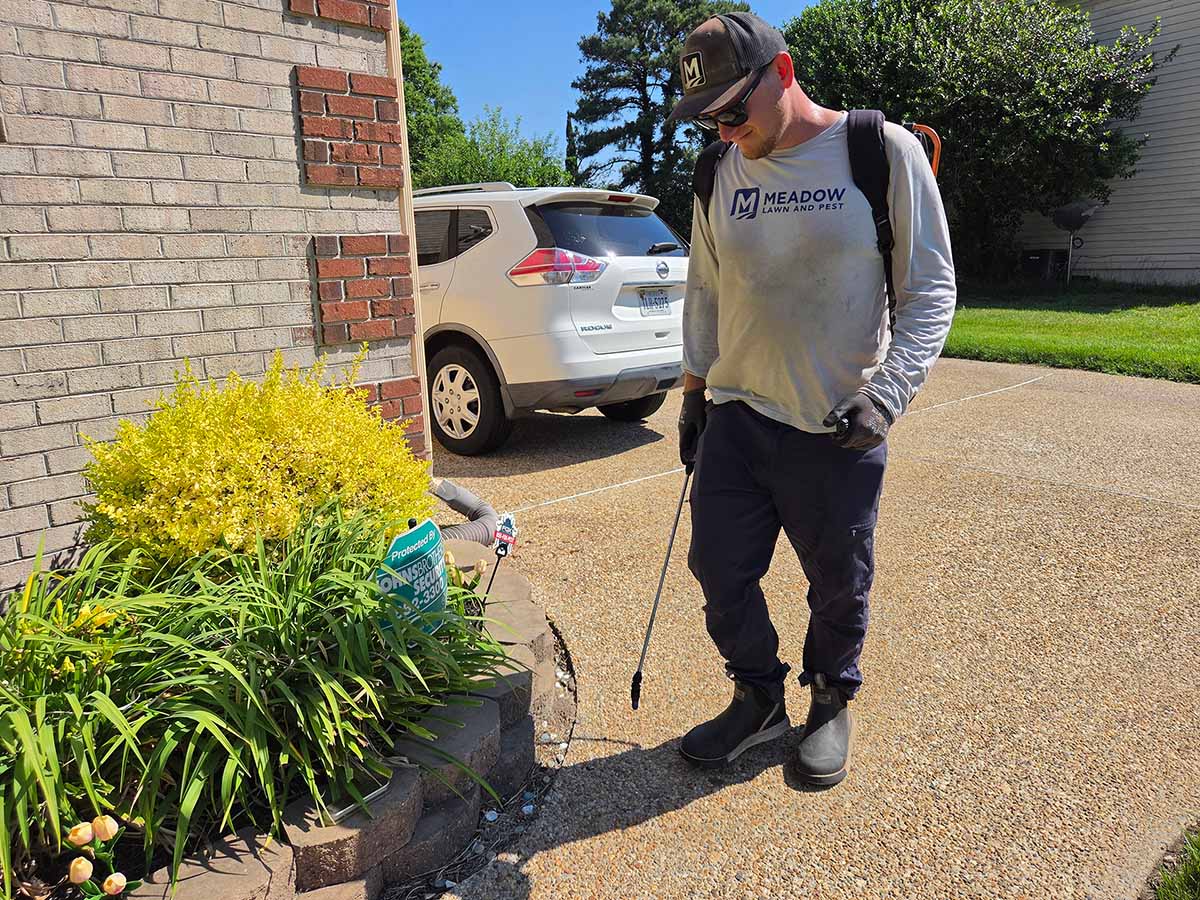
Short Answer: July is the month that decides August in Hampton Roads. The mosquito population doubles after every storm. Tick activity stays high through the month. Chinch bugs and sod webworms hit their destructive stride. Brown patch, pythium, and gray leaf spot all peak. Fire ant mounds finalize. If you keep the calendar tight in July, August stays manageable. If you skip July, August becomes a rescue project. Week 1 holds mosquito and tick refreshes plus a fungicide for fescue. Week 2 brings grub timing confirmation and chinch bug checks. Week 3 covers sod webworm and armyworm monitoring with disease watch. Week 4 sets up pre-August fire ant treatment and the post-storm audit. Here is the month broken down.
If June is the busiest pest month in Hampton Roads, July is the most consequential. June sets the season. July decides whether August is a peaceful end to summer or a stretch of triage calls. We watch this play out the same way every year on properties from Newport News to Virginia Beach to Smithfield. The lawns and yards that finish strong in August are the ones whose owners or service providers stayed disciplined on the July calendar. The ones that look exhausted by Labor Day usually skipped two or three July windows and tried to catch up after damage was visible.
This post is the July version of the master calendar. It is meant to be the reference you can hand to your neighbor or pin near your back door. We have written it for Hampton Roads specifically because our humidity, our coastal storm patterns, and our mix of warm-season and cool-season turf create timing windows that are not the same as further inland Virginia or further south in the Carolinas. Coastal heat and saturated soil push pest pressure earlier and hold it longer. The calendar reflects that.
Week 1: Mosquito and Tick Refresh, Fescue Fungicide
By the first week of July, June barrier sprays are starting to lose their bite. If you are on a 21 to 28 day cycle, the next visit lands here. If you started reactively, this is when you catch up. Two things matter more than product selection. First, the technician needs to actually get the spray into harborage zones: dense shrub bases, the underside of deck boards, the perimeter of mulch beds, the shaded side of fences. Mosquitoes rest in those zones during heat of day. A spray that only hits open turf misses 70 percent of the resting population.
Second, the storm cycle resets everything. Hampton Roads gets afternoon thunderstorms most weeks in July. A single half-inch rain wakes up every container, gutter, and tarp fold within 5 to 7 days as fresh adult mosquitoes. Plan barrier treatments for 2 to 3 days after a storm cluster rather than before. The math works better.
Tick activity stays meaningful through July. Lone star ticks (Amblyomma americanum) are our most common locally and remain aggressive on yards through August. The same perimeter and harborage treatment that hits mosquitoes hits ticks. If you have a wooded edge, that edge needs the highest concentration of treatment.
For fescue lawns, week 1 is the right moment for a preventive fungicide application if brown patch has been confirmed anywhere in the neighborhood. Mycelium and rings have started showing up locally by late June. Hampton Roads humidity and overnight temperatures in the upper 60s create textbook brown patch conditions. A preventive application with a labeled fungicide (azoxystrobin or propiconazole rotation) holds the lawn through the worst of the month. Cost: $100 to $180 for a typical residential fescue lawn. Application repeats at 21 to 28 day intervals if pressure stays high.
Week 1 to 2: Grub Timing Confirmation
Preventive grub treatments applied during the last two weeks of June are still active into July. If you applied late June, water in if it has not rained more than half an inch since. The product needs to move down into the top two inches of soil where eggs are hatching.
If you missed the June window entirely, the first week of July is the absolute last call for chlorantraniliprole-based preventives to work as designed. Trichlorfon is the curative option but it costs more, requires immediate watering, and only addresses grubs that are already in the soil. Better to catch up now than wait for August damage.
How to tell if you have a grub problem developing: pull back a one-foot square of turf at the edge of any thinning area. Healthy turf at this depth shows roots reaching down 2 to 4 inches with white tips. Grub-damaged turf shows roots chewed off near the crown, with the C-shaped white larvae visible at one inch depth. Three or more grubs per square foot warrants treatment.
Week 2: Chinch Bug Verification and Bermuda Stress Reads
Chinch bugs have moved from monitoring into damage stage on susceptible lawns by mid July. Bermuda, zoysia, and St. Augustine lawns in full sun with a thatch layer are the targets. The pattern looks similar to drought stress: irregular yellowing patches that expand. The two are distinguished by where they appear (chinch bugs prefer hot dry edges along driveways and sidewalks), how they respond to water (chinch bug damage does not improve after a deep watering), and a simple flush test.
The soap flush: 2 tablespoons of any dish soap into a gallon of water, poured slowly over a one-square-foot area at the edge of the yellowing zone. Wait 5 minutes. Surfacing adult chinch bugs (small, black with white wing patches, about 3/16 inch long) confirm. Five or more per square foot is treatment threshold.
Treatment is a contact insecticide labeled for chinch bugs (bifenthrin is the workhorse), watered in lightly the next morning. One treatment usually holds. Two treatments are needed if the population was already at outbreak level when discovered. Cost: $100 to $150 per treatment for typical residential.
While you are looking, evaluate Bermuda stress. Bermuda is a heat-loving grass but it still wants water in July. Properties with shallow watering or shaded sections will show stress patches by mid month. Adjust irrigation before damage compounds.
Week 2 to 3: Sod Webworm and Armyworm Monitoring
July is when sod webworm populations explode in Hampton Roads. Adult moths flush out of the lawn at dusk like a small cloud of cream-colored insects when you walk across the turf. That sighting alone does not mean damage, but it does mean the next generation of larvae is about to feed.
Larval damage looks like grass that has been mowed too short in patches, with notched and chewed blade tips visible up close. Birds working a specific area heavily in mornings can also be a tell. The threshold for treatment is roughly 10 to 15 active larvae per square foot. A morning soap flush brings them to the surface for counting.
Fall armyworms are a separate watch but appear similarly. Their damage is faster and more dramatic. A lawn can go from looking fine to looking shredded in 48 hours when armyworms march through. Late July through August is peak local risk. Hampton Roads sits in the Mid-Atlantic corridor where southern populations push northward during summer. Treatments for both pests are similar. A pyrethroid such as bifenthrin or a spinosad product handles light to moderate populations. Heavy populations warrant the longer-residual chlorantraniliprole.
Week 3: Disease Watch, Pythium Risk
Mid July is when pythium blight becomes a genuine threat on stressed cool-season lawns. It is the most destructive turf disease we deal with in Hampton Roads. Pythium can wipe out a fescue lawn in 24 to 48 hours under the right conditions, which are exactly the conditions we get every July: night temperatures above 70, day temperatures above 90, and high humidity, especially after evening watering.
Signs are distinct. Greasy looking patches that appear overnight. A cottony white mycelium visible in early morning dew at the active edge. Patches that follow water flow patterns, often in low spots or where irrigation overlap creates extended wetness. Smell can be foul, like wet straw rotting.
Treatment is fast or it is too late. A pythium-labeled fungicide (mefenoxam is the most effective) must go down within hours of confirmation. Watering must shift to mornings only, completely off in evenings. Mow only when grass is dry. Bag clippings rather than mulching to remove pathogen load.
While checking for pythium, also walk for gray leaf spot on tall fescue. Small lesions with dark borders and tan centers on leaf blades. Less destructive than pythium but indicative of stress and can take down already-weakened lawns. Same fungicide rotation that covers brown patch typically covers gray leaf spot.
Week 3 to 4: Tree and Shrub Maintenance Pass
Bagworms that were missed in June are now in their bags and harder to treat with spray. The hand removal window is open. Walk evergreens (especially arborvitae, cedar, juniper, and spruce). Pick off visible bags and dispose in sealed bags rather than dropping on the ground. Eggs overwinter in those bags and reinfest next spring.
Japanese beetles peak in early to mid July across Hampton Roads. Skeletonized leaves on roses, crape myrtles, lindens, and Norway maples. Hand picking into soapy water at first sight is more effective than waiting. Traps usually attract more beetles than they capture. Skip the traps. Targeted treatment with carbaryl or a systemic neonicotinoid (applied as soil drench earlier in spring is the right approach for future years) addresses heavy populations.
Spider mites accelerate in hot dry weeks. Check the underside of leaves on junipers, spruce, and any ornamental that has looked dusty or off color. A simple test: hold a white sheet of paper under a suspect branch and tap. Small moving specks are mites. Treatment is a miticide; insecticidal soaps can help in light infestations and are easier on beneficials.
Week 4: Fire Ant Pre-August Treatment and Storm Audit
Fire ants are a coastal Virginia reality that is still in the process of expanding northward. Hampton Roads has them in pockets, with Norfolk, Virginia Beach, Suffolk, and Chesapeake all showing populations. The end of July is the right window to treat for August stability. Two-step treatments work best. A broadcast bait (such as Amdro or Extinguish Plus) applied in the cooler hours, then an individual mound treatment 7 to 10 days later for any active mounds that remain.
Fire ant baits require dry soil and dry conditions for at least 24 hours after application. Apply in the early morning during a forecasted dry stretch. Reapply every 6 to 8 weeks during fire ant season.
The end of the month is also when we do storm audits. Hampton Roads averages two to four named tropical systems passing close enough to affect us by late July through August. The audit covers gutter clearing, downspout extensions, any container that holds standing water (children’s toys, plant saucers, tarps, kiddie pools, wheelbarrows, depressions in the lawn), and irrigation system function checks. Five minutes per item across a property cuts mosquito breeding 60 to 80 percent versus a property that never audits.
What to Skip in July
Three things homeowners often do in July that they should not. First, applying nitrogen fertilizer to cool-season grass. Fescue is heat-stressed in July and nitrogen pushes growth the plant cannot support. Hold all fertilizer until September.
Second, mowing too short or too frequently. Hampton Roads July heat requires fescue at 4 inches minimum and Bermuda at 2 to 2.5 inches. Mow only when grass is dry and not in late afternoon. Reduce mowing frequency to one cut per 10 to 14 days if growth has slowed.
Third, evening watering. The most consistent mistake we see leading to July disease. Water between 4 a.m. and 9 a.m. only. Evening watering keeps blades wet through humid overnight hours and effectively guarantees fungal disease.
The Recovery Timeline When Problems Are Caught Early
Chinch bug damage caught at stage 1 (small yellow patches): one treatment, 14 to 21 days for the lawn to fill in. No reseeding needed if Bermuda or zoysia. Mowing and watering as usual.
Brown patch caught at first ring: one fungicide application, 7 to 10 days for active disease to stop, 3 to 4 weeks for full visual recovery. No reseeding unless rings are larger than 18 inches and entirely dead in center.
Pythium caught within 24 hours of first symptoms: one application of mefenoxam plus watering correction, 5 to 7 days for active spread to stop, but visible damage may require September fescue overseed to fully repair. Pythium can leave dead spots that do not recover.
Grub damage caught with three or more grubs per square foot before turf collapse: one curative application of trichlorfon, watered in within 24 hours, plus normal watering. Recovery takes 4 to 6 weeks. Severe damage requires September overseeding for fescue or sprigging or sod patching for Bermuda.
Frequently Asked Questions
Is July too late for grub prevention?
Chlorantraniliprole preventives applied in early July still work. After mid July, switch to curative treatments only if monitoring confirms an active population. Preventive products applied late are wasted money.
How often should mosquito treatments happen in July?
Every 21 to 28 days on average. Tighten to 14 to 21 days for properties near wooded buffer zones, with persistent standing water in surrounding areas, or after storm clusters. Loosen toward 28 days for properties with dry conditions and limited harborage.
Can I treat for ticks myself?
The products are similar to mosquito barriers and DIY treatment is viable if you commit to perimeter coverage every 21 days. Personal protection (treated clothing, permethrin on outdoor work clothes, daily tick checks) matters as much as yard treatment.
My fescue is half dead already. Should I water more?
Probably not. If half the lawn is already dead, more water now will not bring it back and will increase disease risk for the surviving portion. Manage what is left through July, plan a slit-seed or full renovation for early September. We cover that decision in detail in another post this month.
What to Do Next
If you would like a customized July plan for your specific Hampton Roads property, we are glad to walk it with you and put a timing chart together. We serve Hampton Roads including Newport News, Norfolk, Virginia Beach, Chesapeake, Suffolk, Smithfield, Carrollton, Isle of Wight County, and surrounding communities.
Call us at 757-238-8901 or visit meadowlawnandpest.com to schedule a consultation.