
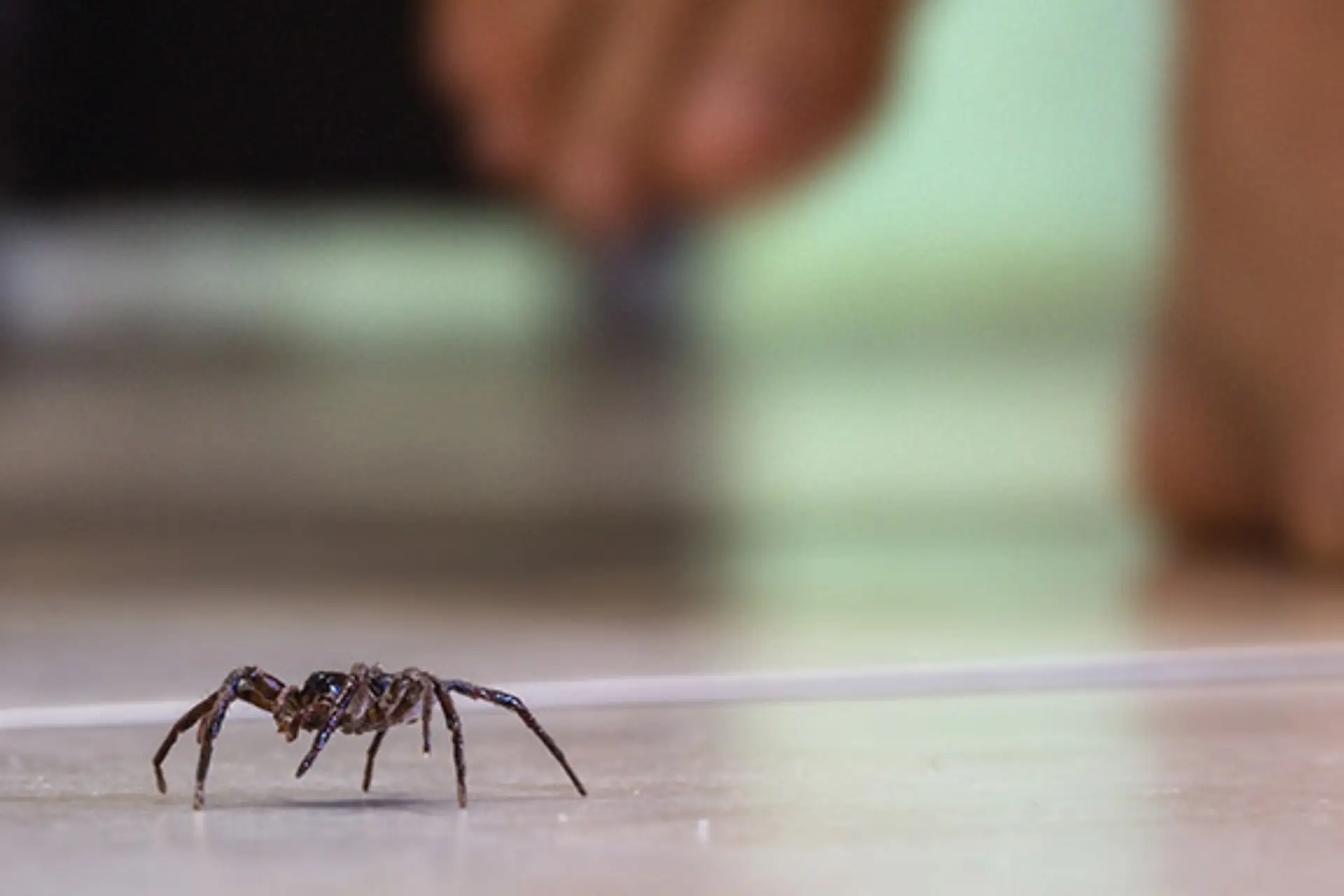
Short Answer: Imported fire ants have been steadily moving north along the Virginia coast, and Hampton Roads properties are increasingly seeing them, particularly in Suffolk, Chesapeake, and the southern parts of our service area. The most effective spring treatment is a two-step approach: a broadcast bait application across the entire treated area in late April or May while soil temperatures are between 70 and 90 degrees, followed by direct mound treatments on any active mounds that survive. Bait alone is not enough on heavily infested properties. Mound treatments alone do not get the queens you cannot see. Together, they deliver season-long control. The wrong products applied at the wrong time waste money and barely dent the colony.
Twenty years ago, fire ants were not really a Hampton Roads problem. Today, depending on which neighborhood you live in, they are either an occasional nuisance or a significant safety concern. We have treated properties in Suffolk where a homeowner could not let a grandchild walk barefoot in the backyard because the mounds had taken over so much of the lawn. The expansion of imported fire ants up the Atlantic coast is real, and the southern half of our service area is now firmly inside the range.
If you have noticed fluffy mounds of soil that were not there a week ago, or if your dog has come back from the yard limping with a few quick angry red bumps on a paw, this post is for you. Here is what we want every Hampton Roads homeowner to know about fire ant treatment.
How to Tell If You Actually Have Fire Ants
Not every ant mound in a Hampton Roads lawn is a fire ant mound. We have several native ant species that build similar-looking mounds, and most of them are harmless. The classic imported fire ant mound has three identifying features. It is a dome shape, often 6 to 18 inches across at the base, made of loose fluffy soil with no obvious central entry hole on top (the ants enter through tunnels in the side). It appears or grows noticeably after a rain. And when you disturb it, the response is immediate, aggressive, and impossible to miss. Hundreds of ants pour out within seconds and run upward on anything that touches the mound, including a stick, a shoe, or a leg.
The ants themselves are reddish brown, with a darker abdomen, and they are variable in size within a single colony (most other ant species have workers that are all roughly the same size, which is a useful tell). If you get stung, the sting feels like a sharp burn at first, then within 24 hours develops into a small white pustule that is also a reliable identifier.
If you are not sure, take a photo of the mound and a close-up of a few ants and call us. We do not charge to identify what you have. Misidentification leads to spending money on the wrong product, so we would rather take five minutes to confirm.
The Spring Treatment Window
Fire ant biology gives us a specific window when treatments work best. The ants are most active when soil temperatures are between 70 and 90 degrees. In Hampton Roads, that means late April through May and again from mid-September through October. During those windows, the ants are foraging aggressively, which means they pick up bait quickly and carry it back to the queen.
Outside those windows, the colony either is not foraging much (cool weather, late fall, winter) or is deep enough in the mound to avoid surface heat (peak summer afternoons). Bait applied at the wrong time sits on the ground, gets rained on, and loses potency before the colony picks it up. Timing the application properly is one of the single biggest factors in whether the treatment works.
That is why we run our primary fire ant program in late April or May for Hampton Roads properties. By the time July arrives, the colonies you treated in spring should be 80 to 95 percent suppressed, and any new colonies showing up later in the summer can be addressed individually.
The Two-Step Approach
Effective fire ant control on a residential lawn is almost always a two-step process.
Step one is the broadcast bait application. We use a handheld or push spreader to apply a granular bait product evenly across the lawn at a labeled low rate (typically 1 to 1.5 pounds per acre). The bait granules are small and protein-rich, which attracts foraging ants. The ants carry the bait back to the colony and feed it to the queen. The active ingredient is slow-acting, which is intentional, because it gives the ants time to deliver the bait throughout the colony before it kills them. Within 4 to 6 weeks of a good bait application, you should see mound activity drop significantly across the treated area.
Step two is direct mound treatment on any active mounds that remain. This is where a faster-acting product gets applied directly to the mound, either as a drench (a liquid mixed with water and poured over and around the mound) or as a granular treatment watered in immediately afterward. Direct mound treatments knock down individual mounds within hours to days, which is useful when you have a specific area where you need to be able to walk barefoot, let pets out, or hold a backyard gathering.
Most homeowners who try to handle fire ants themselves do one or the other and not both. They buy a small bag of mound treatment, hit the three mounds they can see, and then wonder why six new mounds appear two weeks later. Those six mounds were colonies you could not see, and only a broadcast bait application reaches them.
Products That Actually Work (and Some That Do Not)
The bait products with the strongest track record in our region include those with active ingredients like indoxacarb (faster acting baits), hydramethylnon (the classic bait, still effective), and abamectin (slow-acting but excellent residual control). For mound treatments, products with fipronil, bifenthrin, or imidacloprid as the active ingredient all perform well when applied correctly.
The home remedies floating around the internet (boiling water, gasoline, club soda, instant grits) do not work and some of them are unsafe. Boiling water can kill the ants on the surface but leaves the queen alive in nearly every case. Gasoline is illegal as a pesticide and creates fire and soil contamination hazards. Grits is an old story that has been thoroughly debunked. The ants do not actually eat grits, and even if they did, they do not explode.
Generic granular insecticide spread across the whole lawn (the contact-killer approach) is also generally a poor choice for fire ants. It kills the workers on the surface, the queen survives, and the colony rebuilds within weeks. Bait works because it gets carried inside.
What Our Fire Ant Program Looks Like
For a Hampton Roads property with active fire ant pressure, our typical first-year program includes a soil temperature check, a broadcast bait application in late April or May, follow-up mound treatments as needed, and a second broadcast application in early fall if conditions warrant. We monitor the property at each visit so we can catch new colonies before they get established.
Properties that have been on the program for a full year often need much less intervention the following year, because the surrounding colonies have been knocked down and reinvasion pressure drops.
If you have fire ants on your Hampton Roads property and you want them gone, call (757) 238-8901 or request a quote at stg-5eq9zo.elementor.cloud/. With five Virginia Tech Certified Turfgrass Professionals and 17+ years of pest experience in coastal Virginia, we know what works in our climate and what does not.
Fire ants are stubborn, but they are not unbeatable. The right products at the right time in the right sequence is the formula.