
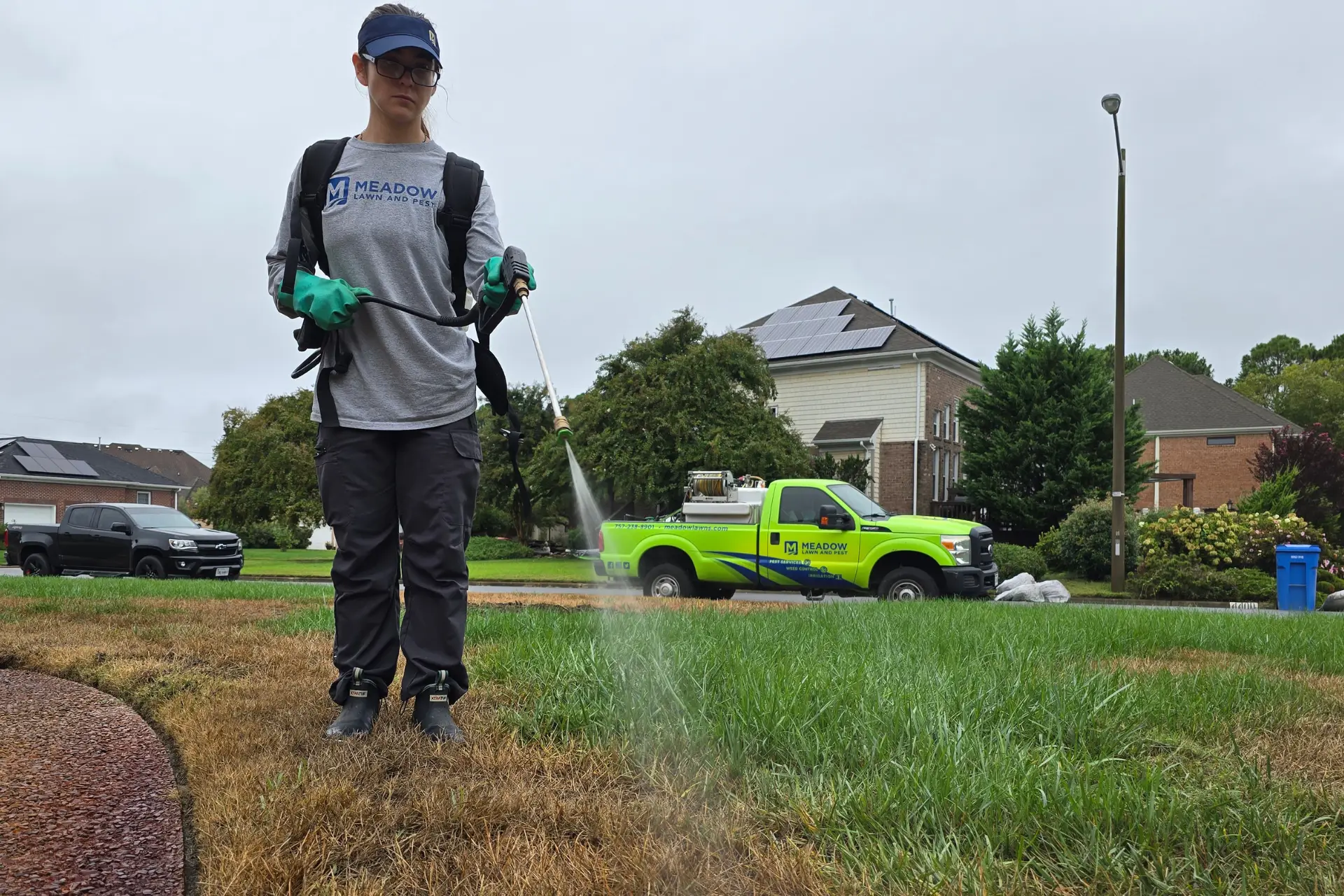
Short Answer: June is the most pest-active month of the year in Hampton Roads. The right timing for each treatment matters more than the products themselves. First week: mosquito and tick barrier sprays, preventive grub setup. Second week: chinch bug monitoring, brown patch fungicide if pressure is building. Third week: bagworm window, tree pest watch. Fourth week: pre-July 4 protection refresh. Lawns and properties on the right calendar produce dramatically better outcomes than those treating reactively. Here is the month broken down.
If you live in Hampton Roads and you want one master reference for June pest management, this is the post for you. Coastal Virginia summer pest pressure starts earlier and runs longer than most homeowners realize. We see consistent patterns across Newport News, Norfolk, Virginia Beach, Chesapeake, Suffolk, and Smithfield about which pests show up when and what timing makes treatments work.
This calendar is the cheat sheet we wish every homeowner could pin to the fridge.
Week 1: Mosquito and Tick Foundation
Mosquito populations have been building since late April. By the first week of June they are at full strength. If you have not yet started a barrier program for the season, this is the right week to begin. The treatment knocks down adult populations within 48 hours and provides residual protection through the rest of June.
Tick activity peaks in May and June in our area. The same harborage zones that get treated for mosquitoes also handle tick reduction. Combined treatments are more efficient than running separate programs.
Cost: $90 to $140 per visit for a typical residential lot. Program continues every 21 to 28 days through early October.
Week 1 to 2: Preventive Grub Setup
The grubs that damage lawns in August and September are produced by eggs adult beetles lay in June and July. Preventive treatment applied during this window puts the product in place before eggs hatch, preventing almost all the damage that otherwise shows up later in summer.
For Hampton Roads, the right grub prevention window is the last two weeks of June through the first week of July. Cost is typically $90 to $150 for a single application.
Week 2: Chinch Bug Monitoring
Chinch bug populations build in St. Augustine and some Bermuda lawns through May and become destructive in June. By the second week of June, properties with chinch bug history should be checking weekly for early activity.
The soap flush test: mix 2 tablespoons of dish soap in a gallon of water, pour over a one-foot square at the edge of any yellowing patch, wait 5 minutes. Surfacing bugs confirm chinch bugs.
Catching chinch bug activity in stage 1 (small patches of yellowing in sunny areas) leads to one $90 to $130 treatment and full recovery. Missing it until stage 3 leads to thousands of dollars in damage.
Week 2 to 3: Brown Patch Disease Watch
Brown patch starts becoming active in Hampton Roads when night temperatures stay above 65 degrees and humidity is high. June typically brings the first signs. Tall fescue is most susceptible; some Bermuda and zoysia varieties can also develop it.
Walk the lawn at dawn after dewy mornings. Look for circular patches with darker outer rings. Visible mycelium (fine web-like growth) on grass blades at the active edge confirms the disease.
Treatment is most effective when applied at first sign rather than after large patches form. A fungicide labeled for brown patch combined with watering adjustments (mornings only) stops the spread within 7 to 10 days.
Week 3: Bagworm Window
Bagworms emerge from overwintering eggs in late May and early June, then begin feeding on evergreen trees and shrubs (especially cedar, juniper, arborvitae, and spruce). The window for effective treatment is the first 4 to 6 weeks of larval activity, which means treatments in early to mid June are most effective.
By July the larvae have built protective bag structures and are much harder to control. By August they are essentially impossible to treat without removing the bags by hand.
Cost for bagworm treatment: typically $80 to $200 for a residential property with multiple susceptible trees. Worth it considering that severe bagworm damage can defoliate and kill mature ornamental trees.
Week 3 to 4: Tree Pest Watch
Beyond bagworms, June is when several other tree pests become visible. Tent caterpillars in cherry and similar trees. Scale on hollies and magnolias. Aphids on roses, crape myrtles, and various ornamentals. Spider mites in hot dry conditions.
Walk every major tree and shrub once during this window. Check the undersides of leaves. Look for sticky residue (a sign of aphid activity). Note any chewed leaves, webbing, or unusual coloration.
Most tree pest issues are manageable with targeted treatments when caught early. Most become unmanageable when ignored until visible damage is severe.
Week 4: Pre-July 4 Protection Refresh
If you are hosting over the holiday weekend, a single barrier spray refresh 3 to 5 days before guests arrive provides peak protection for the gathering. This applies whether you are on a regular program or not.
Properties already on a regular mosquito and tick program may simply request that the next regular visit timing align with the holiday. Properties not on a regular program can book a single-event treatment for $150 to $200.
Combine the treatment with standing water elimination, mosquito misting timer adjustments if you have a misting system, and a quick walk of the property to identify and address any harborage zones that have built up since the previous treatment.
The Most Common Mistake
Treating reactively rather than on calendar. Homeowners often wait until they see damage to call. By that point, the treatment cost is higher, the recovery is slower, and the lawn looks bad through summer.
The right pattern: schedule treatments based on the calendar above. Treat preventively. Walk the property weekly to catch anything that breaks through. Skip the visits only when conditions warrant rather than as a budget cut.
What Else Matters in June
Beyond pest treatments, June matters for several other lawn and landscape items. Mowing height adjustments for warm-season grasses (3 inches for Bermuda, 4 inches for fescue, 3 inches for zoysia). Watering schedule shifts to deep infrequent cycles. Summer fertilizer applications with moderate nitrogen and added potassium. Irrigation system audits. Light pruning of anything dead or hazardous.
The combination of right pest timing plus right cultural practices produces dramatically better summer outcomes than either alone.
Building the Annual Calendar
For homeowners who want a year-round reference, the Hampton Roads pest and lawn calendar generally runs: February to March, pre-emergent and dormant pest preparation. April to May, spring fertility and first mosquito treatments. June, the busy month described in this post. July, ongoing maintenance, drought management, disease watch. August, peak stress management, grub damage rescue if prevention was skipped. September, fall renovation, aeration, overseeding. October to November, winterizing, fall pre-emergent. December to January, dormant season planning.
Each month has its own priorities. June is the busiest. Get June right and the rest of summer follows.
How Programs Adapt to Wet vs Dry Seasons
Hampton Roads summers vary significantly. Wet summers favor disease pressure and reduce mosquito breeding water control. Dry summers reduce disease but stress lawns and increase chinch bug activity. Good lawn care programs adapt to the conditions rather than running the same schedule regardless of weather. Wet year adjustments: tighter mosquito treatment intervals, earlier fungicide preventives, watching for drainage-related issues. Dry year adjustments: more attention to chinch bug monitoring, drought stress management, prioritizing tree watering. Ask your provider how they adapt to the season’s specific conditions.
Frequently Asked Questions
Do I really need all of these treatments?
Not necessarily. Each is risk-based. Properties with history of specific issues benefit from preventive treatments for those issues. Properties without history may skip some preventives and monitor reactively.
What if I can only afford some of these?
The highest-leverage single treatment is preventive grub control in late June. The second highest is mosquito and tick barrier sprays during peak season. The third is brown patch monitoring for fescue lawns. Prioritize based on your specific risks.
Can I do any of these myself?
Most of the products are available at home improvement stores. The timing knowledge is what makes them work. If you commit to the right calendar, DIY is viable. If you find yourself missing timing windows, professional service usually saves money on net.
What is the single most important June pest activity?
Preventive grub treatment in the last two weeks of June. The damage prevented is dramatic and the treatment cost is modest.
What to Do Next
If you want help running through this calendar on your specific Hampton Roads property, we are glad to come walk and put together a customized June plan. We serve Hampton Roads including Newport News, Norfolk, Virginia Beach, Chesapeake, Suffolk, Smithfield, Carrollton, Isle of Wight County, and surrounding communities.
Call us at 757-238-8901 or visit meadowlawnandpest.com to schedule a consultation.