
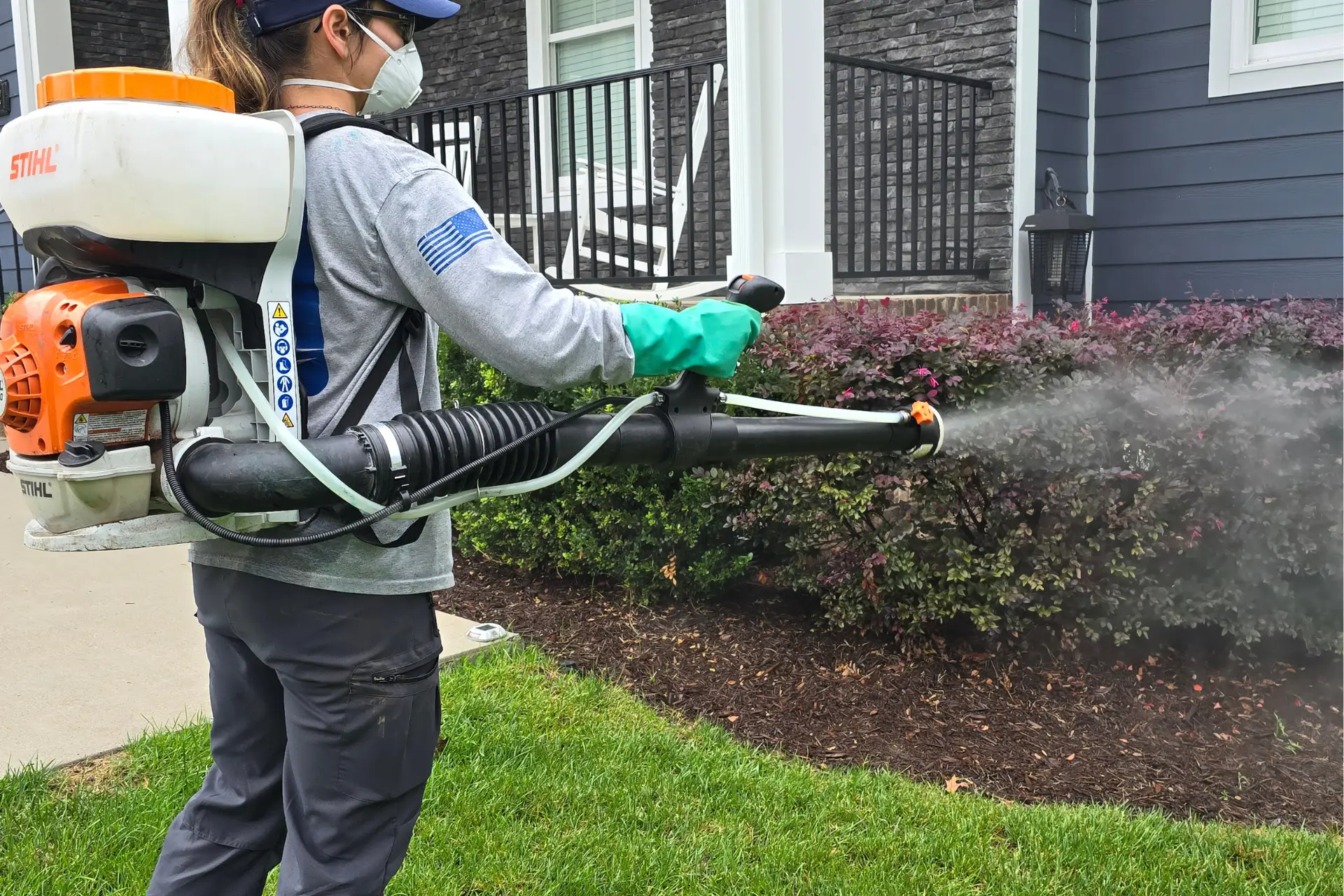
Short Answer: Installed mosquito misting systems work, but for most Hampton Roads residential properties they cost 2 to 3 times more than professional barrier sprays over five years for similar results. Installation runs $2,500 to $6,000. Ongoing operating costs $600 to $1,500 per year. The systems make sense for large properties (1 acre+), properties with severe persistent pressure, homeowners who entertain outdoors frequently, or families with bite sensitivities. For typical quarter to half acre lots, barrier sprays deliver better value. Here is the honest comparison.
If you have been considering an installed mosquito misting system for your coastal Virginia home and want a straight comparison before signing a contract, this post is for you. We have installed and serviced these systems on Hampton Roads properties for years and we have also run barrier spray programs that perform comparably on most lots. We want to walk through the honest comparison.
What a Misting System Actually Is
A permanent installed mosquito misting system is a network of small nozzles mounted around the perimeter of your property, connected to a central reservoir of insecticide concentrate, a pump, and a programmable controller. The system pulses for 30 to 60 seconds, typically 2 to 4 times per day, releasing a fine mist of insecticide.
The system runs autonomously after installation. Most newer systems also include remote control via phone app for on-demand activation. The reservoir holds 30 to 60 days of concentrate depending on usage. Refills are typically quarterly maintenance visits.
Installation Cost Reality
For Hampton Roads residential properties, installation typically runs $2,500 to $6,000 depending on:
Property size. Larger lots require more nozzles and more line. A standard quarter-acre lot might need 30 to 40 nozzles. A one-acre property might need 60 to 80.
Pump and reservoir capacity. Smaller properties can use 30-gallon residential systems. Larger properties need 55 or 110 gallon commercial-grade units.
Installation complexity. Properties with mature landscaping, existing irrigation lines, hardscape, and complex perimeters cost more to install than simple yards.
Quality of components. Higher-end systems with better nozzles, stronger pumps, and longer warranties cost more upfront but typically perform better long-term.
Ongoing Operating Cost
Annual operating costs typically include:
Insecticide concentrate refills: $400 to $800 per year for a standard residential system. Higher for larger systems or properties with severe pressure that requires more frequent runs.
Quarterly maintenance: $200 to $400 per year for inspection, nozzle cleaning, line flushing, and minor repairs.
Occasional repairs: pumps, controllers, nozzles, and lines all wear over time. Budget $100 to $300 per year for unexpected repairs.
Seasonal startup and winterization: $100 to $200 each, twice per year.
Total annual operating: $700 to $1,500 for most residential systems.
Five-Year Total Cost Comparison
Installed misting system: $2,500 to $6,000 install plus $3,500 to $7,500 in 5-year operating = $6,000 to $13,500 total.
Professional barrier spray program (8 treatments per year at $90 to $140 each): $720 to $1,120 per year, $3,600 to $5,600 over five years.
The math: misting systems cost roughly 2x to 2.5x more than barrier sprays over five years for most properties. Some specific situations favor the misting system (large lots, severe pressure) where the math gets closer or even favors misting, but for typical residential lots, barrier sprays produce better value.
Effectiveness Honest Comparison
Both systems work when properly designed and applied. The effectiveness comparison comes down to coverage uniformity and consistency.
Misting systems provide fresh insecticide release multiple times per day, which produces more consistent protection in the mist zones. The downside is that coverage is limited to the specific zones the nozzles reach. Mosquitoes traveling through untreated areas or arriving between mist cycles can still bite. Effectiveness depends heavily on whether the system was designed with enough nozzles for the property.
Barrier sprays cover the entire treated zone uniformly during application, with residual protection over 21 to 28 days. The downside is gradual decline in residual effectiveness toward the end of each cycle. Rain during the cycle can wash some residual off.
For most Hampton Roads properties, the effectiveness gap is small. Both produce dramatic reduction in mosquito activity in family-use parts of the yard.
What the Sales Pitch Often Skips
Several details that misting system sales pitches sometimes minimize:
The pollinator impact. The systems use synthetic pyrethroid chemistry by default, applied multiple times per day. Pollinator exposure is significantly higher than with periodic barrier sprays where applicators can avoid blooming plants.
Wind drift issues. Coastal Virginia gets meaningful wind. Mist drifts onto neighbor properties, into open windows, and onto outdoor furniture. The drift is a real practical issue, not theoretical.
Maintenance reality. Most systems require more maintenance than the initial sales pitch suggests. Nozzles clog. Lines crack. Pumps fail. Each fix is modest individually but they compound over time.
Aesthetic considerations. The nozzles, lines, and reservoir need to go somewhere. On well-designed installations they are nearly invisible. On hastily installed systems they are visible eyesores.
When Misting Systems Actually Make Sense
Large properties with mature landscaping and persistent severe mosquito pressure. The cost premium becomes more reasonable on properties that would otherwise need very frequent barrier sprays.
Properties adjacent to wetlands, marshes, or standing water that produces constant pressure regardless of barrier treatment frequency.
Homeowners who entertain outdoors very frequently and value on-demand protection before events.
Families with bite sensitivities or specific health considerations that require maximum protection.
When Barrier Sprays Make More Sense
Typical residential lots (a quarter to one acre). The cost-effectiveness math favors barrier sprays.
Families with pollinator concerns. The targeted barrier spray application is meaningfully gentler on bees and butterflies than continuous misting.
Homeowners who do not want a permanent installed system on the property.
Properties without severe persistent pressure. Periodic treatments handle moderate pressure as effectively as continuous misting.
What If You Already Have a Misting System
For homeowners who already have an installed system, the question is whether to continue or transition. Continuing makes sense if the system is working well and you value the convenience. Transitioning to barrier sprays makes sense if the system needs significant repairs, if you have pollinator concerns, or if the math no longer works for your situation.
Most homeowners who transition keep the installed hardware but cap the lines, then schedule periodic barrier sprays. The hardware can remain in place for future activation if conditions change.
Installation Considerations Most Salespeople Skip
Beyond cost and effectiveness, several installation considerations affect long-term satisfaction with a misting system. Nozzle placement relative to outdoor entertaining areas matters; you do not want mist drifting onto guests during dinner. Reservoir location needs accessibility for refills but should be hidden from view. Electrical connections need to be properly weather-sealed for the system’s location. Lines need protection from lawn equipment and digging. The integration with existing landscape design matters. A well-designed install considers all of this. A rushed install skips some of these details and the homeowner discovers them over time.
Frequently Asked Questions
How long do these systems last?
Quality systems have a 10 to 15 year service life with proper maintenance. Cheaper systems may need significant repair or replacement within 5 to 7 years.
Will the system kill all the bees in my yard?
Not all, but it does affect pollinator populations meaningfully in the spray zones. For families with active pollinator gardens, this is a significant consideration.
Can I install one myself?
Some DIY kits exist. The challenge is proper nozzle placement, pump sizing, and electrical work. Most DIY installations underperform compared to professional installations because the design details matter.
Do I still need to eliminate standing water?
Yes. The misting system handles adults, not breeding water. Standing water elimination remains essential regardless of which system you use.
Coordinating With Existing Lawn Care
For homeowners with both lawn care and mosquito service from the same provider, coordinated visits are usually more cost-effective than running separate programs. The lawn care tech can flag any pest pressure observed during regular visits, and the mosquito tech can flag any disease or weed pressure observed during mosquito visits. The coordination produces better outcomes than running siloed programs. Most providers will discuss bundled pricing for combined service.
What to Do Next
If you are weighing the decision between a misting system and barrier sprays, we are happy to come walk the property and give you an honest assessment for your specific situation. We will tell you straight which option fits your property.
Call us at 757-238-8901 or visit meadowlawnandpest.com. We serve Hampton Roads communities.